


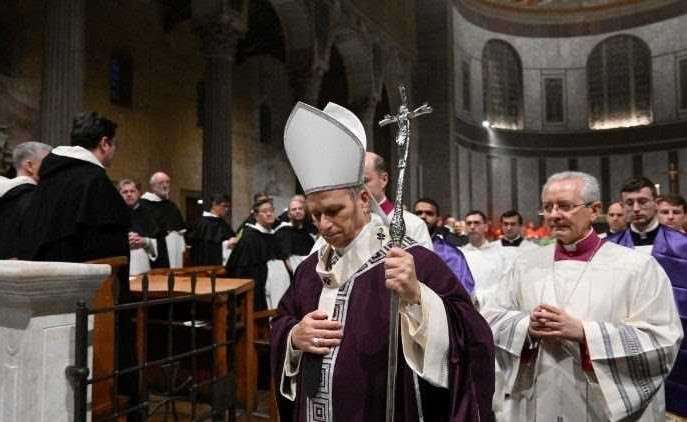
- Says Lent Calls Us To Honest Repentance, Community
CELEBRATING the first papal liturgy of Lent, Pope Leo XIV on Wednesday urged the faithful to resist a culture of self-deception and powerlessness, calling the season of repentance a “powerful time for community” and a chance to offer credible witness to a watching world.
The Pope presided over the traditional Ash Wednesday Mass, which included the blessing and imposition of ashes, at the ancient Basilica of Santa Sabina on Rome’s Aventine Hill. The liturgy at Santa Sabina, the first station of the Lenten season, marked the beginning of the Church’s 40-day Fasting journey toward the Easter Triduum, a journey the Pope prayed would lead the faithful from death to life, from powerlessness to the possibilities of God.
In his homily, he reflected on the day’s readings, which call the faithful not to individual isolation, but to a collective examination of conscience.

Drawing from the Prophet Joel’s injunction to “Gather the people. Sanctify the congregation,” Pope Leo XIV emphasised that Lent is a journey of communal formation.
“We know that it has become increasingly difficult to gather people together and make them feel like a community,” he said, noting: “Not in a nationalistic and aggressive way, but in a communion where each of us finds our place.”
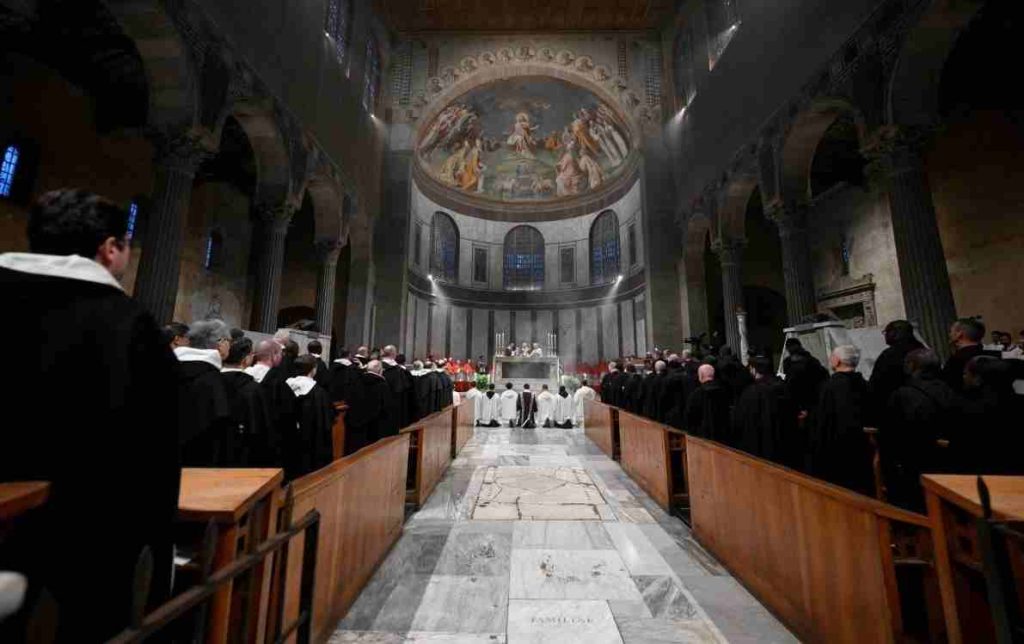
The Pope stressed that this gathering is for the honest admission of fault, he noted that sin is not an external force from “supposed enemies,” but an affliction that exists within. This act of repentance, he acknowledged, is deeply countercultural.
“How rare it is to find adults who repent – individuals, businesses and institutions that admit they have done wrong!” the Pope exclaimed, and argued that this courage to accept responsibility is an “authentic, honest and attractive option, especially in our times, when it is so easy to feel powerless in the face of a world that is in flames.”
Pope Leo XIV highlighted the missionary dimension of Lent, noting that the season’s call for accountability resonates strongly today, particularly with the young.
“Many young people, more than in the past, are open to the invitation of Ash Wednesday,” he said. “Young people especially understand clearly that it is possible to live a just lifestyle, and that there should be accountability for wrongdoings in the Church and in the world.”
He encouraged the faithful to embrace this season as a way to connect with “the many restless people of good will who are seeking authentic ways to renew their lives.”
The Pontiff then turned to a powerful reflection on the meaning of the ashes themselves, recalling a prophetic moment 60 years ago, when Saint Paul VI, shortly after the close of the Second Vatican Council, chose to celebrate the Rite of Ashes publicly to make its significance visible to all.
Pope Leo XIV quoted his predecessor’s words, describing the ceremony as a “realistic pedagogy” that confronts both modern self-delusion and the “fundamental pessimism” pervasive in culture.
Reinterpreting those words for today, Pope Leo painted a stark picture of the “ashes” weighing on the modern conscience.
“Today, we can recognize that his words were prophetic as we perceive in the ashes imposed on us the weight of a world that is ablaze, of entire cities destroyed by war,” he said.
He listed the “ashes of international law and justice among peoples, the ashes of entire ecosystems and harmony among peoples, the ashes of critical thinking and ancient local wisdom, the ashes of that sense of the sacred that dwells in every creature.”
This recognition of devastation, however, is not meant to be an endpoint, but a starting point for hope. Answering the world’s implicit question – “Where is their God?” – the Pope insisted that the faithful are called to carry the marks of death while also bearing witness to the Resurrection.
“We recognize our sins so that we can be converted; this is itself a sign and testimony of Resurrection,” he said. “Indeed, it means that we will not remain among the ashes, but will rise up and rebuild.”
The Pope concluded his homily by pointing to the example of martyrs, both ancient and modern, as guides on this journey.
He invoked the Roman tradition of the Lenten stationes, which involve moving as pilgrims to the basilicas standing on the memories of martyrs. “Let us remember the places, stories and names of those who have chosen the way of the Beatitudes and lived them out to the end,” he urged.
