


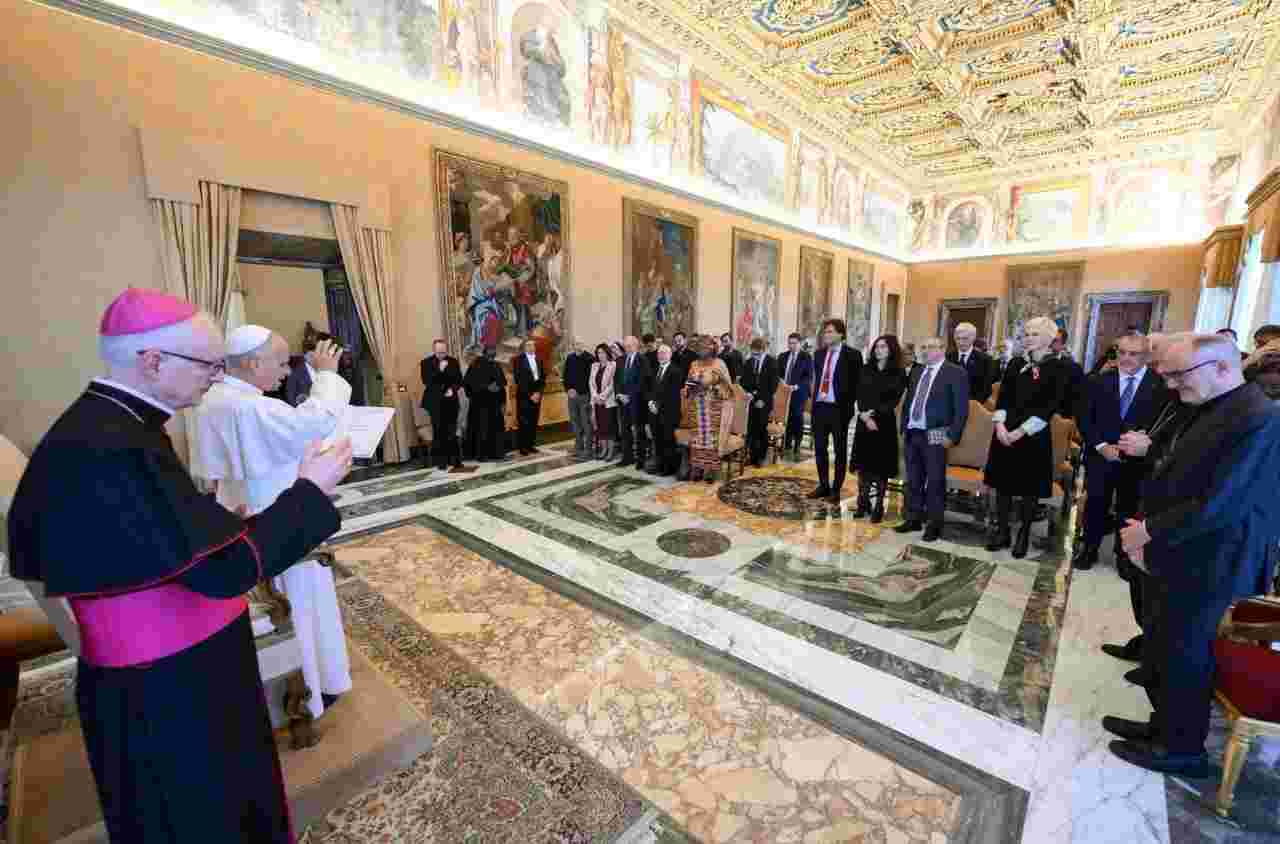
POPE Leo XIV has called for firm human oversight of Artificial Intelligence (AI), insisting that decisions affecting human life, freedom and the use of force must never be delegated to machines, while also exercising his right to vote in the 2026 U.S. midterm elections.
Addressing participants in a Vatican meeting on the future of AI, Pope Leo stressed that technological development must remain centered on human dignity and directed toward the common good.
He warned that increasingly powerful AI systems could threaten human responsibility if their applications are developed without adequate ethical safeguards.

“Decisions affecting human life, freedom and the use of force must always remain subject to effective, informed, and responsible human oversight,” the Pope said.
The meeting, held under the theme: “The Future of AI: A Dialogue Between the Vatican and the Scientific World on the Developments and Applications of Intelligent Technologies,” was jointly organized by the Pontifical Academy for Life and the Future of Life Institute.
Participants from different countries and fields brought what Pope Leo described as the “first fruits of a transdisciplinary approach” to addressing the complex challenges posed by AI.
Drawing on his encyclical “Magnifica Humanitas”, Pope Leo outlined five principles for approaching artificial intelligence: its future is not predetermined; machines are tools rather than persons; certain decisions must never be delegated to them; AI must serve the common good; and institutions must be established to translate ethical principles into practice.
The Pope said the central question should not simply be what AI is capable of doing, but what purpose it should serve.
“Since human beings develop AI, its future relies on the choices humanity makes,” he said, stressing that people have a responsibility to guide, modify or reject applications when necessary.
Pope Leo also warned against reducing people to data points, particularly in areas involving warfare, border control and other decisions with serious consequences for human life and freedom.
He urged governments to take steps toward banning lethal autonomous weapons and said AI must be “disarmed” when its use could remove meaningful human responsibility.
He further cautioned against treating AI systems as persons or granting them legal personhood, arguing that machines do not possess human experiences, relationships, feelings or responsibility. Doing so, he said, could obscure human accountability and leave victims of AI-related harm facing a “faceless entity.”
For AI to benefit humanity, the Pope called for shared standards, independent oversight and clear mechanisms of accountability. He said technological progress should not serve only privileged interests but should promote solidarity and ensure that its benefits are broadly shared.
Votes in U.S. Midterm Elections
In a separate development underscoring the Pope’s emphasis on human responsibility and civic participation, the Holy See Press Office confirmed that Pope Leo XIV has voted in the U.S. midterm elections by mail.
The Pope, an American citizen, submitted his ballot in Chicago, following what the Press Office described as his long-standing practice of civic participation.
He also exercised his right to vote during his years of residence in Peru whenever he was eligible to do so.
“The Holy Father expresses his belief in the right and the duty of citizens to participate in democratic processes,” the Press Office said.
The U.S. midterm elections will take place on November 3, with all 435 seats in the House of Representatives and 35 of the Senate’s 100 seats contested. Governors will also be elected in 36 states, along with numerous state and local officials.
