


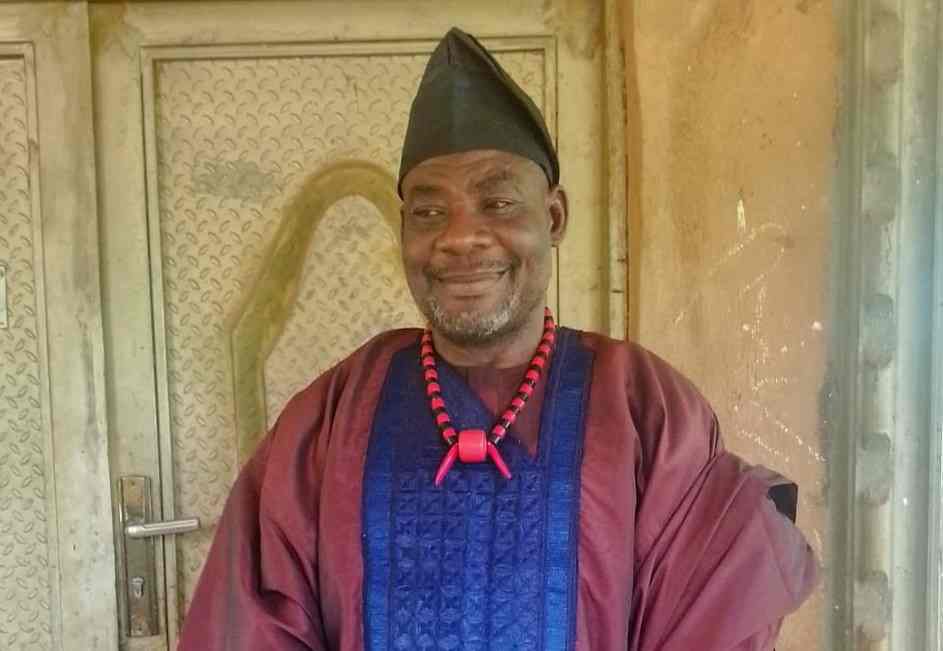
- Says Voters Should Judge Him By Record, Not Slogans
- Promises Accessible Representation, Quarterly Town Halls
By Iduh Onah
AFRICAN Democratic Congress (ADC) candidate for Okpokwu State Constituency in the Benue State House of Assembly, Hon. Stephen Ejembi Ola, has pledged to make accountability, grassroots engagement and realistic representation the central props of his campaign, warning voters against politicians who promise projects beyond the constitutional powers of a legislator.
Ola, a former federal public servant who spent nearly three decades in service before retiring, said his decision to enter elective politics was driven by a desire to continue serving his people rather than by a quest for political status.

“Retirement from public service did not mean retirement from service to my people,” Ola said in an interview with National Record.
“I have spent a significant part of my life working within government systems, and that experience has shown me both what government can do and where it often fails the ordinary citizen,” Ola said, adding that he was seeking to move “from one form of service to another,” just as he stressed that his candidacy was not about acquiring a political title.
Ola also rejected the idea that his public-service résumé should automatically earn him voters’ trust, saying credibility must be established through evidence and accountability. “Trust should never be demanded simply because somebody has a résumé,” he said. “It must be earned.”
The candidate said that if elected he would remain open to scrutiny by constituents, contesting that “representation must be accountable to the people, not merely to the politician.”
His emphasis on accountability extends to his rejection of the familiar political description: “tested and trusted,” which he said should not be used as a substitute for evidence.
“‘Tested and trusted’ should never be a political decoration,” Ola said, and asked rhetorically: “Tested by whom? Trusted for what? Those are legitimate questions.” He, instead, urged voters to examine his years in public service, community engagements and responsibilities undertaken before deciding whether he deserves their support.
“I am not asking anybody to accept a slogan in place of evidence,” he said. “Let the record speak, and let the people make the judgement.”
Limits of Legislative Power
Ola acknowledged that some of the development needs highlighted in his campaign — including roads, water, healthcare and education — cannot simply be delivered by a state legislator acting alone. According to him, candidates have a responsibility to explain the actual powers of the office they are seeking rather than presenting themselves as executives capable of personally delivering every project.
“No legislator should pretend to be a contractor or governor,” Ola said, explaining that the State House of Assembly has defined constitutional responsibilities. According to him, a legislator’s role is to “make laws, provide effective oversight, influence policy and budgetary priorities, and constantly draw government attention to the needs of my constituency.”
Where projects require executive action, he said, he would use “the legitimate instruments available to a legislator” to pursue them.
Ola said campaign promises become misleading when candidates claim powers they do not possess. “Representation is not about making every promise imaginable,” he said. “It is about identifying priorities, pursuing them persistently and reporting back to the people.”
Youth Development and Football
Youth development is another major component of Ola’s campaign, with his manifesto proposing initiatives including mini-stadia, youth leagues, coaching, starter kits and education support.
He said his interest in football was partly rooted in personal experience, recalling the challenges faced by young people with talent but limited access to equipment, structure and opportunity. “Football taught me discipline, teamwork, resilience and how to respond to failure,” he said.
But Ola said his youth agenda goes beyond sports, arguing that the larger challenge is to translate the energy and talent of young people into productive opportunities.
“The larger question is how we turn the energy and talent of our young people into skills, employment, enterprise and productive citizenship,” he said.
He acknowledged that though his proposals are ambitious but argued that ambition must be accompanied by structure and accountability. “I am not saying one person will personally finance every programme,” Ola said, proposing partnerships and efforts to secure legitimate government and institutional support, alongside constituency opportunities.
“We must also be realistic about what belongs to government, what belongs to private partners and what the community can contribute,” he said. “The key is to move from promises to workable programmes.”
Quarterly Town Halls
Ola also promised a more direct system of communication with constituents if elected, including quarterly town hall meetings and ward-level youth liaisons.
He said the town halls would give constituents opportunities to question their representative, raise complaints and receive updates on his activities. “Representation should not end after an election,” he said, adding: “A quarterly town hall creates an opportunity for constituents to ask questions, raise complaints and hear what their representative has been doing.”
He said ward-level youth liaisons would provide another channel for communication because “communication cannot always wait for a formal meeting.”
“If I say I represent the people, they must be able to reach me and, importantly, question me,” he said, adding that he would also welcome criticism rather than surround himself with supporters unwilling to challenge him. “Nobody is perfect,” he said. “A representative who surrounds himself with people who only praise him will eventually lose touch with reality…I would rather have people point out my shortcomings while there is still time to correct them,” he added.
Ola’s closing message was a rejection of sweeping promises and an appeal for voters to judge him by measurable performance. He said constituents should expect accessibility, accountability and a willingness to listen, but warned that he would not claim to have the power to solve every problem immediately.
“I cannot promise that every problem will disappear overnight,” he said. “That would be dishonest.”
Instead, he pledged to take constituents’ concerns seriously, pursue them within the powers of the Assembly, communicate his actions and allow voters to assess his performance.
“In the end,” Ola said, “I would rather be remembered for what I accomplished than for how loudly I campaigned.”
The full text of the interview will be out on Monday, November 2, 2026.
