


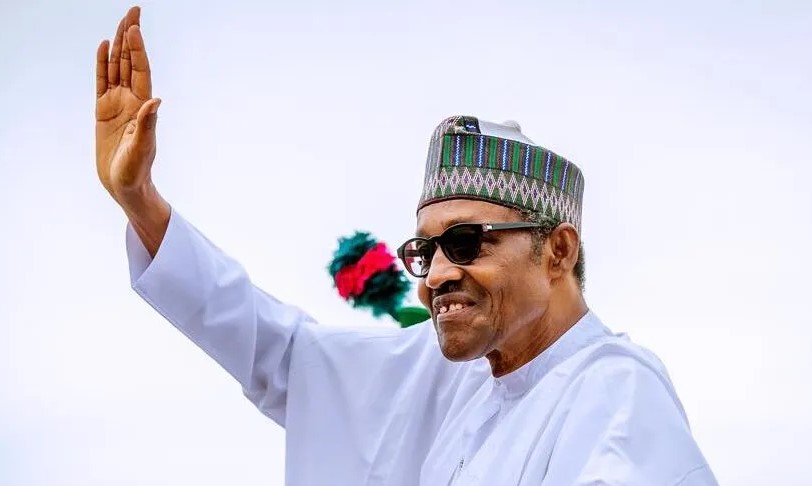
THE NIGERIA Labour Congress (NLC) has expressed deep sorrow over the death of former President, Major General Muhammadu Buhari (retd.), who passed away at a London hospital at the age of 82.
In a press statement titled: “BUHARI PUT THE COUNTRY FIRST”, and signed by its President, Comrade Joe Ajaero, the NLC extended condolences to Buhari’s family, particularly his wife, Hajiya Aisha, as well as his friends and associates.
The Labour Centre acknowledged that Buhari’s demise came as a shock, given his seemingly robust health in recent years despite his well-documented medical challenges during his first term as civilian president.

Reflecting on his legacy, the NLC noted that Buhari served Nigeria with a strong sense of duty, driven by his belief that the country needed urgent repair.
Noting that his leadership spanned two distinct phases: first as a military head of state in the 1980s, and later as a democratically elected president from 2015 to 2023.
The statement acknowledged mixed perceptions of his tenure, with some praising his unwavering commitment to Nigeria’s sovereignty and dignity, while others criticized his rigidity.
“Buhari gave his best to a country he strongly felt was in a state of disrepair. He had two chances to fix the country. First, as a young angry military general and second, as a conciliatory civilian president with a fatherly disposition. What the results were are entirely left to history and the individual,” NLC noted.
NLC noted its complex relationship with the late leader as it recalled his harsh policies against workers during his military rule, including mass retrenchments that caused widespread hardship. The statement however highlighted that as a civilian president, Buhari demonstrated a marked shift in approach, ensuring that no federal worker was laid off — even during the economic strains of the COVID-19 pandemic.
“For us in the unions, Buhari came fighting the unions and mass-retrenching workers leading to indescribable suffering during his tenure as a military head of state.
“However, as a civilian president, Buhari saw to it no worker was laid off (not even during the Covid-19 pandemic). He repeatedly gave facilities to state governments to clear the backlogs of salaries and pensions as well as to enable them regularly pay salaries (although some governors betrayed this trust).
The centre also acknowledged that Buhari’s administration facilitated financial support to state governments to settle salary and pension arrears, a policy the NLC said some governors misused by frittering away the funds.
Despite increasing fuel prices, Buhari resisted pressures to privatize refineries or devalue the naira, a stance the NLC interpreted as a defence of workers’ interests against extreme market-driven policies.
“In the late President therefore we have lost a leader who corrected his mistakes against workers, during his second coming; who stood with the people and country, a leader who truly put the country first no matter the cost,” the statement read.
The NLC concluded by praying for Allah’s forgiveness and mercy upon the former president, wishing him eternal peace.
Buhari’s death has sparked nationwide reflections on his legacy, with many Nigerians divided on his impact but largely united in acknowledging his resolute, if controversial, leadership style.
