


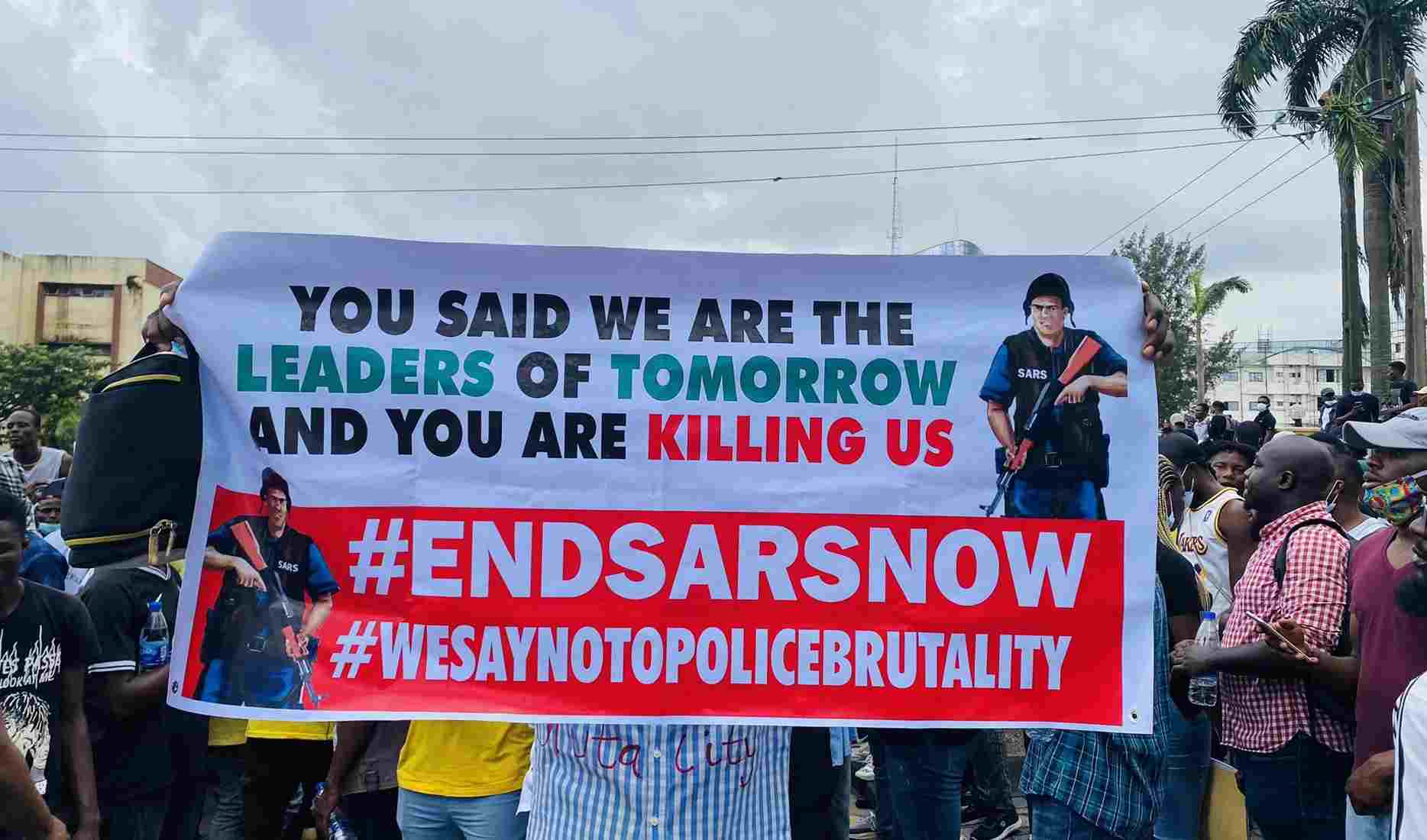
THE WORKERS’ Rights Campaign (WRC) has called on Nigerian workers and youths to unite in a renewed struggle against police brutality, bad governance and what it described as the exploitative system that continues to produce them, six years after the 2020 #EndSARS protests.
In a statement on Tuesday to mark the sixth anniversary of the October 20, 2020 killings associated with the #EndSARS protests, the group described the uprising as an “epochal struggle” led largely by working-class and middle-class youths demanding an end to police brutality and broader systemic injustice.
Signed by WRC Chairperson, Frances Akinjole, and Secretary, Bàbá Ayé, the statement also honoured young Nigerians who lost their lives during the protests, saying they had stood up for justice and demanded constitutional freedoms including freedom of movement, expression and peaceful assembly.

The campaign urged working class youths to become more actively involved in trade unions and to challenge union leadership to deploy the collective power of workers in confronting the country’s economic and political crises.
According to the WRC, one of the major lessons of the 2020 rebellion was the potential power that could emerge from combining mass youth mobilisation with organised working-class action.
The group recalled that Nigerian trade unions had announced a general strike for September 28, 2020, but withdrew the action at the last minute. It said leaders of the two major trade union centres at the time had expressed concern that the strike could create revolutionary pressures, while challenging the left and what they described as “radical civil society” to seize the moment and mobilise against the system.
The WRC said the African Action Congress and Take-It-Back movement subsequently mobilised around the October 1 nationwide protest before the killing of a young man by police in Ughelli, Delta State, on October 4, 2020, triggered a fresh call for mass action.
It credited Omoyele Sowore, identified in the statement as convener of the Take-It-Back movement and National Chair of the AAC, with immediately calling for mass resistance against police brutality and for an end to SARS.
The campaign said the mobilisation subsequently included activists from Take-It-Back, Socialist Workers League and others at the Nigeria Police Force headquarters in Abuja.
The group argued that the absence of the working class as an organised force distinguished the EndSARS protests from the January 2012 #OccupyNigeria uprising.
While acknowledging that many rank-and-file workers participated in the EndSARS protests, particularly in working-class communities, the organisation said individual participation could not substitute for coordinated industrial action by the trade union movement.
“General strikes, synchronised with mass upheavals on the streets,” the group said, represented the greatest potential power available to popular classes against the ruling class.
The organisation therefore called on working class youths to bridge what it described as the gap between class and generation.
It urged young workers to participate actively in establishing and strengthening trade unions in their workplaces, while challenging trade union bureaucracies with ideas capable of advancing what it called the “revolutionary potentials” of the present generation.
WRC also encouraged young people to see themselves not only as members of a generation demanding change, but as workers with collective power to organise and fight for their interests.
WRC said its appeal was particularly urgent given the economic hardship facing Nigerian workers.
It noted that the sixth anniversary of the October 20, 2020 killings was being observed at a time when the Nigeria Labour Congress (NLC) had issued a strike ultimatum to the Federal Government over the hardship associated with the removal of the fuel subsidy and the inadequacy of the national minimum wage.
The WRC called on working-class youths to hold the NLC and other trade unions accountable and to press them to sustain the struggle until workers’ demands are achieved.
The organisation maintained that the EndSARS experience should not be remembered solely as a protest against the now-disbanded Special Anti-Robbery Squad, but as part of a broader struggle over governance, economic conditions, civil liberties and the distribution of political and economic power in Nigeria.
Reflecting on the significance of the anniversary, the WRC invoked the writings of Frantz Fanon, arguing that every generation must identify and fulfil its historical mission.“The mission of this generation must be the unalloyed struggle for liberation,” the group declared, urging workers and youths to pursue that mission through sustained collective struggle.
