


AS A TWO-WEEK ceasefire between Iran and the United States nears its expiration on Wednesday, Iranian officials have sent conflicting signals about participating in a second round of peace talks, publicly expressing deep distrust of Washington while privately acknowledging diplomatic progress mediated by Pakistan.
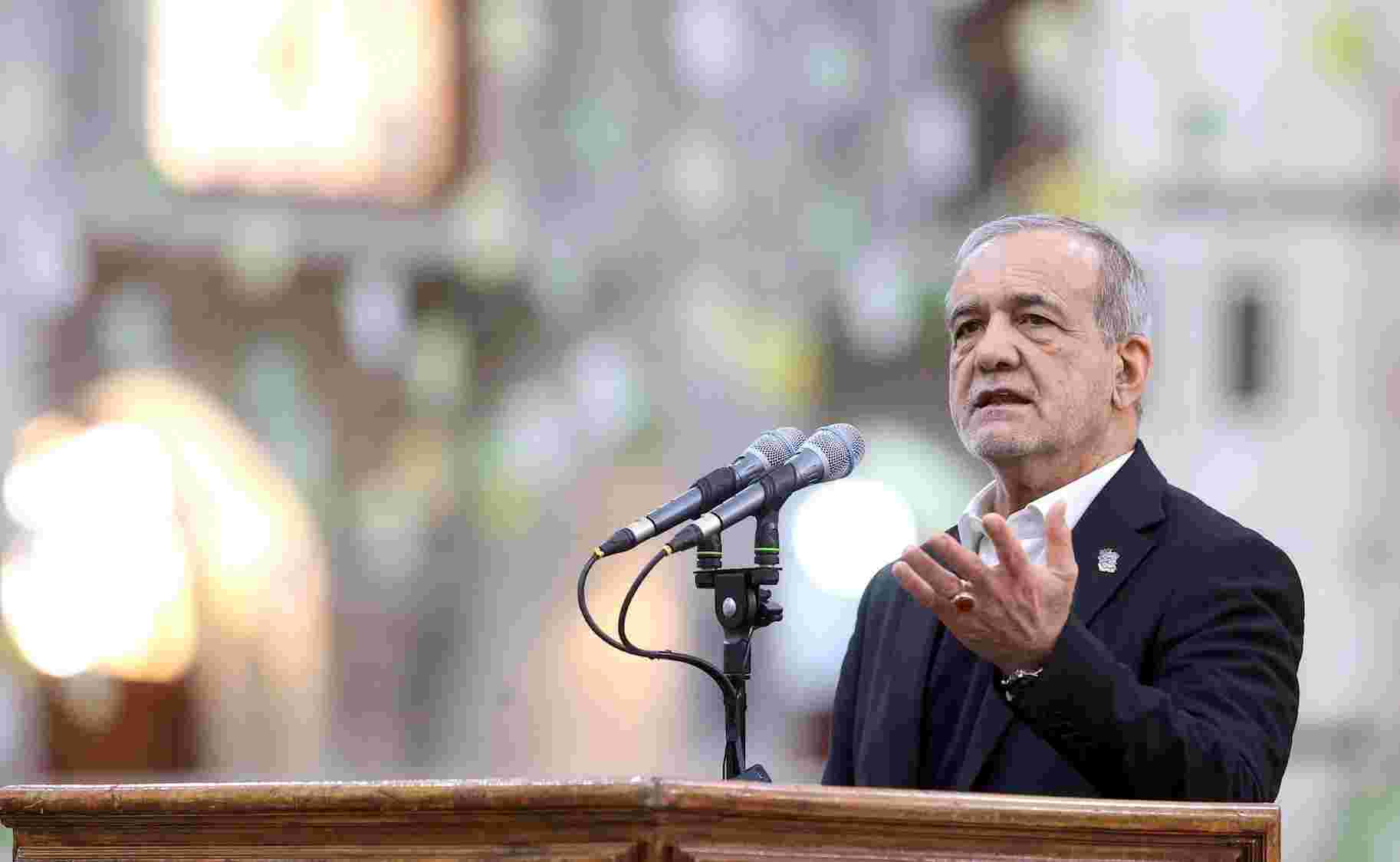
President Masoud Pezeshkian, speaking through state news agency IRNA on Monday, stressed that all rational diplomatic paths should be explored to reduce tensions with the U.S. However, he immediately cautioned that “vigilance and distrust” in any interaction with Washington remain an “undeniable necessity,” accusing the U.S. of “repeating previous patterns and betraying diplomacy.”
His remarks followed an earlier, more definitive stance from Iranian state TV, which – citing an unnamed source – ruled out a new round of negotiations due to what it called the U.S.’s “excessive and irrational” demands and shifting positions.
The immediate trigger for the diplomatic whiplash is a U.S. naval blockade of Iranian ports, which Iran has countered by tightening its control over the Strait of Hormuz – a chokepoint for roughly one-fifth of the world’s oil supply.
On Sunday, U.S. Marines boarded an Iranian-flagged cargo ship after a six-hour standoff, disabling its engines. Iran condemned the action as “armed piracy,” while the U.S. accused Tehran of violating the existing ceasefire.
Shipping data showed traffic through the strait at a virtual standstill, with only three crossings in 12 hours, helping push oil prices up 3–4% on Monday.
Despite the public hostility, a senior Iranian official told Reuters on Monday that Tehran is “positively reviewing” its attendance at U.S.-led peace talks planned in Islamabad, following behind-the-scenes efforts by Pakistan to end the blockade.
Pakistan’s key mediator, Field Marshal Asim Munir, has reportedly urged U.S. President Donald Trump to lift the naval restrictions, which Munir described as an obstacle to dialogue.
Trump, who announced the two-week ceasefire on April 7 without specifying an exact end time, told the New York Post that Vice President JD Vance would lead a U.S. delegation to Islamabad within hours. Nearly 20,000 security personnel have been deployed in the Pakistani capital in preparation.
Yet significant gaps remain. Iranian Foreign Ministry spokesman Esmaeil Baghaei insisted that Washington is “not serious” about diplomacy and is clinging to “unreasonable and unrealistic positions.”
A senior Iranian source added that Tehran’s missile program and other “defensive capabilities” are non-negotiable. Meanwhile, Trump warned on Sunday that the U.S. would destroy every bridge and power plant in Iran if it rejects American terms, while Iran has threatened to strike power stations and desalination plants in Gulf Arab neighbors if its civilian infrastructure is attacked.
European allies, already frustrated by Trump’s criticism of their lack of support, worry that Washington is pushing for a superficial deal that would require years of complex follow-up talks.
With the ceasefire set to expire at 8 p.m. EST Tuesday (midnight GMT), Trump has signaled he may not extend it, saying, “The blockade is going to remain.”
As of Monday, Iran’s parliament speaker, Mohammad Baqer Qalibaf – who has led Tehran’s negotiation efforts – noted that while some progress has been made, the two sides remain far apart on nuclear issues and control of the Strait of Hormuz.
