


IN HIS 1947 Seminal work, “Path to Nigerian Freedom”, Chief Obafemi Awolowo cautioned in subtle terms that Nigeria’s future liberation from its colonial masters would only be in name, if the Country does not anchor its development on Mass education and intentionally-planned economy.
Awolowo’s concern was that a Nation cannot successfully build a modern democracy or economic prosperity on a foundation of widespread ignorance and uncoordinated wealth creation.
It can be conveniently stated that the deaf ear accorded the policy as envisioned by Chief Obafemi Awolowo ignited the vices of kidnapping, banditry, criminality and senseless bloodbath that has come to be our lot in present day Nigeria.
He opined that education was not just a privilege but a fundamental right and a portent tool to eradicate ignorance, poverty and diseases and to risk abandoning the Masses uneducated would inevitably lead to exploitation and societal breakdown. While the other side of the coin was for a systematically planned economy. He recognised that Nigeria’s multi – ethnic demography required strategic planning to inspire mobility, eradicate poverty and engender harmonious growth devoid of mutual suspicion.

ALSO READ: The United States Of MAGAs, Dreamers And Survivors; By Owei Lakemfa
These ideals of Mass education and structured economic independence championed by Obafemi Awolowo were thought utopian and jettisoned at the inception of independence. However; Awolowo was not deterred, as the Premier of the Western region on January 17, 1955 he ambitiously rolled out the free universal primary education policy in Western Nigeria.
This singular programme transformed the region’s educational and entrepreneurship landscape.
While Obafemi Awolowo introduced free and compulsory primary education in the Western region, the Northern region under Sir Ahmadu Bello focused on reserving western education for children of the feudal elites and local administrators to staff the regional civil service.
Realising the limitations of the Islamic education, the Northern administration in a desperate attempt to salvage the situation launched Mass Adult Education Campaigns, known as ‘Yaki da Jahilci’ or ‘War Against Ignorance’ to increase basic reading and writing skills among the older population without immediately overhauling the youth school system.
ALSO READ: General Tiani: The Arbitrary Detention Of Human Rights Defender, Moussa Tchangari, Must End; By Jibrin Ibrahm
The Eastern region’s attempt of 1957 to launch Universal Primary Education collapsed like a pack of cards due to poor planning, lack of funding and stiff opposition from missionary groups, but this failed voyage did not discourage the Premier, Dr. Michael Okpara.
He re-strategized relaunched a different approach from 1959 to 1966, which witnessed massive budget allocations of up to fifty percent of the region’s annual budget to education, training of teachers, partnered missions to expand grant – aided primary schools and teacher training institutions. The icing was the establishment of a regional University at Nsukka in 1960 through collaborative efforts with the federal government.
For the Middle-Belt, people comprising various minority ethnic groups actively engaged in agitation for self-determination and the creation of a separate Middle-Belt State free from the political dominance of the Hausa/Fulani-led Northern region.
To give voice to their agitations in the 1950’s, these movements presented their grievances and demands for administrative autonomy to the British colonial government’s Willink’s Commission. Grassroots education in the Middle-Belt was championed by Christian Missionary Societies and not by a regional government policy.
ALSO READ: More Watchdogs, Less Accountability; By Lawan Musa Danlami
Why State Police Frighten Nigerians; By Iduh Onah
It can be conveniently stated that the deaf ear accorded the policy as envisioned by Chief Obafemi Awolowo ignited the vices of kidnapping, banditry, criminality and senseless bloodbath that has come to be our lot in present day Nigeria.
In addition; it would have fostered political enlightenment, creating an egalitarian, educated populace that undercuts the power of local elites to use tribe and religion to fracture the Masses to achieve personal unpalatable agenda and it would have equally addressed, Chief Obafemi Awolowo’s fears of “The children you refuse to educate will one day hunt you down”.
Also, the massive sums of cash generated from ransoms transformed kidnapping into a decentralised, highly organized business franchise, coupled with deep- rooted poverty, youth unemployment and the under governed rural forests provided vast safe haven for the network to thrive. The militancy in the Niger Delta that was treated with kid gloves emboldened the deprived demography to irk for alternatives to better their lot.
ALSO READ: Nigeria’s Macabre Dance: Corruption, Ghost Agencies: A Call For Inquiry; By Abadom Lawrence Amechi
When Politics Captures The Civil Service; By Ivo Takor
The individuals engaged in these untoward trades are only responding to years of neglect, venting their frustrations on the State that has denied them actualisation of their dreams and most importantly failed campaign promises turned rhetorical by politicians.
The point of convergence is that if this model was adopted by all the regions it would have eliminated vulnerability to exploitation as an educated and gainfully employed youth population is immune to manipulation. The model would have dismantled the roots of banditry as millions of children would not have been left on the streets to become the next generation of armed bandits and kidnappers.
The concept would have stimulated economic autonomy by promoting optimization of regional resources to fund social infrastructure and minimise the extreme regional poverty that currently gives energy to violent criminality.
In addition; it would have fostered political enlightenment, creating an egalitarian, educated populace that undercuts the power of local elites to use tribe and religion to fracture the Masses to achieve personal unpalatable agenda and it would have equally addressed, Chief Obafemi Awolowo’s fears of “The children you refuse to educate will one day hunt you down”.
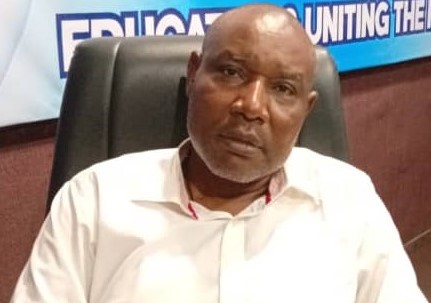
Tiav, a broadcast journalist, writes from Makurdi, Benue State.
