


A FRESH wave of Russian missile and drone attacks has intensified pressure on Ukraine’s already strained air defences while exposing deep shortcomings in civilian shelter infrastructure, leaving residents increasingly fearful and frustrated as the war enters its fifth year.
Russia launched one of its latest large-scale overnight aerial assaults on Ukraine, firing more than 70 missiles and about 280 drones at targets across the country, with Kyiv and the western city of Lviv among the main targets.
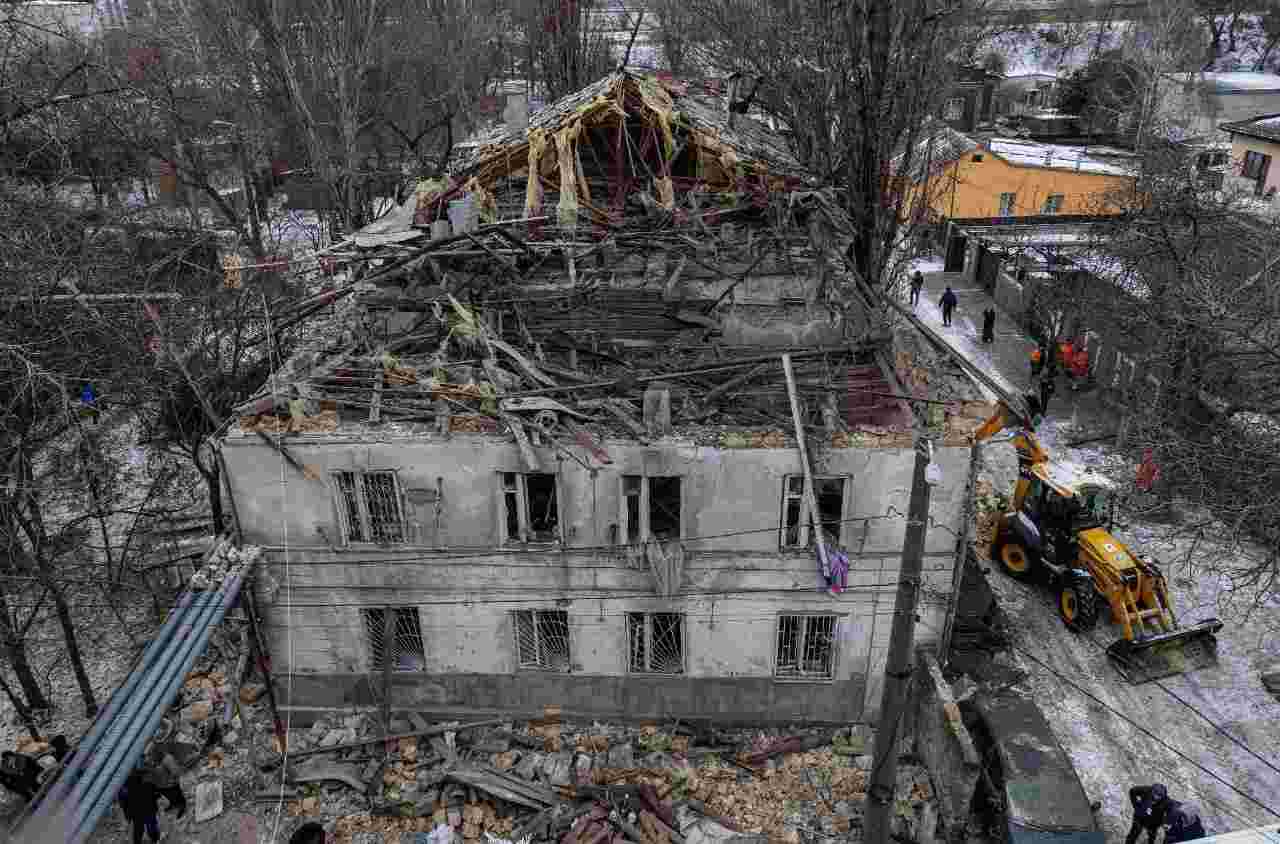
Ukrainian authorities said at least nine civilians, including children, were killed and dozens more injured in the attacks, while homes, schools and other civilian infrastructure suffered extensive damage.

Ukraine’s air force said it intercepted the majority of incoming drones and cruise missiles but managed to destroy only one of nine ballistic missiles, highlighting Kyiv’s growing vulnerability as stocks of U.S.-made Patriot interceptor missiles remain critically low.
President Volodymyr Zelenskiy said the shortage of advanced air defence systems was costing lives and renewed appeals to Western allies to accelerate deliveries of Patriot batteries and interceptor missiles.
The attacks illustrated the evolving nature of Russia’s aerial campaign, which has increasingly relied on ballistic missiles that are far harder to intercept than drones or cruise missiles.
In one of the deadliest incidents, a missile destroyed a house in the Dnipropetrovsk region, killing six people, including three children, while rescue workers searched for others feared trapped beneath the rubble. Ukrainian officials said they suspected Russia had used a North Korean-supplied ballistic missile in the strike.
As the bombardments intensify, another crisis has become increasingly visible in Kyiv: the shortage of safe, accessible bomb shelters for civilians.
Residents across the capital say they are struggling to find adequate protection during increasingly frequent overnight air raids, with many accusing local authorities of failing to prepare the city despite years of missile attacks.
In Kyiv’s Sviatoshynskyi district, residents recently protested outside a school where a bomb shelter has remained under construction since 2023 despite repeated Russian strikes.
Local officials have blamed unfinished utility connections and administrative delays, but many residents say bureaucratic excuses are no longer acceptable as civilians continue to die.
“We are simply being left without protection,” residents complained, expressing anger that projects intended to safeguard civilians remain incomplete while missile attacks have become a near-nightly occurrence.
Although Kyiv authorities say the city has more than 4,300 designated shelter facilities, only around 500 meet the standards required for purpose-built bomb shelters.
Many listed shelters are reportedly locked, inaccessible, structurally inadequate or unsuitable for prolonged stays, forcing thousands of people to rely on metro stations whenever air raid sirens sound.
The capital’s underground railway system has become the city’s most dependable refuge, with tens of thousands of residents spending nights on station platforms as missiles and drones approach. Even so, the metro network has struggled to cope with the growing numbers, with reports of overcrowding, damaged facilities and instances in which people were denied entry because of capacity constraints or disputes over bringing pets into shelters.
The mounting pressure on both Ukraine’s air defence network and civilian protection systems comes as Russia continues to escalate long-range attacks despite relatively limited changes along the front lines. While Moscow denies deliberately targeting civilians, Ukrainian officials say the repeated strikes on residential neighbourhoods and public infrastructure demonstrate a strategy aimed at wearing down the country’s population.
For many Ukrainians, the attacks have transformed daily life into a routine of interrupted sleep, hurried trips to underground shelters and growing uncertainty over whether adequate protection will be available when the next air raid alert sounds.
As missile attacks become more frequent and increasingly difficult to intercept, residents say the country’s survival depends not only on additional Western air defence systems but also on urgently expanding safe shelters for civilians across the capital and beyond.
