


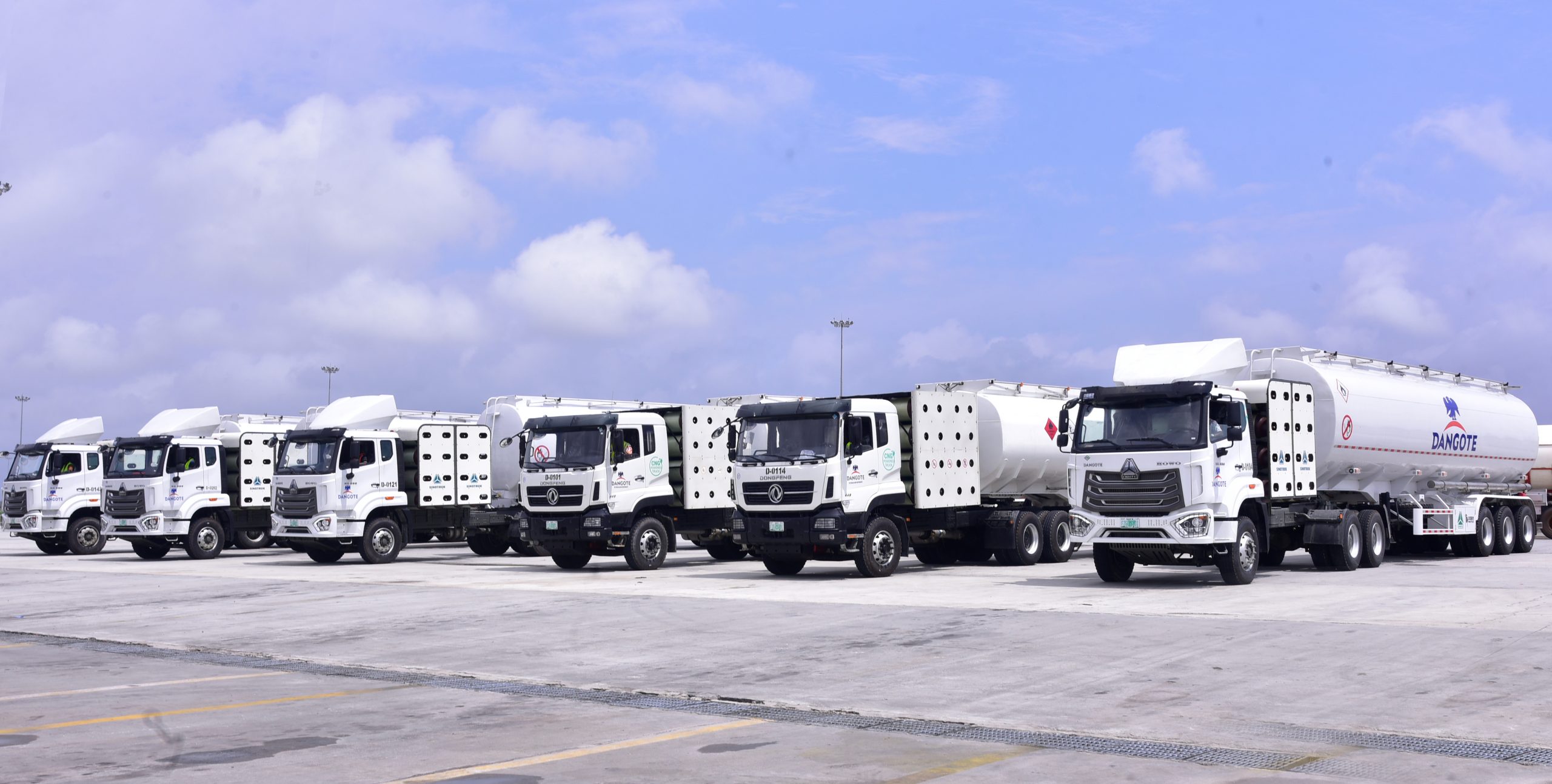
THE RECENT face-off between the Dangote Refinery and NUPENG has once again exposed a fault line running through Nigeria’s labour relations: the tension between protecting workers’ rights and safeguarding economic stability. In this dispute — over unionisation, employment practices and the deployment of CNG trucks for fuel distribution — both sides have just causes. Yet, neither can ignore the consequences of their actions on everyday Nigerians, who often suffer most in the crossfire.
Unions are essential guardians of workers’ rights. They give voice to the worker who might otherwise be silenced by corporate power. NUPENG’s allegation that Dangote is recruiting drivers under conditions that force them to renounce union membership strikes at fundamental labour protections. As reported by Daily Times Nigeria, “To us, amassing wealth on the basis of enslavement and depriving workers of a union and voice amounts to creating filthy wealth.”
In the balance between workers’ rights and national interest, one thing is clear: neither side should allow their rhetoric to degrade their responsibility. Unions must not treat strikes as a routine weapon without considering the real human cost. Employers must not erect walls around labour rights under the guise of innovation or efficiency. And the government, as both arbiter and protector, must ensure the law serves the vulnerable, not only the powerful.
On the other hand, one cannot ignore that industrial actions — even those motivated by legitimate grievances — carry costs beyond boardrooms and union halls. In the case of Dangote vs NUPENG, the specter of fuel scarcity loomed large, with fears of inflated transport and commodity prices. The Vanguard reported that the Memorandum of Understanding (MoU) signed between Dangote management and NUPENG promises that “unionisation of employees must be completed between September 9 and 22, 2025 … no worker will be victimised for participating in the strike or supporting unionisation … both parties will report back … after the process concludes.”

ALSO READ: Corrupt Nations And The Rage Of The Gen Z Generation; By Abadom Lawrence Amechi
There is something deeply troubling about rhetoric that frames union action as heroism when it corresponds with relief for workers, yet as sabotage when it threatens the economic equilibrium. On Pulse Nigeria, Dr. Inuwa, an activist, made this point sharply: “The okada rider in Enugu, the pepper seller in Osun, the teacher in Kaduna, and the mechanic in Port Harcourt will bear the brunt … This is not a fight for justice — it is a direct attack on the Nigerian people.”
These are not empty metaphors. When union‐employer deadlocks lead to strikes, what follows is often fuel queues, price hikes, disruptions in transportation, increased cost of goods and eroded purchasing power for the poor. In a country where many live daily from hand-to-mouth, the impact is immediate and harsh.
Dangote’s own assurances, meanwhile, have tried to draw a different picture. According to Badagry Today, Dangote Refinery’s spokesman, Anthony Chiejina said: “There is no fuel shortage; everything is going on as normal,” insisting operations have not been disrupted by the strike action. Such statements serve two functions: to calm nerves and to preserve confidence in a refinery seen by many as a beacon of hope for energy independence.
ALSO READ: When The Rich Roars: The Dangote-Nupeng Face-Off; By Owei Lakemfa
Yet, even the best intentions are not enough if lived realities diverge. Unions have a constitutional and moral right to organise. Management too has a duty under law and in practice to respect those rights. As Vanguard quoted Dangote’s MD, Sayyu Dantata: “The management is not averse to unionisation. We will abide by the provisions of the law and ensure employees who wish to join unions are free to do so without interference.”
So where can the balance be struck? First: transparency. A union’s legitimacy depends not only on its demands, but how those demands are handled in public view. If management is genuinely open, then showing proof of non-interference, allowing free choice and avoiding coercive clauses (like forcing workers to renounce union membership) is essential. The MoU’s detailed stipulations are a step in that direction.
Second: proportionate action. Strikes should be an instrument of last resort. When called, they should be narrowly tailored to grievance, limited in duration, clearly communicated and mindful of the collateral damage to the public. If the economic costs – inflation, supply disruptions – outweigh the possible gains, the strategies must be rethought.
ALSO READ: ‘Oga Yellow, See Your Boys’ And The Israeli Licence, By Hassan Gimba
Third: shared responsibility. This conflict isn’t just between Dangote and NUPENG. The government, civil society and regulatory agencies are all stakeholders. The Mass Action Against Economic Saboteurs (MAAES) issued a warning: “Any industrial action called on such flimsy grounds is not about labour rights but a reckless attempt to destabilise Nigeria and inflict suffering on millions of ordinary citizens.” That sentiment reflects a broader worry: that what starts as unionism can sometimes become economic warfare in disguise.
Nigeria deserves better. The rights of workers should be upheld; economic progress should be protected. May this clash between Dangote and NUPENG teach not only about conflict, but about collaboration — a way forward where dignity, fairness and the common good all rise together.
Finally: accountability. If agreements like the MoU of September 2025 are to mean more than words, they must be enforced. If workers are victimised; if unionisation processes are undermined; if alternate unions are imposed – then the credibility of every party involved erodes. NUPENG’s concern that workers signing up for the CNG-driven trucking scheme are compelled to renounce unions must be addressed transparently.
ALSO READ: 2027: Premature Political Campaigns; By Jibrin Ibrahim
In the balance between workers’ rights and national interest, one thing is clear: neither side should allow their rhetoric to degrade their responsibility. Unions must not treat strikes as a routine weapon without considering the real human cost. Employers must not erect walls around labour rights under the guise of innovation or efficiency. And the government, as both arbiter and protector, must ensure the law serves the vulnerable, not only the powerful.
Because at the end of the day, it is ordinary Nigerians — street vendors, public servants, drivers, patients, students — who bear the brunt when the conflict lingers. It is their suffering that signals when rights are being respected or crushed.
Yes, unions fight for what is just. Yes, Dangote is pioneering projects that could lessen Nigeria’s energy dependence. But justice without responsibility, innovation without compassion, rights without consequence — these are unstable foundations for a nation trying desperately to grow.
Nigeria deserves better. The rights of workers should be upheld; economic progress should be protected. May this clash between Dangote and NUPENG teach not only about conflict, but about collaboration — a way forward where dignity, fairness and the common good all rise together.
