


By Amos Aar
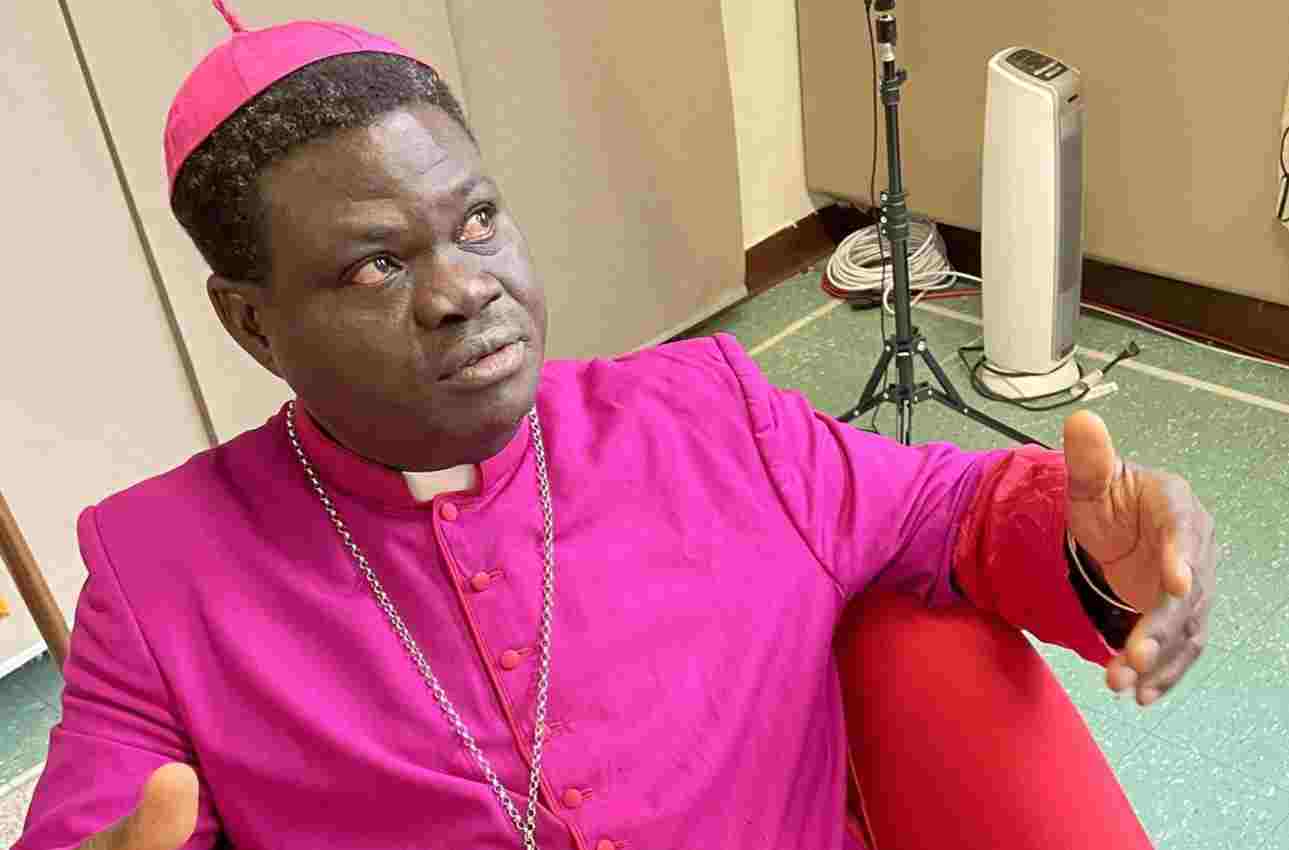
BISHOP Wilfred Anagbe of the Catholic Diocese of Makurdi has painted a grim picture of the escalating violence and persecution faced by Christians in Nigeria.
Addressing the U.S. Congress House Committee on Foreign Affairs, Africa Subcommittee in Washington DC on Wednesday, Bishop Anagbe called for urgent international intervention to halt what he described as a systematic effort to eliminate the Christian identity and faith in Nigeria.
Bishop Anagbe who oversees one of the four Catholic dioceses in Benue State, emphasised the deteriorating security situation in the Northern Nigeria, and particularly North Central Nigeria, where Christian communities face relentless attacks by militant Fulani herdsmen.
“Nigeria, and eventually my diocese and the state of Benue, have become, in recent years, one of the most dangerous and insecure places for Christians,” he stated in viral video.
Stating that with approximately two million Catholics under his care, Bishop Anagbe detailed how armed groups have been invading villages, killing priests, displacing entire communities, and taking over ancestral farmlands.
The violence, he argued, is not just random but part of a broader agenda to Islamise the North Central region of Nigeria.
“They are taking over the places! So, you clearly see an expansionist approach and Islamic culture. And then they are making the people now flee and leave their villages, and they conquer it,” Bishop Anagbe lamented.
He bemoaned that Nigerian Christians are facing what he termed “a church under Islamist extermination.” According to him, the violence is fuelled not only by religious extremism but also by political and economic motives. He described how Fulani militants, acting as mercenaries, are systematically driving Christian farmers off their fertile land, replacing them with armed settlers who erase the original identity of these communities.
“Militant Fulani herdsmen are terrorists destroying society. They steal and vandalise. They kill and boast about it. They kidnap and rape. And they enjoy total impunity from the elected authorities,” he declared.
Despite numerous attacks, he said, Nigerian security forces have largely failed to protect the affected communities. Requests for military or police assistance often go unanswered, leaving villages defenceless against the ongoing massacres.
“At the end of 2024, several villages were warned of upcoming violence. The leaders called the police for defence ahead of time, but they did not come. And the Christian massacres, almost customary, took place, killing hundreds in Plateau and Benue,” he recounted.
The humanitarian impact of the violence, he said, is staggering, noting that millions of people, including children and the elderly, have been forced into makeshift Internally Displaced Persons (IDP) camps, where they live in dire conditions.
“In Benue State, in Makurdi Diocese alone, I have about nine camps. Nine!” he stressed.
He said while visiting one of these camps on Ash Wednesday (March 5, 2025), he witnessed the despair of thousands who have lost everything: homes, livelihoods, and loved ones.
He criticised the Nigerian government’s approach to addressing the crisis, warning that relocating displaced communities without restoring their ancestral lands would only prolong their suffering.
“If you resettle them to other camps or build places for them, what happens with the ancestral lands? Who takes care of them? This is where I feel the government is complacent on this issue,” he argued.
Bishop Anagbe made a fervent plea to the United States to officially re-designate Nigeria as a “Country of Particular Concern” due to religious persecution.
He urged U.S. policymakers to use their diplomatic influence to ensure the Nigerian government takes decisive action against the ongoing violence.
“Consider that Nigeria can be your ally, but it cannot be one where half the population is in the process of being murderously eliminated,” he warned.
He also called for a partnership between international bodies, the Church, and Nigerians of goodwill to push for peace and justice.
“We are working for a peaceful and prosperous society, and our desperate plight has been set aside by U.S. policy for too long, to the cost of thousands of lives,” he said.
Bishop Anagbe’s testimony was not just a report of suffering but a call for accountability. He condemned Nigerian leaders who, in his view, have enabled the violence through silence or complicity.
“It is not just a conspiracy of silence; it is aiding, abetting, and supporting these terrorists to keep doing their work,” he said firmly.
“I implore this August body to insist on the return and rehabilitation of all the IDPs to their ancestral lands and not to relocate them to other constructed camps elsewhere.
“We have to let the people go back to their homes and help them rebuild their lives,” Bishop Anagbe pleaded.
