


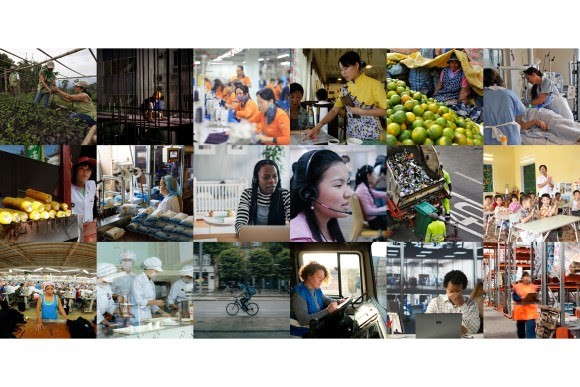
New global report shows how poorly designed or managed work, including high demands, long hours, and job insecurity in poorly managed workplaces are damaging workers’ health and the economy.
MORE than 840,000 people die each year from health conditions linked to psychosocial risks, such as long working hours, job insecurity, and workplace harassment, according to a new global report by the International Labour Organization (ILO). These work-related psychosocial risks are mainly associated with cardiovascular diseases and mental disorders, including suicide.
The report also finds that these risks account for nearly 45 million disability-adjusted life years (DALYs) lost annually, reflecting years of healthy life lost due to illness, disability, or premature death, and are estimated to result in economic losses equivalent to 1.37 per cent of global GDP each year.

The report, The psychosocial working environment: Global developments and pathways for action, highlights the growing impact of how work is designed, organized, and managed on workers’ safety and health. It warns that psychosocial risk factors—including long working hours, job insecurity, high demands with low control, and workplace bullying and harassment—can create harmful working environments if not properly addressed.
What is the Psychosocial Working Environment?
The report introduces the psychosocial working environment as the elements of work and workplace interactions related to how jobs are designed, how work is organized and managed, and the broader policies, practices and procedures that govern work. These elements, both individually and in combination, affect workers’ health and well-being, as well as organizational performance.
To better understand psychosocial risks, the report proposes three interrelated levels of the working environment:
First, the nature of the job itself, including demands, responsibilities, alignment with workers’ skills, access to resources, and the design of tasks in terms of meaning, variety, and skill use.
Second, how work is organized and managed, covering role clarity, expectations, autonomy, workload, work pace, and supervision and support.
Third, the broader workplace policies, practices and procedures that govern work. These include employment and working time arrangements, the management of organizational change, digital monitoring, performance and reward processes, OSH policy and management systems, procedures to prevent violence and harassment at work, and mechanisms for worker consultation and participation.
The report emphasizes that psychosocial risks arise from these elements and can be prevented through organizational approaches that address their root causes. It also highlights the importance of integrating psychosocial risk management into occupational safety and health systems, supported by social dialogue between governments, employers, and workers.
How the ILO Estimated 840,000 Deaths
The figure of over 840,000 deaths per year was estimated using two key sources of evidence. The first is data on the global prevalence of five major psychosocial risk factors at work: job strain (high demands combined with low control), effort–reward imbalance, job insecurity, long working hours, and workplace bullying and harassment. The second is scientific research showing how these risks increase the likelihood of serious health conditions such as heart disease, stroke, and mental disorders, including suicide.
These risk levels were then applied to the latest global mortality and health data from the World Health Organization (WHO) and the Global Burden of Disease (GBD) study to estimate the number of deaths and DALYs attributable to these risks each year. This approach allowed the ILO to quantify both the human and economic burden, including estimating productivity losses reflected in GDP costs associated with healthy life years lost.
In addition, the report synthesizes a broad body of evidence showing that psychosocial risks are linked to a wide range of mental and physical health conditions among workers, including depression and anxiety, as well as metabolic diseases, musculoskeletal disorders, and sleep disturbances.
Widespread Exposure
While many psychosocial risks are not new, major transformations in the world of work, including digitalization, artificial intelligence, remote work, and new employment arrangements, are reshaping the psychosocial working environment. These changes may intensify existing risks or create new ones if not properly addressed. At the same time, they can offer opportunities for improved work organization and greater flexibility, highlighting the need for proactive action.
“Psychosocial risks are becoming one of the most significant challenges for occupational safety and health in the modern world of work,” said Manal Azzi, Team Lead on OSH Policy and Systems at the ILO. “Improving the psychosocial working environment is essential not only for protecting workers’ mental and physical health, but also for strengthening productivity, organizational performance and sustainable economic development.”
By addressing these risks proactively, the report concludes, countries and enterprises can create healthier workplaces that benefit both workers and organizations while strengthening productivity and economic resilience. (ILO News)
