


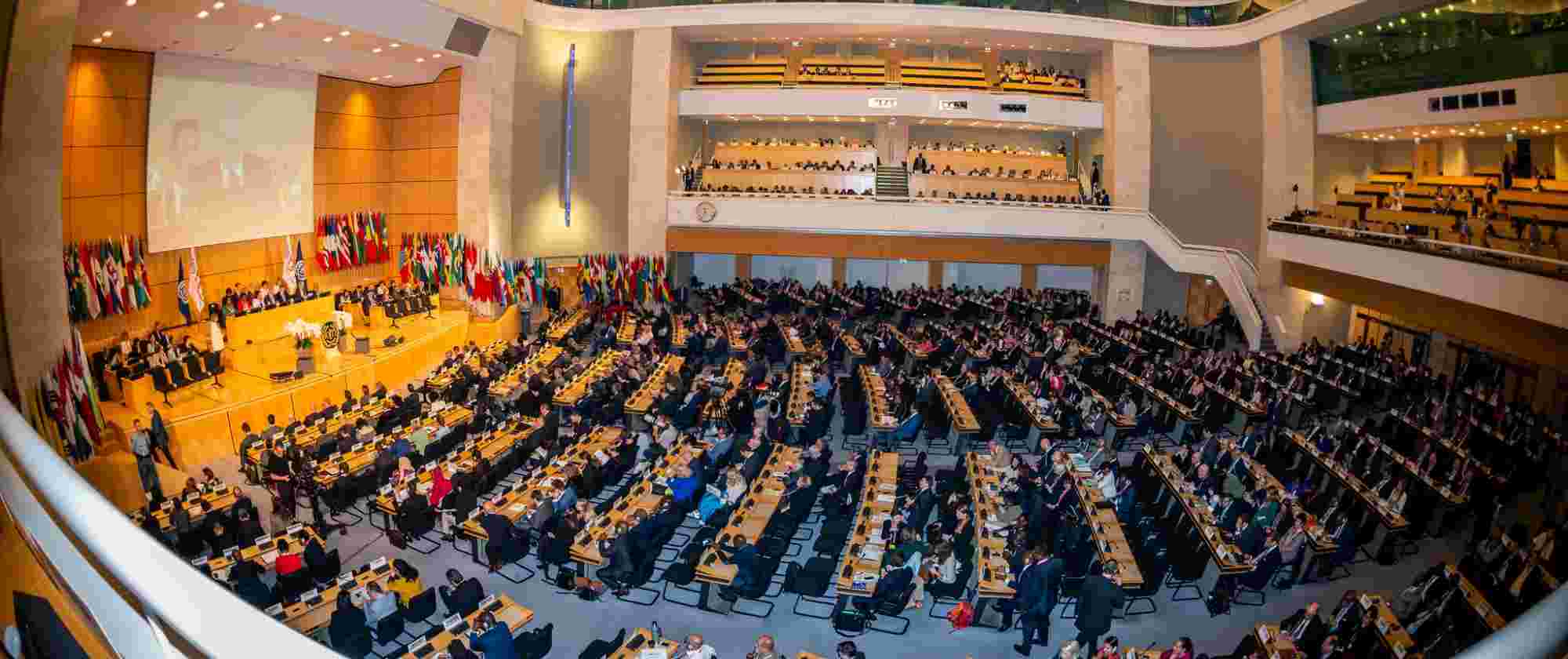
THE INTERNATIONAL Labour Organization (ILO) is set to convene its 114th Session of the International Labour Conference (ILC) in Geneva, Switzerland, from Monday, June 1 to Friday, June 12, 2026, bringing together government officials, employers’ representatives and labour unions from its 187 member states to deliberate on some of the most pressing issues shaping the future of work globally.
Central to this year’s conference agenda are discussions on decent work in the platform economy, social dialogue and tripartism, gender equality in the workplace, and the growing impact of artificial intelligence on labour markets.
The conference, regarded as the ILO’s highest decision-making body, is expected to adopt key recommendations and standards that could influence labour policies across both developed and emerging economies.

According to the official agenda released by the ILO, delegates will engage in a second standard-setting discussion on “decent work in the platform economy,” with draft conventions and recommendations already prepared for deliberation.
The issue has become increasingly significant as millions of workers worldwide, particularly in developing economies, rely on digital platforms for transportation, logistics, freelancing and other forms of gig work.
For Nigeria, analysts say the discussions are particularly timely.
Africa’s largest economy has witnessed rapid expansion in app-based transport services, food delivery operations, digital freelancing and e-commerce logistics, sectors that employ a growing number of young Nigerians but are often criticised for weak social protections, irregular earnings and poor workplace safeguards.
Labour experts believe the outcomes of the conference could influence future Nigerian legislation concerning gig workers, occupational protections and digital labour standards.
The Nigerian government, employers’ associations and organised labour are expected to monitor the deliberations closely as the country grapples with rising unemployment, underemployment and informal sector expansion.
The conference will also examine strategies for advancing gender equality at work, including measures aimed at addressing wage disparities, workplace discrimination and unequal access to opportunities.
Observers note that the issue resonates strongly in Nigeria, where women continue to face barriers in formal employment, leadership representation and access to decent work opportunities, especially within the technology and manufacturing sectors.
Another major focus of the conference is the role of artificial intelligence and automation in reshaping global labour markets.
In a report prepared ahead of the conference, the ILO warned that technological transformation could significantly alter employment patterns and skills requirements across economies.
The organisation stressed the need for stronger investments in lifelong learning and workforce adaptation to prevent widening inequality and exclusion.
For Nigeria, where policymakers are seeking to expand digital skills development and technology-driven entrepreneurship, the AI discussions may provide useful guidance on balancing innovation with worker protection.
Experts have repeatedly cautioned that without adequate training and regulatory frameworks, emerging technologies could deepen job insecurity in vulnerable sectors.
The conference will further deliberate on social dialogue and tripartism, a framework that promotes collaboration between governments, employers and workers in labour policymaking.
Industrial relations stakeholders in Nigeria have long argued that stronger dialogue mechanisms are essential to reducing recurring labour disputes, strikes and tensions over wage negotiations.
In addition, the Committee on the Application of Standards will review member states’ compliance with international labour conventions and recommendations.
The discussions are expected to draw attention to issues such as workplace rights, freedom of association and labour protections in various countries.
The ILC comes at a time when global labour markets are under pressure from economic uncertainty, inflationary trends, technological disruption and shifting employment structures.
The conference is expected to produce resolutions and policy directions that may shape labour governance and employment standards for years ahead.
Nigeria, as a longstanding member of the ILO and one of Africa’s largest labour markets, is likely to pay close attention to the conference’s outcomes, particularly in areas relating to digital employment, labour protections and inclusive economic growth.
