


By Victor Itodo Abuh
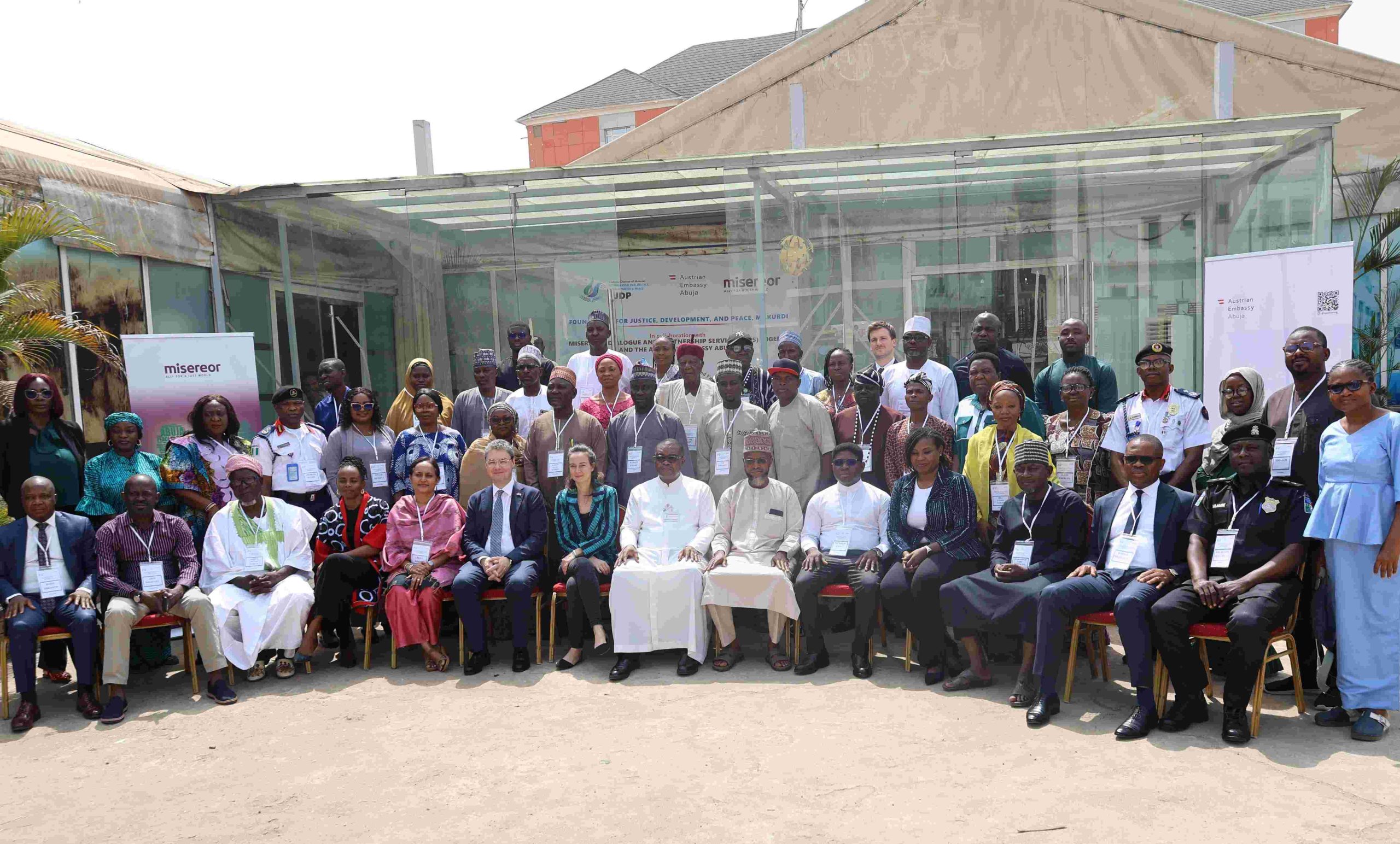
WHEN conflict changes its face, peace must also change its strategy. That was the central message at a three-day stakeholders’ forum held in Abuja to address the escalating violence in Nigeria’s Benue Valley.
In recent years, clashes between farmers and herders have evolved into more coordinated and deadly attacks, leaving scores dead, communities destroyed and thousands displaced. The June 2025 attack on Yelwata, which drew global attention and prompted a presidential visit, underscored the deepening humanitarian and security crisis in the region.

Against this backdrop, the Foundation for Justice, Development and Peace (FJDP), in partnership with Misereor and the Austrian Embassy, launched the Strengthening Community Resilience (SCORE) Programme aimed at addressing the root causes of the crisis.
The Abuja forum sought to remap the conflict landscape, build a shared understanding among stakeholders, strengthen interfaith dialogue, enhance mediation skills and provide a neutral platform for discussion and problem-solving.
Participants included government officials, security agencies, representatives of farmer and herder groups, state peace commissions, as well as traditional and religious leaders from Benue and Nasarawa states. Many emphasised that the dynamics of the conflict have shifted beyond simple resource-based disputes to more complex identity and political dimensions.
A representative of Misereor, Julia Krojer, noted that sustainable peace cannot be built on outdated assumptions. She stressed that evidence-based strategies are critical to addressing the evolving nature of the conflict.
The Australian Ambassador to Nigeria, Peter Guschelbauer, shared lessons from his country’s past security challenges, highlighting the importance of thorough conflict mapping and the effective implementation of targeted solutions in resolving protracted crises.
Religious leaders at the forum identified identity reaffirmation and the “politics of numbers” as significant drivers of violence. They emphasised the need for national reorientation and called on the National Orientation Agency to intensify efforts at promoting unity and social cohesion.
A representative of Jama’atu Nasril Islam added that political actors often exploit crises for personal or partisan gain, urging tolerance and mutual respect as essential ingredients for sustainable peace across the country.
Women, who often bear the brunt of insecurity, also demanded a stronger voice in peacebuilding processes. One case study presented at the forum highlighted the plight of a woman amputee affected by the violence, underscoring the long-term human cost of the conflict and the urgent need for inclusive recovery strategies.
Participants agreed that transforming the Benue Valley from a zone of recurring violence into a community grounded in trust and resilience requires inclusive dialogue, data-driven solutions and strengthened local mediation mechanisms.
As the SCORE Programme takes root, stakeholders expressed hope that a renewed, coordinated and evidence-based approach could chart a new course toward peaceful coexistence in one of Nigeria’s most troubled regions.
