


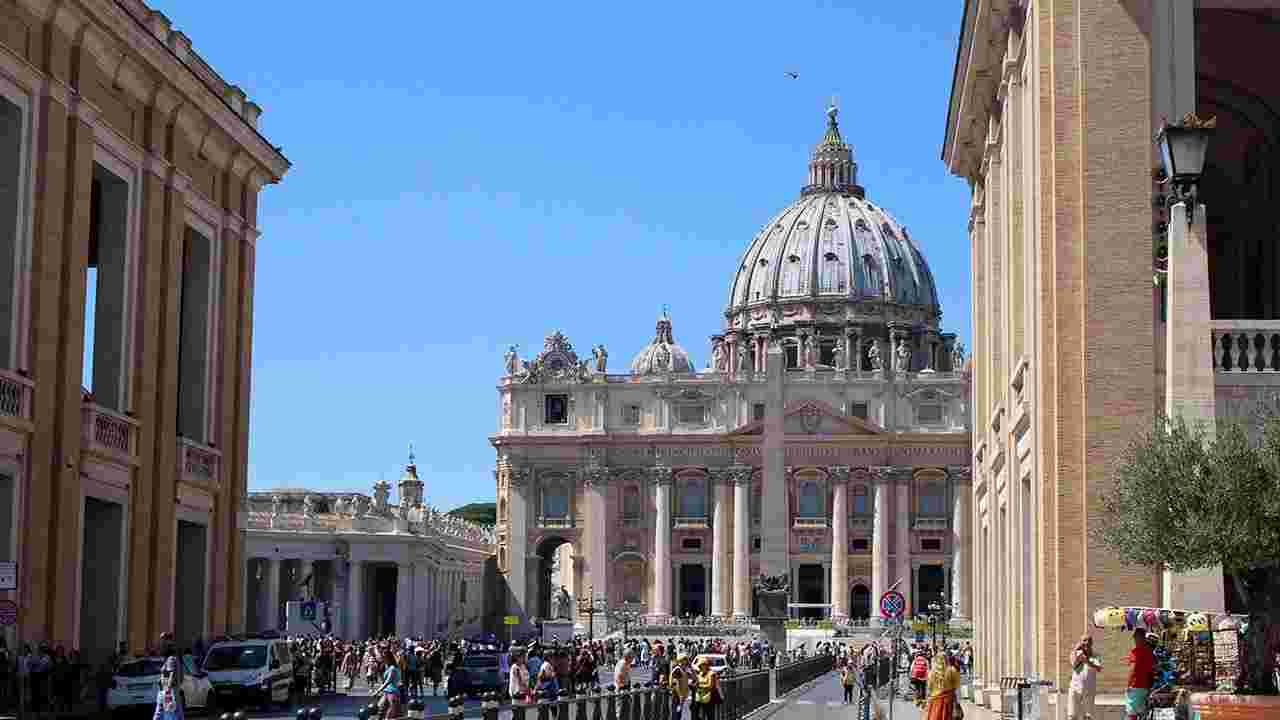
POPE Leo XIV has appointed three distinguished historians from Italy, the United States and Poland as new members of the Pontifical Committee for Historical Sciences, strengthening the Vatican body responsible for promoting research into the history of the Catholic Church and preserving its documentary heritage.
The Vatican announced the appointments on Thursday, August 13, 2026, naming Professor Umberto Longo, Professor Francesco Cesareo and Professor Anna Barańska to the committee.
The appointments bring together scholars with backgrounds in medieval history, higher education and Church history, reflecting the committee’s longstanding role in supporting historical scholarship and encouraging greater understanding of the Church’s past.

Longo, an Italian historian, is director of the Italian Historical Institute for the Middle Ages in Rome. His appointment adds to the committee’s expertise in the study of medieval history, an important area of research for understanding the development of European Christianity and the institutional history of the Catholic Church.
Cesareo, from the United States, is president emeritus of Assumption University in Worcester, Massachusetts. His academic and administrative experience in American higher education brings another dimension to the committee’s international membership.
The third appointee, Anna Barańska, is an associate professor at the Faculty of Humanities of the John Paul II Catholic University of Lublin in Poland. Her appointment further strengthens the representation of Central and Eastern European historical scholarship within the Vatican body.
The Vatican did not announce a specific new project attached to the appointments. Rather, the three historians are joining an institution whose broader mandate is to advance historical research concerning the Church and its documentary heritage.
A Committee With More Than 70 Years Of History
The Pontifical Committee for Historical Sciences dates back to 1954, when it was established by Pope Pius XII. Its origins, however, reach further back into the 19th century.
The committee inherited the tradition of the Cardinal Commission for Historical Studies established by Pope Leo XIII through his August 18, 1883 Apostolic Letter “Saepenumero considerantes”.
For more than seven decades, the committee has played a role in encouraging historical studies connected with the Catholic Church. One of its continuing areas of attention has been the Church’s archival heritage, particularly the collections preserved in the Vatican Archives.
The Vatican Archives contain centuries of documents relating to the history of the Church, the papacy and its interactions with governments, institutions and societies around the world. Access to such records is therefore important not only for Catholic scholars but also for historians seeking to understand broader political, cultural and social developments.
According to Vatican News, the committee has repeatedly been involved in calls for scholars to have greater and better access to archival collections held by the Holy See.
Why the Appointment Matters
For Catholics and historians in Nigeria and across Africa, the appointments are significant because Church history is increasingly studied as part of a global story rather than one centred exclusively on Europe.
The Catholic Church has a long and expanding history in Africa, including Nigeria, where Catholic missions, schools, hospitals, seminaries and lay movements have played important roles in the country’s social and religious development.
Historical research supported by institutions connected to the Holy See can help preserve records and provide scholarly context for understanding how Christianity developed in different regions, including Africa. It can also contribute to the study of the relationships between missionaries and local communities, the growth of indigenous clergy and religious leadership, and the transformation of Catholic institutions over time.
Although Vatican News did not indicate that the three appointments are specifically linked to African Church history, the committee’s international composition underlines the importance of bringing scholars from different academic traditions into the study of the Church’s past.
Leadership of the Committee
The Pontifical Committee for Historical Sciences is currently chaired by Jesuit Father Marek Inglot, while Pierantonio Piatti serves as secretary.
Their work, together with that of the newly appointed members, places historical research within the Vatican’s broader effort to preserve and make sense of its documentary heritage.
The appointments also come at a time when historical scholarship is increasingly benefiting from improved archival access and international academic cooperation. For the Catholic Church, such work can provide a more comprehensive understanding of its institutional history while allowing researchers to examine the past through primary documents rather than relying solely on later accounts.
For the wider academic community, the Vatican’s extensive archives remain an important source for research into religion, diplomacy, politics, culture and society across centuries.
The three new members – Longo, Cesareo and Barańska – will therefore join a committee whose work extends beyond ecclesiastical history in the narrow sense. Its activities contribute to the broader study of the historical forces and institutions that have shaped Europe and the wider Christian world.
