


By Amos Aar
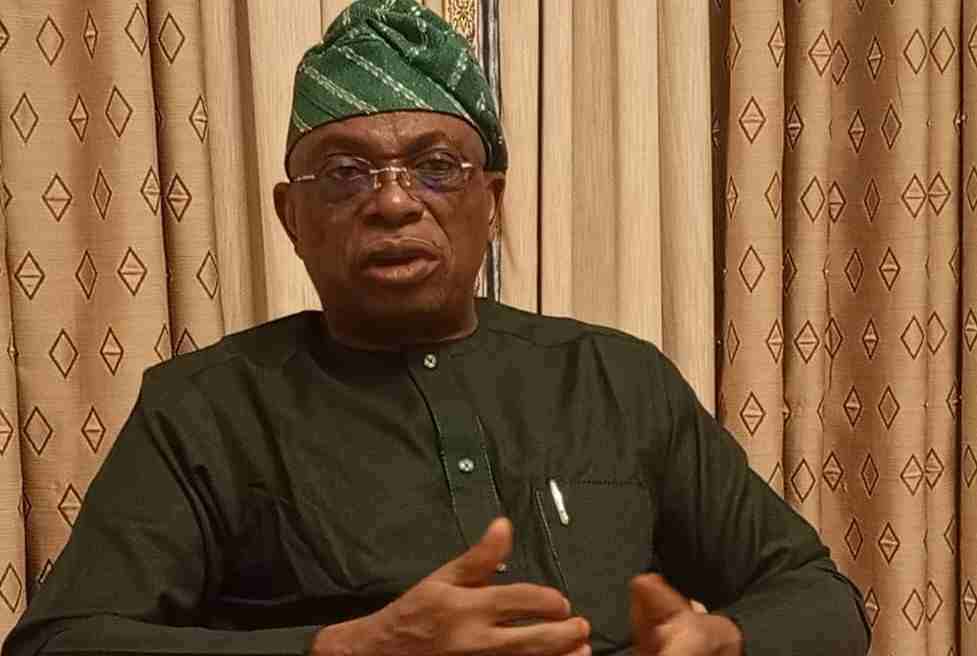
THE MEMBER representing Makurdi/Guma Federal Constituency in the House of Representatives, Hon. Dickson Tarkighir, has, in obvious response to Benue State Governor, Rev. Fr. Hyacinth Alia, declared that the scale of killings and displacements in Benue State amounts to genocide.
Tarkighir, though did not frame his remarks while speaking with journalist as a response to Governor Alia, the content and context of his interaction are laced with innuendos of the governor’s recent remarks on genocide in Benue.

The lawmaker insisted that Benue people do not need anyone to define for them what they have endured for over a decade.
National Record reported recently that Governor Alia, in Abuja at a consultative forum on the protection of the rights of Internally Displaced Persons (IDPs) and Forcibly Displaced Persons (FDPs) organised by the National Human Rights Commission (NHRC), had dismissed claims of “Christian genocide” taking place in Benue State, remarks many described as uncalled for given the mass killings and attacks that have made the state a huge camp of Internally Displaced Persons (IDPs).
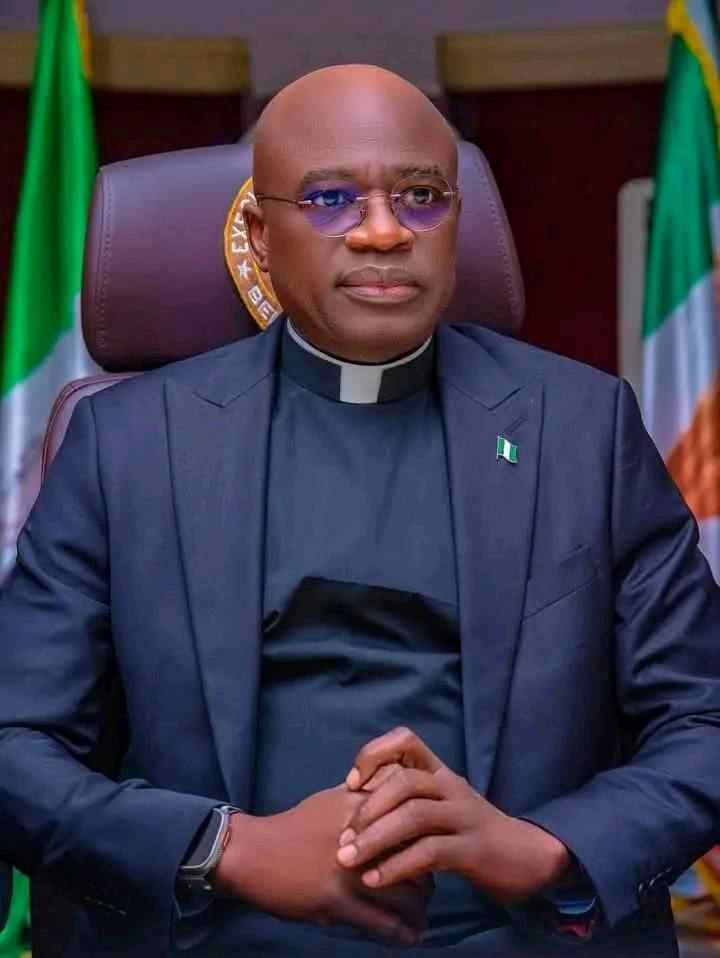
Alia’s remark spurned into a full-scale national debate, drawing reactions from citizens, religious leaders, political groups, and security analysts.
“I am a Reverend Father; so being in governance does not take that away from me. I am still a Reverend Father. I came in as a governor as a Reverend Father; I am working with the fear of God and the compassion of Christianity and humanity and at the end of the day, I’m still going back to the church as a Reverend Father and a good Christian. So that is for the record. We need to understand this.
“In my state of Benue, we don’t have any religious, any ethnic, any racial, any national or state genocide. We don’t have that. Do we have a number of insecurities in the state? Yes, we do. But it is not a genocide. Someone would need to go through there to check the United Nations definitions for this. Have we lost a number of people? Yes. We have at different stages.
“If I have given you a background or the challenges we’ve had many years ago, we’re talking about the agro-pastoralist. And they were talking about the agro-farmers, typical farmers. So, it began like playing, like joke, and then it went over and then just continued to some huge proportions.
“But that does not fit into the parameters of a genocide. So, for those who seek to politicise everything, there is no genocide in Benue State. But we have security challenges in Benue state,” Alia’s controversial remark reads.
The governor, again addressing journalists in Makurdi, after meeting Nobel Laureate, Prof. Wole Soyinka, in an effort to explain his Abuja remark, insisted that he did not deny the killings in Benue, nor did he trivialise the suffering of displaced families.
According to him, his earlier comments were misunderstood. He explained that his use of the phrase “executing their plans religiously” was merely an idiom for “consistently,” not a suggestion of religious motivation. To him, describing the killings as religiously driven misrepresents the complexity of the crisis.
“I never denied that my people were killed. I remain very firm that we have bandits and terrorists who come fully organised to destroy, maim and kill. I have consistently, yes, religiously, stated that their aim is land grabbing. This did not begin as anything religious,” Alia insisted, further arguing that both Christians and Muslims have been victims and cautioned against reducing a multi-layered tragedy to a single narrative.
Tarkighir Provides Context
Speaking with journalists on Sunday, Tarkighir said the state is living through “five internationally recognised elements of genocide” and requires urgent assistance from both the Federal Government and international partners.
“For 15 years, Benue has lived with genocide. We don’t need anybody to define it for us. Seventeen out of twenty-three local governments are under constant attack. People have not been able to farm for 15 years. We need help, and even the Federal Government admits that,” Tarkighir said.
He confirmed ongoing engagements with the United States, noting that American officials are currently in Nigeria “investigating and offering support, including intelligence and possible arms transactions to strengthen military capacity.”
Tarkighir, who explained that he has lived with internally displaced persons for most of his political career, said the prolonged crisis informed his decision to invest massively in scholarships, employment facilitation and livelihood empowerment for constituents.
He said economic hardship and displacement pushed many young people out of school, a situation he sought to remedy through a structured scholarship scheme. “Last year, we awarded 210 students scholarships totalling N7.5 million. This year we increased it to N25 million for 500 students. I think that’s a huge empowerment from last year. The distribution of this money has been hampered by some of the students not having account. About 450 students have already been credited; the remaining 50 will be settled once they submit their UBA details. But we are thinking that once we get into this week, everybody we get it,” he stated.
On empowerment, the lawmaker noted that relocation challenges, caused by a sudden withdrawal of an approved venue, IBB Square, Makurdi by the state government, forced him to distribute materials in phases, but the process has now been fully completed. Beneficiaries received tricycles, motorcycles, grinding machines and sewing machines to support themselves since returning to farmlands remains impossible. “Right now, we have done a hundred percent distribution and our people are quite happy”, he said.
Addressing concerns about job requests, Tarkighir said he began helping young people secure employment into federal institutions as far back as 2015 because many parents were old pensioners, sick or impoverished. “So, I felt that if a child gets a federal job, that family is lifted. That is the motivation,” he said.
Tarkighir also spoke extensively on the political climate in the state, particularly the crisis within the All Progressives Congress (APC). He expressed confidence that the party leadership, including President Bola Ahmed Tinubu, would resolve the conflict ahead of the 2027 elections. “The APC is the biggest party in Africa. I believe the issues will be settled before the polls,” he maintained.
The lawmaker dismissed comparisons being made between the current and previous Benue administrations, arguing that allocations are now much higher across the country. “We should not compare our leaders to past leaders because the challenges first and foremost are different. Now, the resources available to those leaders are also different. Compare Benue with other states receiving the same allocations.
“I remember, in 2007 when I came into politics, the government of Benue State was receiving N2.5 to N2.7billion a month as allocation. In 2015, 2019, 2023, allocation hovered around N6 billion to N6.5 billion. Now, 2023 come out to now, we are receiving 15, 20, 30 billion naira sometimes in a month. So, we should not go back to compare what the other leader didn’t do or did. We should have a pair review mechanism. What is state A, say Nasarawa, doing? What is Kogi doing. What is Taraba doing? Because the allocations this time are the same across states.
“Let me tell you, Benue is number one in terms of allocation in North Central and number 4 or 5 in the whole of the North. So, when we are comparing what is happening in Benue in terms of development, we shouldn’t restrict ourselves to what the past leader did. Let me restrict us to the North because we have the same terrain and this is why. If a kilometre of road costs N3 billion in the South-South, it costs N800 million to N1 billion in the North because the terrains are different, which is why I am restricting us to this Northern geography where we have the same terrain in terms of construction. So, let us go back to the past when the resources were minimal viz-a-viz the demand for those resources as at now that we have so much.
“I went to the National Assembly in 2015-2019. What I was able to achieve at that time my allocation in 2015 was N300 million for my constituency (capital projects) no cash was given to me. In the last budget, I was given N1 billion, capital project”, Tarkigir said.
He went on to detail how the increased allocation was utilised for constituency needs.
“This is what I did with N1 billion: I allocated N550 million for transformers for my federal constituency. Another N200 million for transformers too. So, at the end of the day, we are going to have twenty-two (22) transformers for Makurdi and very soon, they will be supplied and installed.
“So, that’s the difference between now and 2015 when I first went to the National Assembly. Nobody was given N500 million but now I have N1 billion. In that N1 billion, I have put about N300 million for dams in two communities. I put a dam in Ukohol because they don’t have water. Boreholes are not yieldable. I put another dam in Akumba. I put a police station at Kaseyo because of insecurity. We have an electrification project from Gbajimba to Uikpam. When I went to the 8th assembly, we didn’t have enough money to do the magnitude of employment that we just did. The scholarship we did was just for lawyers. This time around, the scholarship is for five hundred students. We have given them N25 million cash.
“So, I am not going to compare my tenure in the 10th assembly to the guy who went there in the 9th assembly. I will rather look at what my colleague in Nasarawa is doing with the resources that he has got from this budget. So, comparing someone who was a governor, for instance, from 2015-2023 with the guy who is governor from 2023 to now is not right. That’s not the analysis we should be having if we really want to develop this state”
On law-making, Tarkighir highlighted his work on the Constitution Review Committee, where he is pushing for local government autonomy, state police and independent state assemblies. According to him, autonomy will revive rural economies and enhance community-level security. “If local governments can receive funds directly, people will return home. And with state police, those who know the terrain can identify threats immediately,” he argued.
Looking ahead to 2027, the legislator asserted that it was premature to declare interest in re-election, though several groups have urged him to return. “For now, we are focused on implementing the 2024 and 2025 budgets. Elections are far ahead,” he said.
Tarkighir called for voter mobilisation among youths and women, urging them to register early and obtain their Permanent Voter Cards. “Your PVC determines your future. It decides your councillor, chairman, state assembly member, House of Representatives member, senator, governor and president. Choose wisely,” he said.
He added that the new security architecture initiated by the President, combined with international collaboration, created a new hope that the state’s security nightmare will eventually end.
