


NIGERIA‘s democracy is captive to two unequal tendencies driven by kleptocratic and utilitarian fringes. The main fringe is anchored on selfish economistic interests, injurious to public good, which prioritises the greed and graft of its elites for primitive accumulation; whilst the subsidiary fringe is anchored on people’s happiness which is only possible by massively tilting governance away from the needs and pleasures of a few individuals to those of the people. Though each of the fringes is neither party-specific, nor exclusively confined to a particular branch of government, they give Nigeria’s democracy a dual character.
Misapplying the Nkrumahist dictum: seek first the political kingdom, and the rest would flow, the kleptocratic fringe regards political power as an avenue to personal economic empowerment, social advancement and cultural refinement, and not as a means of effecting radical changes in the conditions of peoples’ existence.
Judicially certified dignitaries of the fringe include the late Depreiye Alamieyeseigha, former governor of Bayelsa State, James Ibori, former governor of Delta State who fled prosecution for money laundering at home only to be jailed abroad; Joshua Dariye and Rev. Jolly Nyame, former governors of Plateau and Taraba states respectively, who were convicted for financial crimes but pardoned by the anti-corruption sheriff, former President Buhari.
According to the misreading of the dictum, since continuous access to economic, social and cultural powers in prebendal societies is contingent on political power, which is continually retained through commodification of politics to make it restrictive; and deployment of primitively accumulated public funds to lubricate political dynasties and cliques founded on fluid networks of godfathers and cronies which repeatedly catapult their members from political pillar to post.

ALSO READ:
Oronsaye Report: Issues Of Efficiency In Service Delivery, Cutting-Cost And Job Losses; By Prince Peters A. Adeyemi
The utilitarian democrats could have been inspired by utilitarianism, the religious codes, and transparent past leaders who were custodians of public funds, which were only used to make life more abundant.
The Utilitarian Democrat-in-Chief is Governor Zulum, who presided over a multi-billion construction project under Kashim Shettima, but couldn’t afford to build a house; couldn’t dip his hands into public funds for personal reasons; couldn’t be away from the project site, which was a Boko Haram enclave; who, at a great risk to his person, slept there, which underscored an unparallel honesty and exemplary commitment to public service.
The earth-shaking transformation he is undertaking in Borno State, restoring hope where it vanished, re instituting humanity in people, and making life worth living for the downtrodden in a passionately selfless manner, vindicate Vice President Kashim Shettima in his choice.
ALSO READ:
Workers Problematic Search For Justice At The National Industrial Court; By Owei Lakemfa
The late Alhaji Balarabe Musa, former governor of old Kaduna State, who couldn’t compromise with the conservative NPN legislators on principles, whose pro-people vision was unacceptable to them; which earned him impeachment, was deservedly among the archetypal leaders of the pro-people utilitarian democratic fringe in Nigeria.
The command of the kleptocratic fringe is dependent on an injurious lack of utmost concern for the plight of the poor; and the audacity to divert the largest quantum of public funds from millions, billions to uncountable figures, traits exhibited by prominent appointed and elected democrats in Nigeria.
Judicially certified dignitaries of the fringe include the late Depreiye Alamieyeseigha, former governor of Bayelsa State, James Ibori, former governor of Delta State who fled prosecution for money laundering at home only to be jailed abroad; Joshua Dariye and Rev. Jolly Nyame, former governors of Plateau and Taraba states respectively, who were convicted for financial crimes but pardoned by the anti-corruption sheriff, former President Buhari.
The tragedy of the dominant kleptocratic fringe for Nigerians is that it is widely pervasive in the democratic structures and branches of government; which has spawn a lootocracy in which 58 former governors are alleged to have looted about N2.187 trillion over the last 25 years; amounts which are slightly less than the 2024 budgets for Lagos State (N2.25 trillion) and the South-western states (N2.29 trillion), and higher than the 2024 budgets of the North-eastern states (N1.60 trillion) and the North-central states (NI.89 trillion).
A prospective member awaiting certification (or clearance) in this Club of Infamy is Yahaya Bello, immediate past governor of Kogi State, on whose head is dangling an N80 billion money laundering charge. Had he not been left off the prosecutorial hook by a former attorney general’ s nolle prosequi, Senator Danjuma Goje could have been a judicially certified member of the fringe.
The kleptocratic fringe undertakes primitive accumulation, a mechanism for syphoning public properties and resources through different means, which include budget padding, a legislative usurpation of executive powers in which legislators escalate their powers beyond the passage of appropriation acts to allocate, delete, increase and reduce budgetary estimates as they deem fit. Senator Abdul Ningi’s revelation that some moneys were not tied up to specific projects in the 2024 Appropriation Act makes many pundits to regard the usurpation as self-serving.
Constituency projects constitute a legislative encroachment into executive functions; which resemble a double-edged sword, with which different goals are achieved. To utilitarian fringe legislators, concerned with the plight of their people, constituency projects are guaranteed interventions which deliver dividends of democracy to their constituencies. Whilst to legislators on the other divide, they are veritable aggrandisement instruments accomplished through shoddy execution of projects; projects diversion to private domains; and non-execution at all.
A high utility legislative function to legislators, undertaken by each National Assembly; with low utility to Nigerians, as pretty little has been achieved in past attempts is Constitutional Amendment, which has gulped considerable resources and legislative efforts. Nigerians probe why constitutional amendments should be a four-year periodic legislative activity undertaken by each National Assembly, rather than a legislative response to unfolding piecemeal needs?
ALSO READ:
Nigeria’s 45th May Day: Tribute To Joe Ihonde/Ali Chiroma Generation And Nigeria’s Labour Movement (2); By Omotoye Olorode
Contract padding is a mechanism for subsuming private contracts under public contracts, which diverts public funds to the accumulative needs of a few individuals, denying the public the fullest use of their resources for their exclusive benefits.
As much as the state fights this fringe through its agencies, it contradictorily reinforces it through judicial means (plea bargains and nolle prosequi), official pardon of convicted corrupt democrats; and wining and dining with prominent members of the fringe alleged to have abused their offices; who are catapulted to prominence in government and party, which greatly undermines the democratic project.
Privatisation of public enterprises, and sales of public assets are substantially used to dispossess Nigerians of their common patrimony; schools and hospitals’ premises, green squares, cemeteries and market spaces are not spared, which are dashed away to the kleptocratic elites in a socialism turned upside down.
The tragedy of the dominant kleptocratic fringe for Nigerians is that it is widely pervasive in the democratic structures and branches of government; which has spawn a lootocracy in which 58 former governors are alleged to have looted about N2.187 trillion over the last 25 years; amounts which are slightly less than the 2024 budgets for Lagos State (N2.25 trillion) and the South-western states (N2.29 trillion), and higher than the 2024 budgets of the North-eastern states (N1.60 trillion) and the North-central states (NI.89 trillion).
ALSO READ:
Under Tinubu, Corruption Is Fighting Back With Gusto; Jibrin Ibrahim
The dialectical struggles of tendencies within movements, parties, etc, take subtle and fierce forms, in which each tendency tries to get an upper hand to dominate the movement, party or structure. In the struggles within Nigeria’s democratic structures, there is a tendency to overpower and obliterate the pro-people utilitarian fringe and transform the nation’s democracy into a united kleptocratic front.
As much as the state fights this fringe through its agencies, it contradictorily reinforces it through judicial means (plea bargains and nolle prosequi), official pardon of convicted corrupt democrats; and wining and dining with prominent members of the fringe alleged to have abused their offices; who are catapulted to prominence in government and party, which greatly undermines the democratic project.
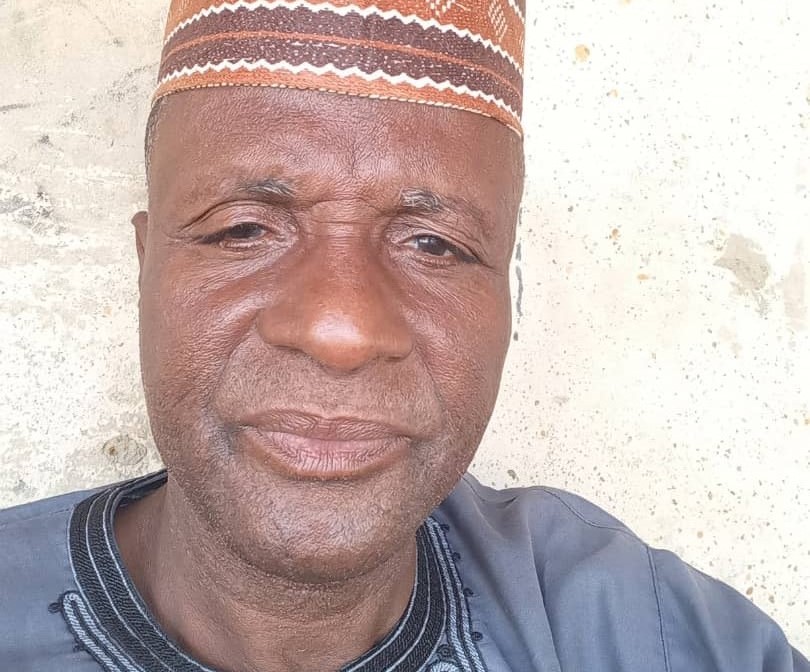
Jahun, a commentator on public affairs, is based in Dutse, Jigawa State. He can be reached via email @: aminuhabibu58@gmai.com
