


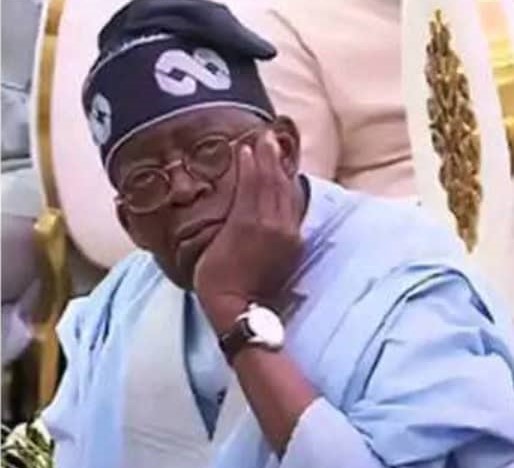
THE MINISTER of Information and National Orientation, Mohammed Idris, has issued a robust defence of President Bola Ahmed Tinubu’s administration, asserting that it has maintained a strict principle of fairness and equity in the distribution of projects, appointments, and opportunities across all six geopolitical zones.
The minister, in a statement he personally signed, responded to what he termed “recent insinuations, half-truths, and fake information” regarding an alleged lopsidedness in federal allocations.
Citing verifiable data, the minister presented a detailed breakdown of major infrastructure projects to demonstrate what he calls an “uncommon commitment to balanced development and inclusivity.”

According to the figures provided, the Northwest geopolitical zone is the largest beneficiary of project approvals, with allocations totalling ₦5.97 trillion, representing over 40% of the total. This is followed by the South-South (₦2.41 trillion), North-Central (₦1.13 trillion), South-West excluding Lagos (₦604 billion), South-East (₦407 billion), and North-East (₦400 billion).
“Contrary to the perception being pushed in some quarters… No region is playing a second fiddle or ignored,” the statement read.
The government highlighted several flagship projects to illustrate a geographical balance. It noted that while the Lagos-Calabar Coastal Highway is a major intervention in the South, the Badagry-Sokoto Highway predominantly traverses the North. Overall, it stated that 52% of the combined length of all legacy road projects is in the North, with 48% in the South.
A non-exhaustive list of major projects was provided for each region. In the North, these include the dualization of the Abuja-Kaduna-Kano Road (₦764bn), the Sokoto-Gusau-Funtua-Zaria Road (₦824bn), and numerous road projects in Kano, Borno, and Kebbi states. The statement also noted significant progress on the Kano-Maradi rail line, which it says has jumped from 5% to 67% completion.
In the South, highlighted projects include the Lagos-Ibadan Expressway, the rehabilitation of key bridges in Lagos, the Enugu-Onitsha Road, the Second Niger Bridge access roads, and the Bodo-Bonny Road in Rivers State.
Beyond transport, the administration pointed to the revival of the 255MW Kaduna Power Plant, advancements on the AKK Gas Project, and the commencement of oil drilling in the Kolmani region of Bauchi and Gombe States as evidence of diversified development across the country.
The statement also addressed federal appointments, asserting that President Tinubu has “consistently appointed capable Nigerians from every part of the country, guided by competence and inclusivity.”
Furthermore, the establishment of five new Regional Development Commissions and the creation of the Federal Ministry of Livestock Development were cited as key institutional moves designed to address unique regional needs.
“President Tinubu is building national infrastructure, not local trophies,” the Minister stated. “Lagos is rightly upgraded as Nigeria’s commercial hub, but the Northwest holds the lion’s share of approvals. This proves that all regions are receiving fair consideration.”
Concluding the defence, the government declared that President Tinubu has “proven himself to be a fair, pragmatic, and consequential reformer” whose “commitment to equity and justice is unwavering,” assuring Nigerians that no part of the country would be left behind.
