


ACROSS the fourteen local government areas of Zone A, the seven of Zone B, and the nine of Zone C, the drums of political alignment are beating once again. As the electoral horizon draws near, certain familiar figures — individuals who previously occupied the highest corridors of power in Benue State — are regrouping under newly minted alliances. To the casual observer, these gatherings may appear as routine democratic mobilization. However, to the discerning eye of the Benue electorate, a deeper, more troubling motive is visible beneath the surface.
History, as they say, is the most honest teacher. For decades, the people of Benue State entrusted their mandate, their hopes, and their commonwealth to a select political class. At various times, these individuals held executive, legislative, and institutional authority. They were given every opportunity to transform our agrarian potential into industrial prosperity, to build enduring infrastructure, and to ensure that the labourer received his wages promptly and with dignity. Yet, what was the record of their stewardship? Years of unpaid salaries and pensions that turned retired civil servants into paupers and walking corpses, dilapidated roads that cut off rural farmers from urban markets; and a governance culture where the collective patrimony of the State was treated as personal booty rather than a sacred public trust.
That social contract — the solemn agreement between the governed and those who govern —was repeatedly breached. When the people of Benue finally spoke with one resounding voice at the polls in 2023, electing Reverend Father Hyacinth Iormem Alia as governor, it was not a mere change of personnel. It was a decisive rejection of an old order that had held the state hostage.

Let us be clear, Democratic opposition is healthy, and every citizen has the constitutional right to associate and contest for power. However, the people of Benue must distinguish between an opposition driven by superior ideas for development and a gang-up motivated by wounded egos and lost financial pipelines and wells. When those who left behind mountains of debt, abandoned projects, and unpaid arrears suddenly rebrand themselves as saviours of the State, the people must ask a fundamental question: what did they forget in Government House that they are so desperate to return for?
Since assuming office, the current administration has prioritized returning governance to the grassroots. Civil servants and pensioners now receive their entitlements regularly. Rural and urban roads are receiving critical attention. Public funds are being channeled into tangible human capital development, agricultural revitalization, and institutional reforms rather than servicing the extravagant and bloated lifestyles of political godfathers. Naturally, when the tap of unearned privilege is turned off, those who fed fat on the system feel displaced, alienated, and desperate.
ALSO READ: Why This Culture Of Not Speaking Ill Of The Dead? By Iduh Onah
Pension Reform In Nigeria: The High Human Cost Of States’ Failure To Deliver; By Ivo Takor
It is this sense of displacement—not genuine concern for the welfare of the Benue masses—that fuels the current wave of political coalitions. Having realized that they can no longer dictate how State resources are shared, or unilaterally handpick commissioners and local government chairmen from their living rooms, these estranged power brokers have decided to bury their own past rivalries. Yesterday’s sworn political enemies and estranged bedfellows are suddenly embracing today, not out of love for Benue, but out of a shared determination to reclaim access to the State treasury.
Their strategy is transparent. Knowing that their own records cannot withstand the scrutiny of the Benue electorate, they seek to sponsor a pliable surrogate—someone who will owe allegiance not to the voters, but to the cabal that installed him. Their ultimate objective is simple, to oust an administration that refuses to share public funds among a privileged few, and replace it with a puppet and zombie who will reopen the vaults of the State for the systematic siphoning of our collective patrimony.
Let us be clear, Democratic opposition is healthy, and every citizen has the constitutional right to associate and contest for power. However, the people of Benue must distinguish between an opposition driven by superior ideas for development and a gang-up motivated by wounded egos and lost financial pipelines and wells. When those who left behind mountains of debt, abandoned projects, and unpaid arrears suddenly rebrand themselves as saviours of the State, the people must ask a fundamental question: what did they forget in Government House that they are so desperate to return for?
Benue State belongs to all of us — the farmer in Katsina-Ala, the trader in Gboko, the artisan in Otukpo, the student in Makurdi, and the pensioner in Vandeikya. It is not the private estate of any political family or coalition of former officeholders. The progress recorded over the past few years demonstrates what is possible when leadership is anchored on empathy, fiscal discipline, and accountability to God and the people rather than to political merchants and jobbers.
ALSO READ: Election-Related Risks And The Future Of Nigerian Democracy; By Jibrin Ibrahim
Iyayi: Remembering The Revolutionary Intellectual Who Lived, Taught And Died In The Service Of The People; By Omotoye Olorode
As political rhetoric intensifies in the coming months, the citizens of Benue must remain vigilant. Do not be swayed by manufactured crises, sponsored propaganda, or the crocodile tears of those who had power and squandered it. Guard your permanent voter cards like your birthright, because they remain the ultimate shield against those who wish to drag our state back into the dark days of impunity and Egyptian servitude.
The journey toward a prosperous, self-reliant Benue requires focus, continuity, and collective resolve. Let us stand firm in defending the gains we have made, reject any coalition built on greed and self-preservation, and ensure that the destiny of Benue State remains firmly in the hands of its people.
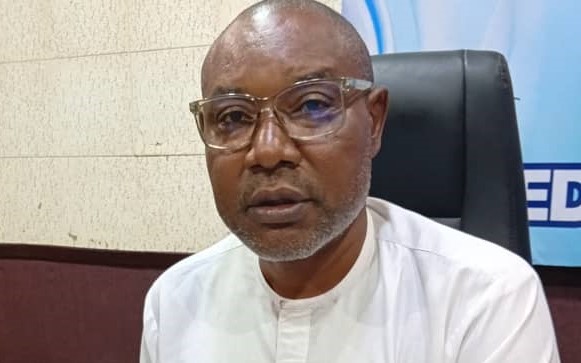
Tiav, a broadcast journalist, writes from Makurdi, Benue State.
