



FOUR persons were on Saturday seriously wounded and hospitalised in Abuja following the explosion of a solar inverter at a residential apartment in Nubende Estate, Wuse Zone 3, Abuja.
Two of the victims of the explosion were admitted at the Trauma Centre of the National Hospital while another, the wife of the owner of the apartment, Mr Suleiman Musa, was said to have been admitted at the Federal Medical Centre, Jabi, Abuja, and the fourth, with slight injuries, was treated and discharged that day.

Apeh John Daniel, a.k.a Arshavin, one of the victims of the inverter explosion who sustained serious injuries, told National Record on Tuesday in an interview on his hospital bed at the Trauma Centre that the inverter exploded inside Mr Musa’s apartment at No 3, Nubende Estate, Nubende Street, behind Federal Road Safety Commission’s headquarters, Wuse Zone 3, Abuja.

Apeh, wounded on both hands by the impact of the explosion that also left spotted burns on his face, said the explosion happened while the rites of a traditional wedding ceremony were about to commence under a canopy set beside the apartment.
“We actually came for a friend’s sister’s traditional marriage, so before the rites could start, we were downstairs, close to the window of a neighbour and we were chatting, and all of a sudden, we started seeing smoke emanating from the window.
“So, were like (asking), where is this smoke coming from, what’s the cause of this smoke? Before we could say jack, … the whole place exploded on us,” Apeh narrated.

He said as he was being conveyed to the hospital, he saw from the car the apartment burning. He said three others were also hurt, one of whom is the wife of the owner of the apartment who was seriously wounded on her face and chest, as she was closest to the window of the apartment.
Noting that there was no fatality, Apeh, however, said: “I and Bayo (Odesina Oyebayo, another victim admitted at the Trauma Centre of the National Hospital) are here but the man’s wife, I heard they took her the FMC (Federal Medical Centre, Jabi). The fourth person, his was not too serious like ours, they said he had a cut on his leg and on his lips and they treated him and he was able to go home that day.”
Odesina Oyebayo, the second victim at the Trauma Centre, concurred with Apeh’s narrative when asked about the incident.
In a visit to Nubende Estate, Wuse Zone 3, Abuja, National Record observed that the explosion caused substantial damage to Suleiman Musa’ apartment, which was being rehabilitated by workmen.
Asked if Mrs Musa was still in hospital, National Record was told that she had been discharged from the hospital but recuperating at a family house somewhere in Abuja. None of the workmen, including a relation of the family, could offer any other useful information on the incident.
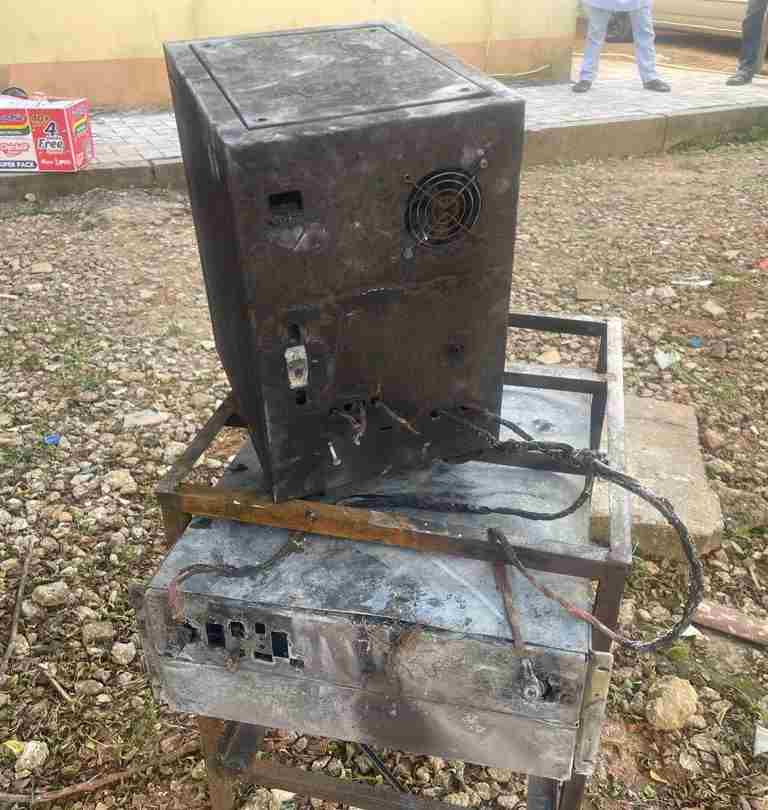
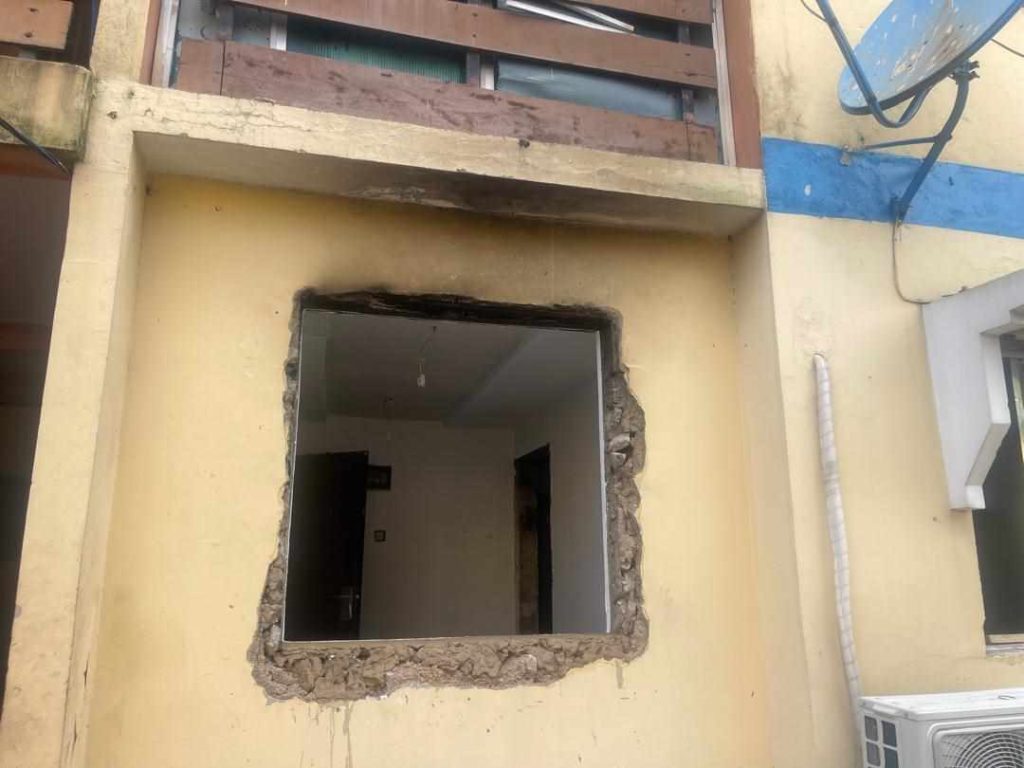
Outside the apartment were the charred remains of the inverter while it was observed that the two windows of the apartment were blown off with black traces of smoke left on the wall and a strong odour of burnt electrical appliances could still be perceived.
Possible causes of inverter explosion
A dealer on solar appliances and renewable energy, with informed knowledge of the workings of inverters, Mr Oliver Adah, told National Record that inverter explosions are not uncommon. He said they however occurred from poor installation by quacks.
He said in addition to problem of quackery, explosions or fire outbreaks could result from overloading of an inverter beyond its carrying capacity, especially, especially when high voltage appliances such as pressing irons and electric heaters, which ought to directly draw energy from electric power are plugged in to inverters.
“What we do to avoid the unfortunate incidents of fire and explosion is that in the process of installation, we disable lines with high voltage from inverters to avoid overheating that could burn the inverter or cause it to explode. We do the connection in a way that even if you plug in, for instance, pressing iron or heater, it will not work.
“But you know, some people will go ahead after installation to do connections beyond the carrying capacity of the appliance. This can lead to what you are talking about,” Adah told National Record.
ChatGPT, a generative artificial intelligence chatbot developed by OpenAI, not only corroborated Adah’s opinion, it offered detailed reasons that could lead to inverter explosion while also proffering explosion prevention measures, and concluded with an advice: “Remember, prevention is key! If you suspect an issue, consult a professional electrician or the manufacturer’s support.”
Asked what might be the possible causes of inverter explosion, ChatGPT produced the following response:
“Inverter explosions can occur due to various reasons. Here are some common causes:
“Electrical Issues:
“1. Overvoltage: Exceeding the inverter’s voltage rating.
“2. Undervoltage: Insufficient voltage, causing overcurrent.
“3. Short circuits: Faulty wiring or internal components.
“4. Overcurrent: Exceeding the inverter’s current rating.
“Thermal Issues:
“1. Overheating: Poor cooling, high ambient temperatures, or blocked vents.
“2. Overloading: Exceeding the inverter’s power rating.
“Component Failures:
“1. Capacitor failure: Deterioration or faulty capacitors.
“2. MOSFET/IGBT failure: Power semiconductor malfunction.
“3. Transformer failure: Magnetic component malfunction.
“Environmental Factors:
“1. Moisture ingress: Water damage or humidity.
“2. Physical damage: Drops, impacts, or vibrations.
“3. Corrosion: Environmental factors affecting internal components.
“Manufacturing Defects:
“1. Design flaws
“2. Poor quality components
“3. Inadequate testing
“User Errors:
“1. Incorrect installation
“2. Improper configuration
“3. Neglecting maintenance
“Other Factors:
“1. Age and wear and tear
“2. Power surges or spikes
“3. Compatibility issues with connected devices
“To prevent inverter explosions:
“1. Follow manufacturer guidelines.
“2. Regularly inspect and maintain the inverter.
“3. Ensure proper installation and configuration.
“4. Monitor temperature and voltage levels.
“5. Use protective devices (e.g., surge protectors).”
