


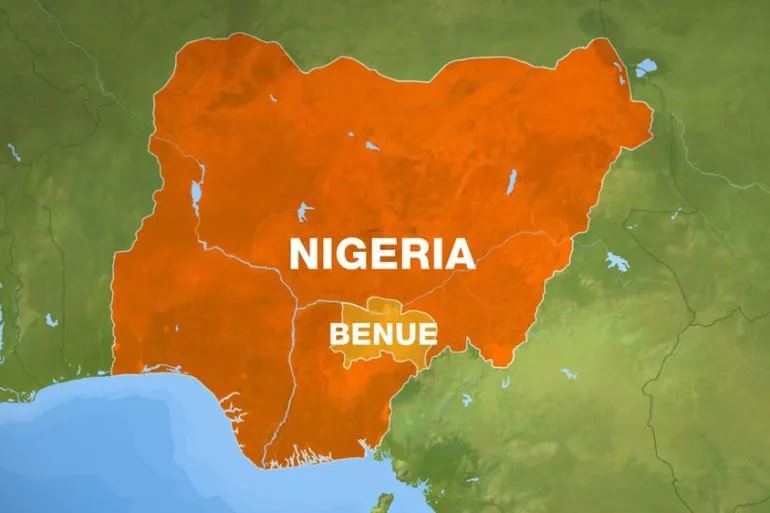
FOR BENUE State, the 2025 oil and gas licensing round marks a watershed in its economic and energy history, with three of the 37 oil and gas blocks awarded by the Nigerian Upstream Petroleum Regulatory Commission (NUPRC) located on Benue soil, spanning two NUPRC-classified geological basins.
The geological basins include the Benue Trough and the Anambra Basin, located in three local government areas – Otukpo, Apa and Okpokwu. Together, the three blocks carry the legacy of five historic exploration wells, the oldest drilled in 1954, marking the state’s long-recognised but largely dormant hydrocarbon potential.
The development comes as 31 companies emerged successful bidders for 37 of the 50 oil and gas blocks offered during Nigeria’s 2025 Licensing Round, following the conclusion of the commercial bid conference held at the Transcorp Event Centre on Tuesday, July 21, 2026 in Abuja.

According to the NUPRC, the licensing exercise attracted 143 companies that submitted about 200 bids, with 13 blocks receiving no offers.
For Benue, however, the national exercise represents far more than another licensing round. It is the first time that multiple petroleum prospecting licences with surface footprints in the state have been awarded simultaneously, positioning Benue as one of Nigeria’s emerging frontier exploration destinations.
The three awarded blocks are PPL 800, PPL 801 and PPL 902.
PPL 800, situated within the Southern Benue Trough, covers Otukpo and Apa LGAs, and was awarded to Dakoda & U Limited.
PPL 801, also located in the southwestern portion of the Southern Benue Trough, was won by Eyre Energy Limited, while PPL 902, located in the Anambra Basin with its surface footprint in Okpokwu LGA, was awarded to South-borne Oil and Gas Limited.
The licensing outcome also reflects a broader shift in Nigeria’s upstream petroleum strategy. The NUPRC described the 2025 round as historic because, for the first time, frontier inland basins; including the Benue Trough, Anambra Basin, Chad Basin and Benin Basin, attracted significant commercial investor interest alongside the country’s traditional Niger Delta producing areas.
Of the 37 awarded assets, 15 are located within these frontier basins.
Benue’s three awarded blocks also possess substantial historical exploration value. PPL 800 contains four historic exploration wells – Ocheku River-1, Adoka-1, Bopo-1 and Okpaya-1 – drilled between 1954 and 1967 by Shell and TotalEnergies, with Ocheku River-1 reaching a depth of 6,020 feet, making it the deepest well drilled across the three Benue blocks. PPL 902 contains the Opiarum-1 exploration well at Opialu Village of Edumoga in Okpokwu LGA, drilled by Shell in May 1955, while PPL 801 remains an entirely unexplored block with no previous drilling history.
The presence of these historic wells reinforces geological evidence that the Benue Trough and adjoining portions of the Anambra Basin have long been recognised as hydrocarbon-bearing provinces, although commercial development has remained elusive for decades.
Industry observers believe the renewed investor interest could unlock fresh exploration activities in the state, potentially leading to seismic surveys, appraisal drilling and eventual field development if commercially viable reserves are confirmed.
The award of PPL 902 is regarded as particularly significant because it revives interest in one of northern Nigeria’s oldest hydrocarbon prospects.
The Opiarum-1 well at Opialu Village of Edumoga in Okpokwu LGA was drilled more than seven decades ago and is considered primarily gas-prone with some oil potential, aligning with Nigeria’s growing emphasis on domestic gas development and gas-to-power projects.
Under the Petroleum Industry Act (PIA) 2021, communities hosting producing assets are entitled to benefit through the Host Communities Development Trust, which channels a prescribed share of operators’ expenditure into community development.
Should exploration advance to production, communities in Otukpo, Apa and Okpokwu stand to benefit from infrastructure development, employment opportunities and other economic gains associated with petroleum operations.
Nevertheless, the awards do not yet amount to final licences.
The NUPRC has stated that successful bidders must first pay the prescribed signature bonuses and obtain the approval of the Minister of Petroleum Resources before final allocations become effective, in accordance with the Petroleum Industry Act.
The Commission has also reiterated its “drill or drop” policy, warning that companies failing to develop awarded assets risk losing their licences.
Not all prospective Benue acreage attracted investors. Two additional Benue Trough blocks – PPL 802 and PPL 803, located in the south-eastern portion of the basin – received no bids and have been returned to the government’s licensing basket for future rounds.
Despite that setback, analysts say the successful licensing of three Benue-based blocks represents the state’s most significant entry yet into Nigeria’s upstream petroleum industry.
If the winning companies meet regulatory requirements and proceed with exploration, Benue could witness renewed oil and gas activities for the first time in more than 70 years, transforming it from a largely overlooked frontier province into one of the country’s emerging hydrocarbon investment destinations.
