


By Iduh Onah
IN A STATE where many children in rural communities continue to confront the consequences of inadequate educational infrastructure, the reconstruction and commissioning of St. Joseph’s Primary School, Agbangwe, in Okpokwu LGA, offers more than a renovated school building. Instead, it represents a practical intervention in the long-running challenge of bringing quality education closer to children in underserved communities.
The reconstructed school was formally commissioned and handed over to the Benue State Government on October 2, 2026, following an initiative of the McRay Victus Foundation.

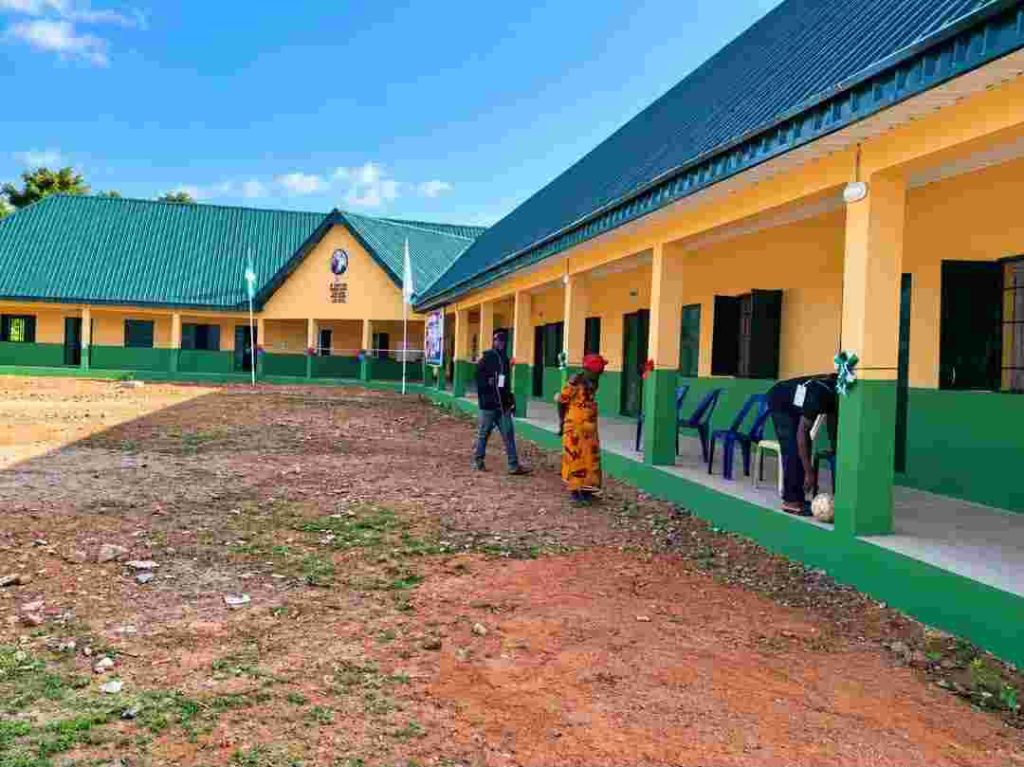
The project, according to the address delivered by Engr. Innocent Unaji, Chairman of the Board of Trustees of the McRay Victus Foundation, grew out of a request made to the state Ministry of Education in September 2024 for approval to reconstruct the school.
The significance of the intervention lies in the reality it seeks to confront: for children in rural Benue, access to education is not determined by school enrolment alone, but also by whether there is a functional, safe and adequately equipped school in which learning can take place.
The Agbangwe project is therefore important because it places infrastructure at the centre of the education conversation.
Across many rural communities, the physical condition of schools can become an invisible barrier to learning. Dilapidated classrooms, inadequate learning facilities and limited access to modern educational resources can reinforce the disadvantages already faced by children in communities far removed from major urban centres.
Against that background, the reconstruction of St. Joseph’s Primary School demonstrates what can happen when private philanthropy, community participation and government responsibility converge around a common objective.
Engr. Unaji described the foundation as a non-profit organisation established to make a sustainable difference in the lives of people across various areas of need. Education is one of its principal areas of intervention, alongside poverty reduction, food security, water and sanitation, and youth empowerment.
That broader approach is significant. Education cannot be separated from the conditions surrounding a child. A child who lacks access to clean water, adequate nutrition, safe facilities or economic support faces obstacles that extend beyond the classroom.
Perhaps the most compelling dimension of the Agbangwe project is its personal connection to the foundation’s leadership.
In his address, Engr. Unaji disclosed that he began his own educational journey at the same primary school. That history gives the project an unusually personal dimension: the reconstruction is not simply an act of corporate philanthropy but an attempt to give today’s children access to opportunities that can alter the trajectory of their lives.

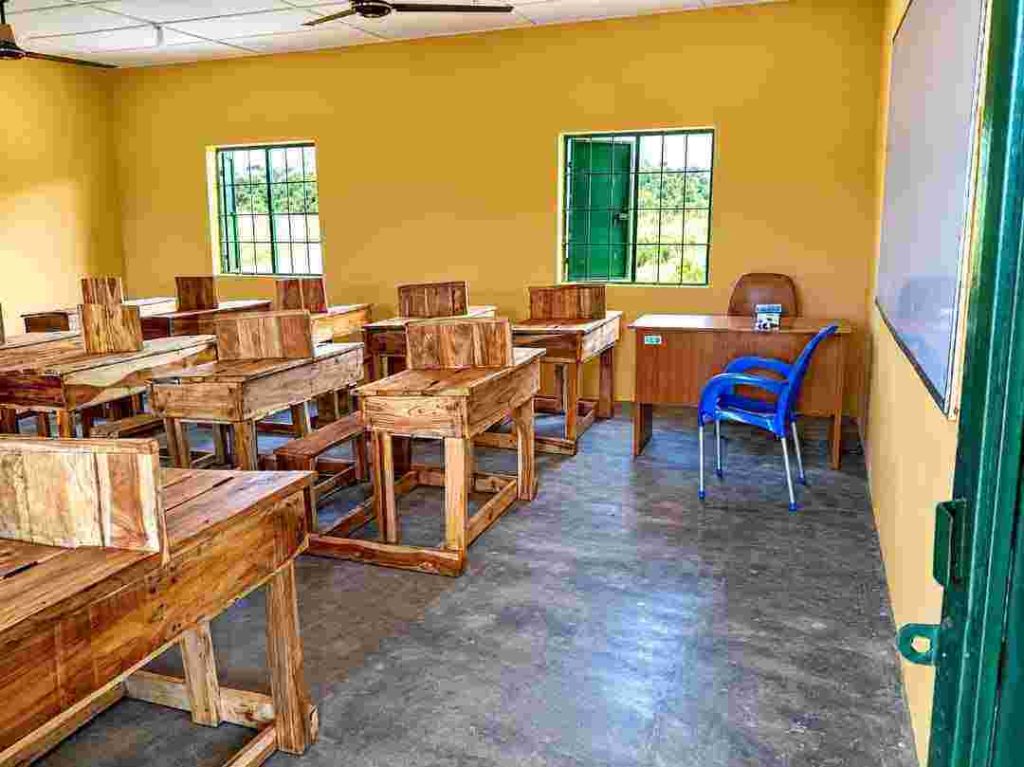
The foundation says it has spent more than N100 million on reconstructing and equipping the school, describing the investment as an effort to complement government’s responsibility for delivering education to children in Benue.
While the government remains the primary organ responsible for public education, the scale of infrastructure needs in many communities means that partnerships can accelerate improvements. The Agbangwe experience demonstrates the potential of such partnerships when private resources or charity are directed toward clearly identified community needs.
Importantly, the vision outlined at Agbangwe does not stop at the reconstruction of classrooms. The foundation appealed to the government for the immediate deployment of qualified teachers, the provision of computers and tablets for teachers and pupils, perimeter fencing and security, and approval for the commencement of a SUBEB Junior Secondary School from the next academic year.
These requests reveal an important truth about educational development: that a modern school is more than a building. A newly reconstructed facility may provide the physical foundation for learning, but its full potential depends on teachers, technology, security, continuity from primary to secondary education and an environment that encourages children to remain in school.
The call to transform the school into a digital learning centre is particularly significant in an era in which access to technology increasingly shapes educational opportunity. For rural pupils, access to computers and tablets could help narrow the gap between children in underserved communities and their counterparts in better-resourced urban schools.
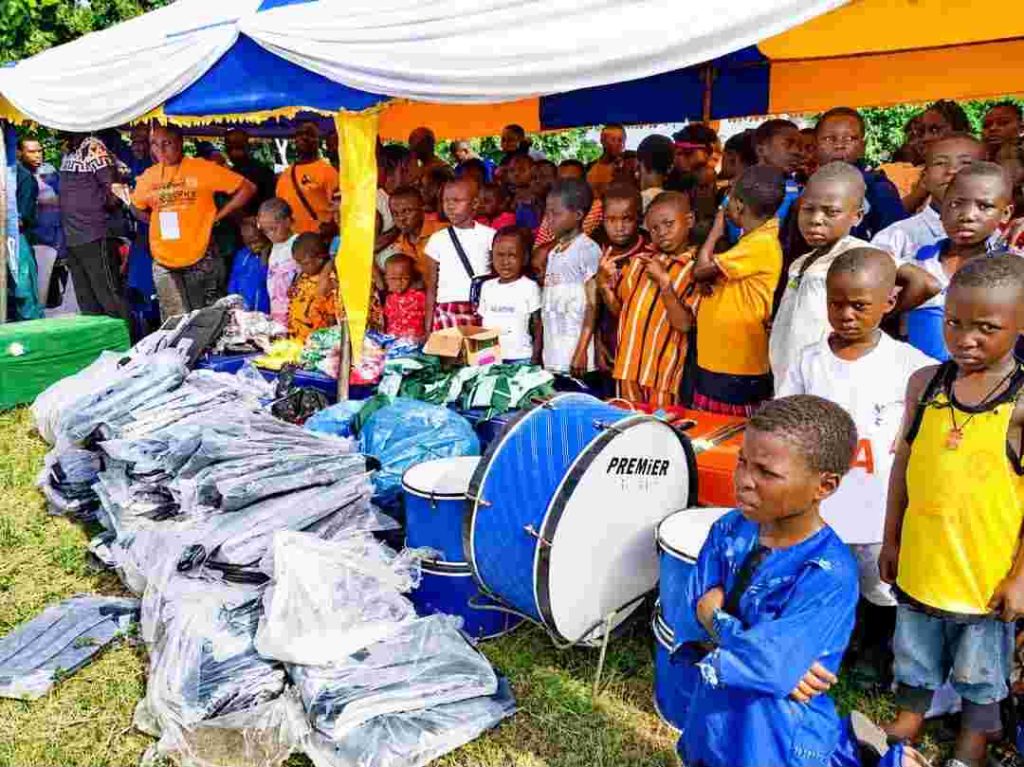
The Agbangwe project also offers a broader lesson for Benue’s education sector. If one community can mobilise around the rehabilitation of its school through a partnership involving philanthropy, government and local stakeholders, similar models could potentially be adapted elsewhere. Such interventions would not replace the state’s responsibility; rather, they could complement public investment and help direct attention to communities where infrastructure needs are most urgent.
The foundation’s programme framework further places the project within the wider goal of achieving quality education and inclusive development, linking its work to the United Nations Sustainable Development Goals (SDGs), particularly SDG 4 on quality education.
For Benue, the challenge is ultimately about more than constructing schools, but more so about ensuring that where a child is born must not determine the quality of education available to that child.

The commissioning of St. Joseph’s Primary School may therefore be viewed as a modest but powerful statement about what is possible in rural educational development. It tells parents that their children’s education matters; tells pupils that they deserve decent learning spaces; tells communities that neglected infrastructure can be transformed; and it also demonstrates to government and potential development partners that targeted collaboration can produce tangible results.
But the real measure of the project’s success will come in the years ahead, not simply from the appearance of the new facilities, but from whether children learn better, teachers are adequately supported, technology becomes part of everyday learning and the educational pathway is extended into junior secondary school.
For Agbangwe, a school that once stood as a symbol of need has been given a new lease of life. For Benue, the bigger opportunity is to turn that single success into a broader movement: from repairing schools to rebuilding the foundations of rural education, one community at a time.
