


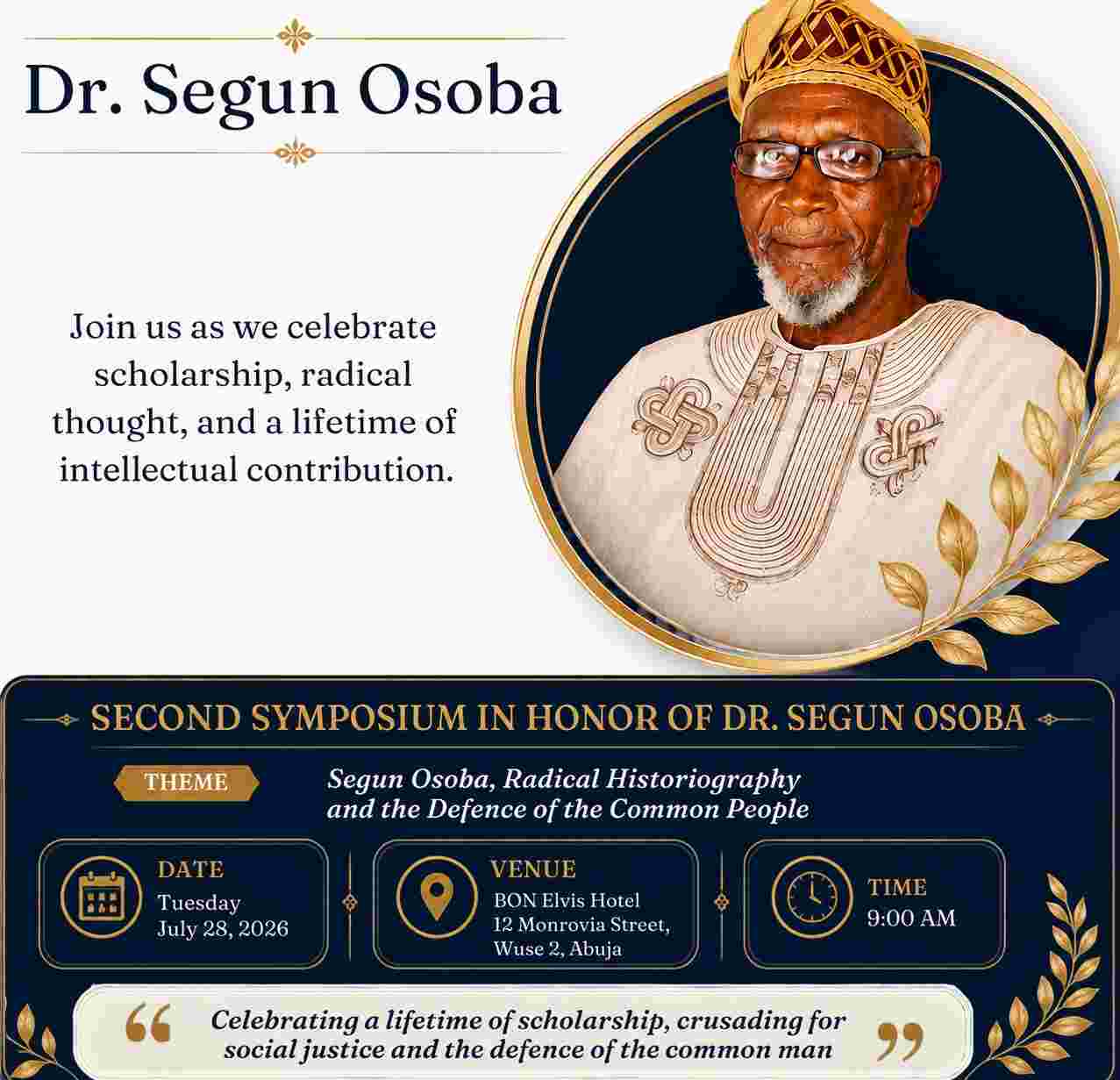
How the second Dr Segun Osoba Symposium revived an old debate about class, state power and democratic transformation in Nigeria.
By Iduh Onah
OUTSIDE the BON Elvis Hotel conference hall in Wuse 2, Abuja on Tuesday, July 28, 2026, Nigerians continued their weary negotiation with hardship. Commercial buses and kabu-kabu taxis dropped off workers already calculating how to stretch wages that inflation had rendered inadequate almost before payday. Young graduates contemplated an economy that no longer seemed capable of rewarding education with employment. Pensioners waited for benefits earned through decades of public service but delayed by bureaucracy and corruption. Across markets and neighbourhoods, families rationed meals, postponed medical treatment and adjusted to shrinking opportunities, while those who governed appeared increasingly insulated from the consequences of the policies they framed.

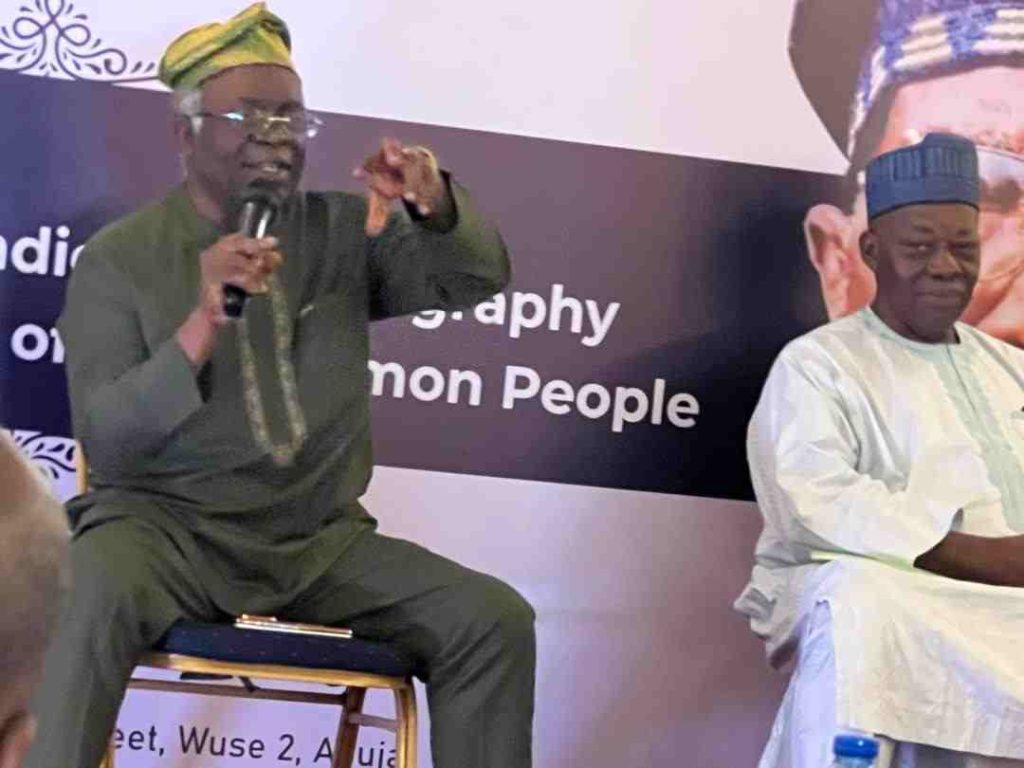
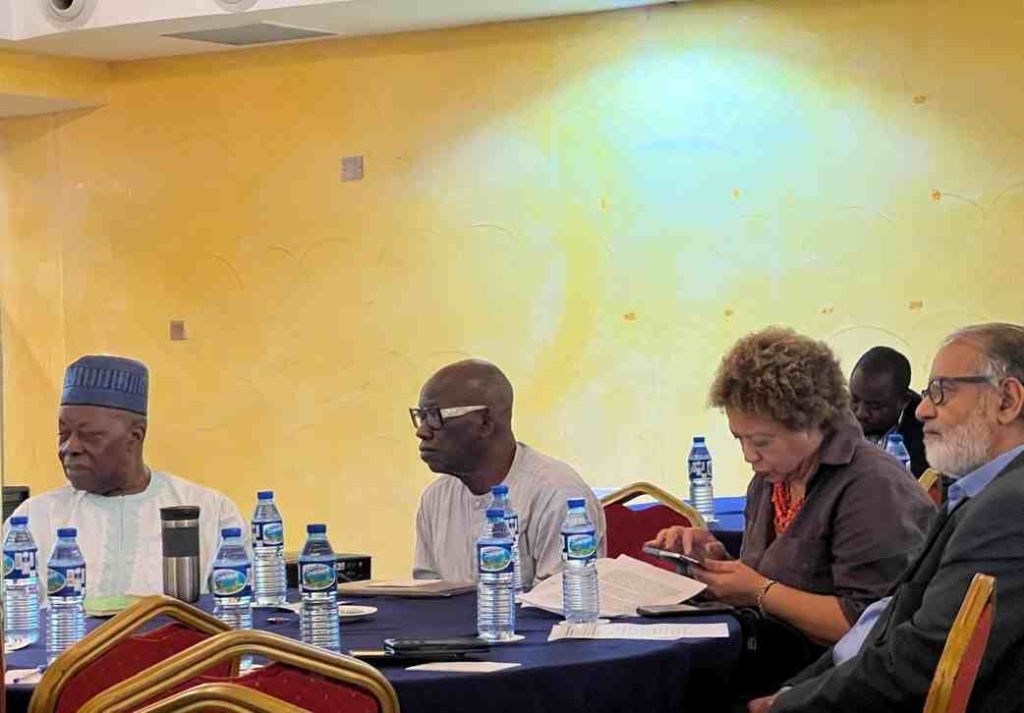
Inside the conference hall, however, another conversation was taking shape; one firmly rooted in those same realities. Scholars, labour activists, lawyers, feminist intellectuals, former student leaders, journalists, politicians of varying ideological persuasions, workers and younger generation of Nigerians gathered under the auspices of the “Osoba for Eternity Platform” to honour the late Marxist historian and public intellectual, Dr Segun Samuel Osoba, with a symposium on the theme: “Segun Osoba: Radical Historiography and the Defence of the Common People.”
The gathering was a searching examination of Nigeria’s political economy that looked at contemporary realities through the analytical framework that Osoba developed over decades. For both the old and youthful members of the audience, it returned them to questions that remain as unsettling today as when Osoba first posed them, as Professor Jibrin Ibrahim recalled – who owns the Nigerian state? Whose interests does it ultimately serve? Why has public office become synonymous with private accumulation, economic growth with expanding poverty, and constitutional promises of justice with the everyday experience of deprivation?
These questions acquired renewed urgency against the backdrop of Nigeria’s present crisis: as inflation erodes incomes, unemployment and food insecurity deepen, and inequality widens, criminality and generalised insecurity deteriorate, participants argued that the country’s predicament can no longer be explained away simply as poor leadership or policy mistakes, but more by an underlying architecture of a carefully organised process of exploitation and exclusion that remained remarkably entrenched and resilient.
It was this structural perspective that distinguished the Osoba Symposium from the familiar cycles of public debate and protestations over fuel price increases or subsidy, deregulation, structural adjustment, minimum wage and electoral reform. Those issues remain important, participants acknowledged, but they rarely interrogate the deeper social relations that reproduce inequality regardless of who is in power. So the isolated socio-economic and political dysfunctions were analysed not as isolated economic or moral failures but as symptoms of under-development in a political economy that concentrates wealth, weakens democratic accountability and turns public institutions into instruments of elite accumulation rather than popular welfare.
In doing so, the symposium reopened the question that has largely disappeared from mainstream political discourse in Nigeria: whether the deepening crisis demands not merely another round of policy adjustments or electoral change, but a serious reconsideration of socialist politics as an alternative framework for national transformation.
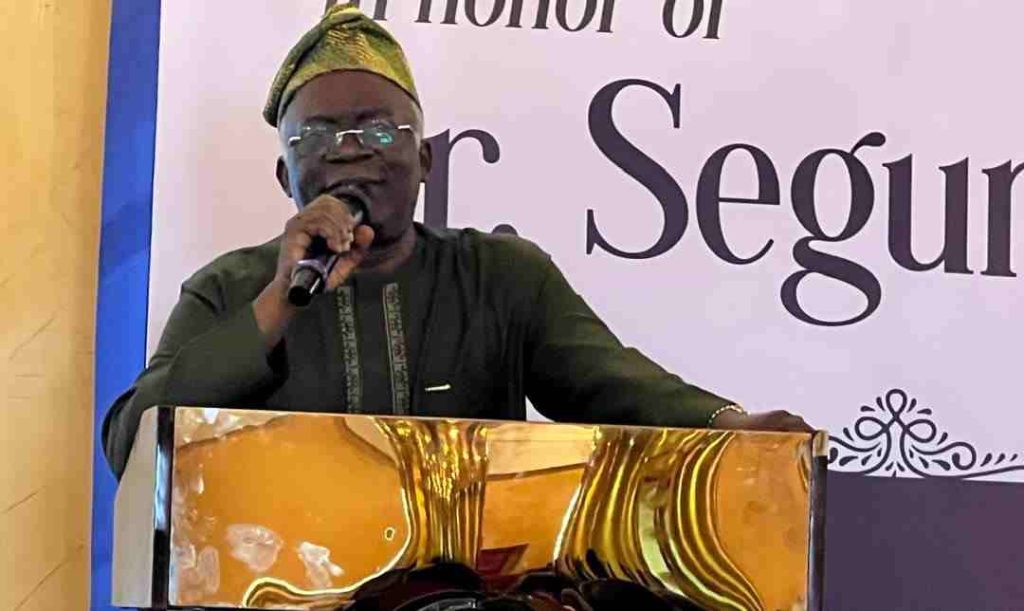
If one intervention provided the philosophical foundation for the day’s discussions, it was the opening address by the symposium’s chair, human rights lawyer, Femi Falana, SAN. Drawing on the history of Chapter II of the Nigerian Constitution, Falana revisited an often-overlooked tradition of constitutional thought associated with Segun Osoba and his contemporary, Marxist scholar, the late Dr Bala Usman. Falana’s central concern was not simply the content of the constitution but the failure of citizens to organised and compel successive governments to honour its social commitments.
Falana therefore challenged organised labour to regain its historic role as an agent of democratic transformation. While acknowledging the importance of struggles for improved wages, he argued that labour diminishes its political significance when it confines itself to periodic salary negotiations. Workers, he insisted, are more than employees bargaining with employers but citizens entitled to decent housing, quality healthcare, accessible education, secure pensions and meaningful social protection; all of which he said are rights already recognised, at least in principle, within Nigeria’s constitutional framework.
Returning to the debates surrounding the 1975–76 Constitution Drafting Committee, Falana recalled the celebrated Minority Report prepared by Osoba and Bala Usman; a vision which eventually found expression in Chapter II of the Nigerian Constitution, which he said successive governments have largely treated as aspirational socio-economic ideals rather than enforceable obligations.
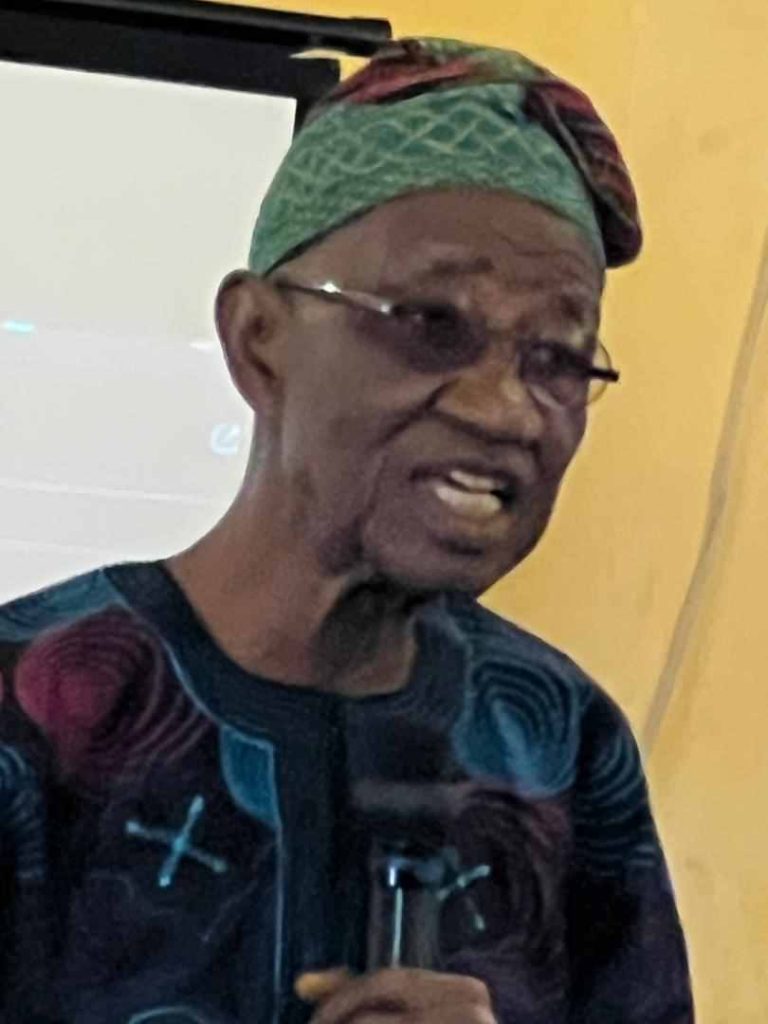
Falana’s argument was therefore as much political as it was constitutional. Rights inscribed in law, he suggested, acquire meaning only when citizens collectively organise to compel the state to implement. He argued that at a time when inflation rapidly erodes negotiated wage increases, demanding for expanded access to housing, healthcare, education and social protection may prove just as important to workers’ welfare as improvements in salaries themselves.
Falana’s intervention therefore reframed labour politics, shifting core focus from wage to the broader architecture of social citizenship. In doing so, he established one of the symposium’s defining themes: that meaningful democratic renewal requires transforming the relationship between citizens and the state, not merely negotiating better terms within an unequal order.
If Falana established the constitutional and political framework for the symposium, Comrade Y. Z. Ya’u, speaking on behalf of the organisers, explained why they believed revisiting Osoba’s intellectual legacy had become an urgent political necessity. His welcome address was less an exercise in remembrance than a carefully argued defence of ideas as instruments of social transformation.
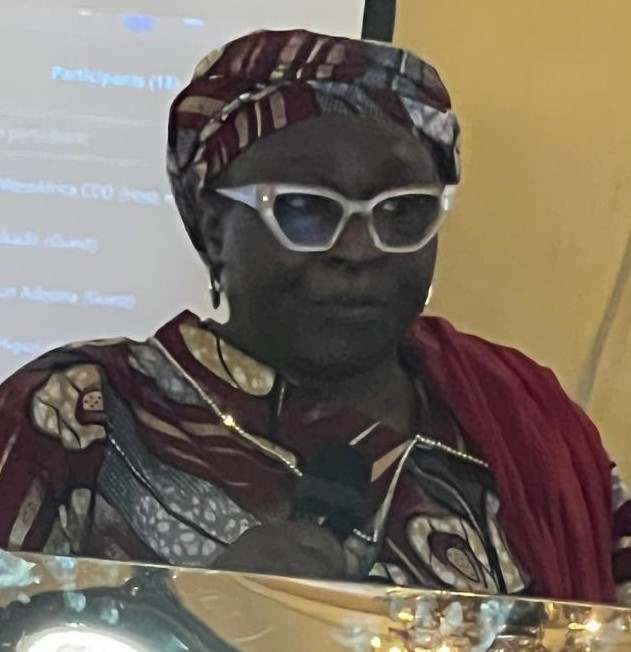
“Ideas are eternal and will continue to resonate with society when they speak to the realities of that society,” Ya’u declared, capturing the philosophy behind the “Osoba for Eternity Platform”. For him, the symposium was conceived not as an occasion for intellectual nostalgia or biographical celebration, but as an intervention in Nigeria’s under-development crisis. The question before participants, he said, was straightforward but profound: do Osoba’s ideas still possess the explanatory and political power to illuminate Nigeria’s contemporary condition?
That conviction underpins the organisers’ broader vision. Beyond annual symposia, the platform hopes to establish university prizes, a foundation and an institute dedicated to advancing progressive scholarship. These initiatives, Ya’u stressed, would have little meaning if they merely preserved Osoba’s memory. His writings matter because they remain living resources for understanding elite domination, neo-colonial dependency and the persistent failure of Nigeria’s democracy to deliver social justice.
It was in that context that Ya’u revisited Osoba’s celebrated Minority Report to the 1975–76 Constitution Drafting Committee, which he provocatively described instead as the “Majority Report” because, in his words, it reflected “the view and aspirations of the majority of Nigerians,” while the officially adopted document served the interests of a narrow ruling class.
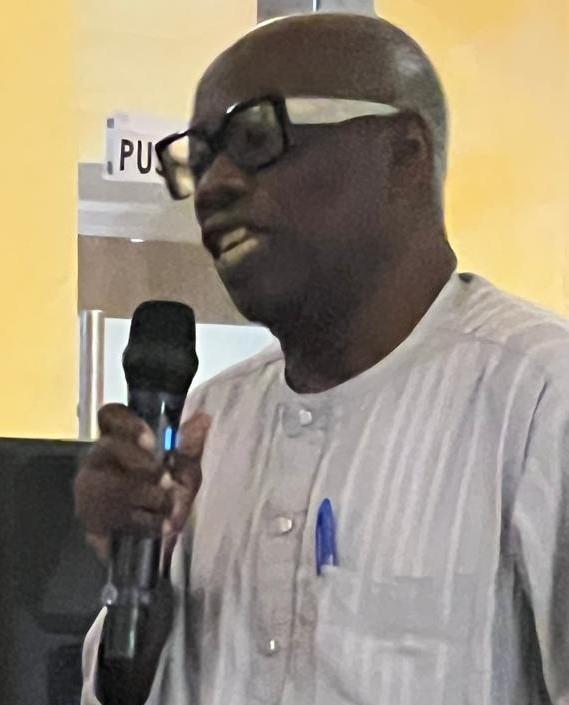
This historic reference reinforced a larger argument raised by Comrade Falana from the onset – that constitutional legitimacy ultimately derives not merely from elite consensus but from the extent of the rigour with which citizens engage political institutions to express their aspirations for collective welfare.
For Ya’u, therefore, ideas are valuable only insofar as they shape political practice. “We do not take ideas as ornamental pieces to decorate our speech,” he reminded participants, adding: “We take them as tools for action.” Osoba’s legacy, he argued, should continue to inspire scholars, labour leaders, gender advocates and younger activists seeking what he described as “a way and compass” towards a more just constitutional order.
Ya’u’s appeal transformed the memorial into a collective commitment to ensure that Osoba’s scholarship remained an active force in Nigeria’s democratic struggles rather than a body of work confined to libraries and commemorative speeches.
That challenge found its most rigorous intellectual expression in the intervention of Professor Jibrin Ibrahim, popularly known within progressive circles as Comrade Jibo. Rather than presenting Osoba as a Marxist thinker whose conclusions deserved unquestioning acceptance, Ibrahim argued that his greatest contribution lay in his methodology. Osoba’s scholarship, he noted, exemplified an uncompromising commitment to investigating how political and economic power actually operates within Nigerian society.
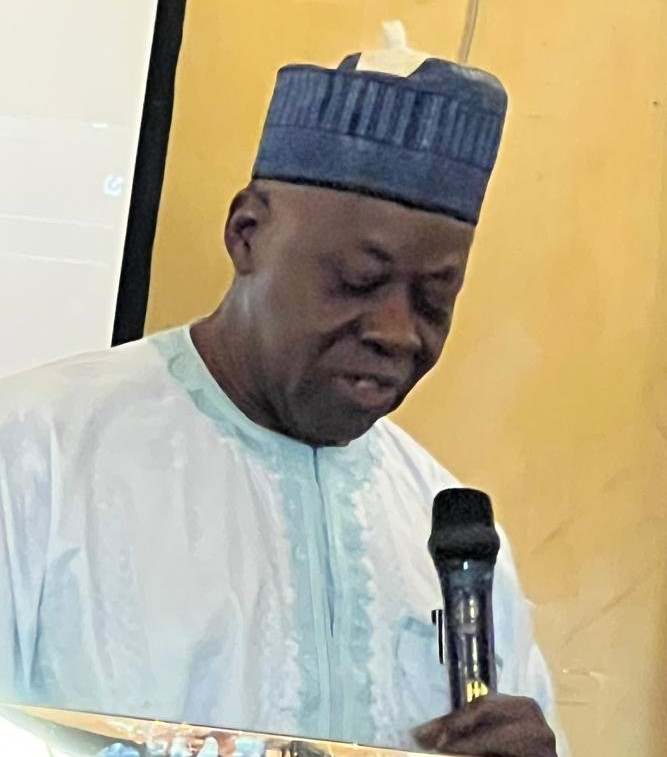
Tracing the historical relationship between colonialism, indigenous class formation and the emergence of the post-colonial ruling elite, Ibrahim examined how the Nigerian state gradually evolved into an instrument through which political office became a pathway to private accumulation rather than public service. Corruption, inequality and elite domination, he argued, are therefore not accidental features of Nigeria’s political system but products of historical processes that have repeatedly reproduced themselves across successive regimes.
This diagnosis led Ibrahim to a broader reflection on the nature of the modern state. Since the French Revolution, he observed, the legitimacy of government has rested on the principle that the state belongs to its citizens. Nigeria’s enduring tragedy, however, is the growing separation between state and society. Electoral competition increasingly revolves around access to public resources rather than competing visions of national development, while ethnic and religious divisions are repeatedly mobilised to obscure the more fundamental question of class power. Far from offering historical abstractions, Ibrahim’s analysis provided a compelling explanation for why Nigeria’s contemporary political crises continue to reproduce familiar patterns of social inequality.
If Ibrahim diagnosed the structural character of Nigeria’s crisis, Professor Omotoye Olorode turned attention to the capacity of progressive forces to confront it. His intervention centred on an uncomfortable but unavoidable question: what became of the Nigerian Left?
Rejecting both nostalgia and despair, Olorode argued that rebuilding progressive politics cannot mean attempting to recreate the organisations of the 1970s or 1980s. Nigeria has changed too profoundly for such restoration to be possible; that Organised Labour has become increasingly fragmented and informal; that digital technologies have transformed political communication; and that insecurity, migration and identity politics now intersect with older questions of class, production and development. These changes do not invalidate socialist politics, he insisted; they demand its intellectual renewal and organisational reconstruction.
Veterans of earlier struggles, Olorode further argued, therefore have responsibilities beyond preserving memories of past victories. Their task is to help cultivate a new generation capable of understanding contemporary realities while retaining the discipline, solidarity and strategic imagination that once sustained progressive movements. The challenge is not to replicate history but to reinterpret its lessons for a vastly different political landscape.
That emphasis on renewal was reinforced by Comrade Hauwa Mustapha of the Nigeria Labour Congress, who broadened the discussion beyond political organisation to the question of historical knowledge itself. Any meaningful revival of radical politics, she argued, must also challenge the ways history is written and whose experiences it privileges.
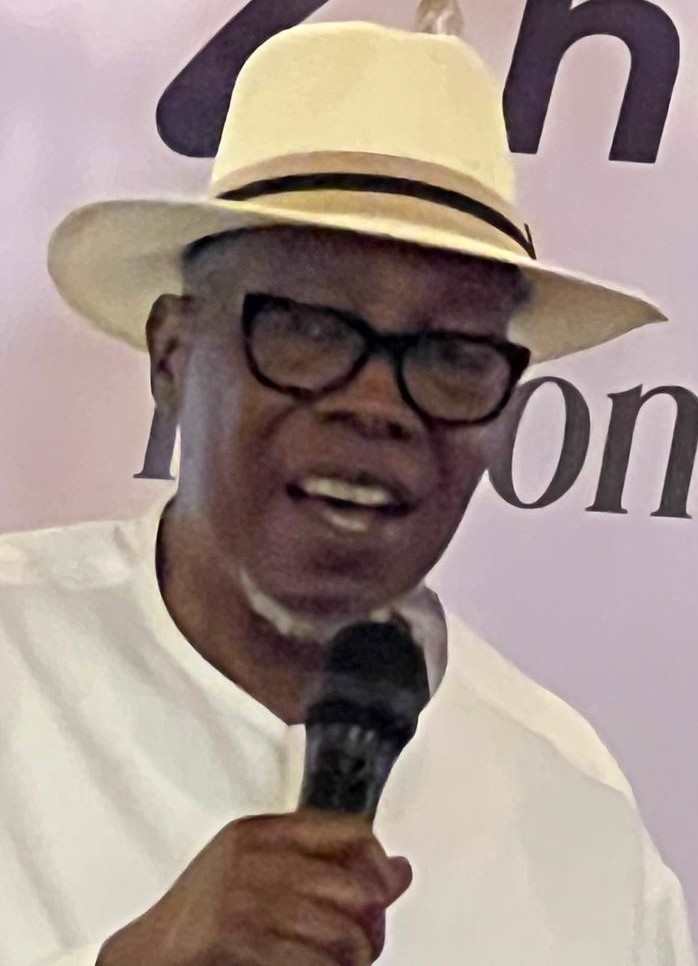
Osoba’s historiography, Comrade Hauwa observed, was significant precisely because it displaced elite-centred narratives and restored historical agency to those ordinarily excluded from official accounts. Extending that intellectual tradition today requires paying equal attention not only to industrial workers but also to women, market traders, informal producers, community organisers and countless others whose labour sustains society while their experiences remain largely absent from dominant political discourse. In doing so, she reminded participants that any contemporary socialist politics worthy of the name must become more democratic, more inclusive and more attentive to the multiple forms through which exploitation and exclusion are experienced in twenty-first-century Nigeria.
Professor Adele Jinadu’s intervention returned the symposium to perhaps its most unsettling question: What, exactly, happened to the Nigerian Left?
The question, seemingly simple and sarcastic, has profound implications. Jinadu recalled a period when radical scholarship, militant trade unionism, activist student movements and progressive professional associations collectively connected everyday struggles to broader projects of democratic transformation. Much of that infrastructure, he argued, has weakened under decades of military repression, neo-liberal restructuring and ideological fragmentation.
His intervention therefore shifted attention from the failures of the ruling elite to the responsibilities of those who seek to challenge them.
Taken together, these interventions revealed an important feature of the symposium. Its participants were not merely diagnosing the failures of the Nigerian state; they were also subjecting progressive politics itself to sustained self-examination.
Rather than romanticising an earlier era of Left activism, they acknowledged organisational decline while insisting that renewal remains possible through intellectual honesty, strategic adaptation and a willingness to rethink inherited assumptions. In that sense, the symposium became as much a conversation about rebuilding democratic agency as it was a critique of state power.
Generally, the interventions amounted to far more than a sequence of individual speeches. They converged around a single, if contested, proposition: Nigeria’s crisis is fundamentally political before it is technical. Inflation, unemployment, corruption, constitutional dysfunction and deepening inequality are not isolated problems awaiting technocratic solutions. They are interconnected expressions of a political economy that has concentrated wealth, weakened public institutions and steadily distanced the state from the society it claims to govern.
That shared diagnosis did not produce unanimity on strategy, nor did it seek to. Participants differed in emphasis, historical interpretation and organisational priorities. Yet they agreed on a more fundamental point: meaningful democratic renewal cannot be achieved simply through periodic elections, elite realignments or incremental policy reforms if the underlying structures of power remain intact.
The symposium therefore restored ideological debate to a public sphere increasingly dominated by electoral arithmetic, personality contests and elite defections.
That achievement should not be overstated. To describe the Segun Osoba Symposium as the rebirth of the Nigerian Left would be both premature and historically careless. Progressive organisations remain fragmented. Trade unions confront new economic realities. Universities, once important centres of radical intellectual production, have been weakened by years of underfunding and political pressure. The institutional ecosystem that once sustained organised progressive politics is no longer what it was. Comrade John Odah eloquently made this point in the closing minutes of the event in the effort to explain the dysfunction in the operationalisation of student unionism.
Yet the symposium accomplished something that may, in the long run, prove equally significant. It reopened questions that mainstream politics has spent decades avoiding. Questions about who owns the Nigerian state and in whose interests it is governed. Questions about the meaning of constitutional justice beyond the formal guarantee of civil and political rights. Questions about the responsibilities of organised labour beyond wage bargaining. Questions about the role of scholarship in democratic struggle. And, perhaps most provocatively, questions about whether socialist politics still offers an intellectually serious framework for confronting mass poverty, widening inequality and elite accumulation in contemporary Nigeria.
The significance of those questions lies not in the certainty of their answers but in their refusal to accept the limits of prevailing political discourse. For much of Nigeria’s Fourth Republic, public debate has oscillated between competing political personalities, electoral calculations and short-term economic measures.
The symposium suggested that these debates, while important, often leave untouched the deeper structures through which power is organised and inequality reproduced. In returning attention to questions of class, state power and social justice, it invited participants to think beyond the immediate electoral cycle and towards the longer project of democratic transformation.
Whether one accepts the symposium’s ideological premises is, in many respects, secondary to its larger contribution. Healthy democracies require more than elections; they require robust intellectual disagreement about the kind of society citizens wish to build.
By recovering traditions of radical scholarship that have increasingly disappeared from mainstream political conversation, the gathering reminded participants that democracy is impoverished when it loses the capacity to imagine alternatives to the status quo.
That may ultimately prove to be Segun Osoba’s most enduring legacy. Not that his conclusions should be accepted uncritically, nor that his generation possessed ready-made answers to the complexities of twenty-first-century Nigeria. Rather, his enduring contribution lies in the example he offered as a scholar: one who insisted that serious intellectual inquiry must illuminate the structures of power, interrogate inherited assumptions and remain accountable to the lived realities of ordinary people. His scholarship was distinguished less by ideological certainty than by methodological rigour and an unwavering commitment to asking difficult questions.
History, therefore, is unlikely to judge Osoba principally by the number of memorial lectures organised in his honour or by the eloquence of tributes paid to his remarkable life. His legacy will be measured instead by whether his method of inquiry continues to inspire critical scholarship, whether his ideas continue to enrich democratic debate, and whether new generations find in his work the intellectual resources to imagine, and organise for, a more just political order.
As participants left the conference hall and returned to an Abuja still burdened by inflation, unemployment, insecurity and widening inequality, none could reasonably claim that the symposium had offered an immediate solution to Nigeria’s many crises; nor was that its purpose. Its more modest, and perhaps more consequential, achievement was to remind those in attendance that every enduring political transformation begins with the courage to question assumptions that have come to seem inevitable.
In that respect, the Segun Osoba Symposium accomplished something increasingly rare in Nigeria’s public life. It did not merely commemorate a distinguished intellectual. It restored ideas to the centre of politics. And in doing so, it reopened one of the country’s oldest; and most urgent, democratic conversations: whether a political order built around social justice, popular participation and the public good remains not simply desirable, but necessary.
