



By Iduh Onah
THE RECENT confirmation of Dr Emmanuel Odo (JP) as the substantive Clerk of the Nigerian Senate goes far more than a routine career advancement; it is the crowning of a three-decade journey defined by quiet diligence, profound institutional memory, and a leadership philosophy rooted in both his education and grooming under his Idoma heritage.
Formalised by the National Assembly Service Commission (NASC) in January 2026 after a well-assessed period as Acting Clerk, Dr Odo’s appointment has been met with a chorus of approval from across the legislative and public service spectrum. An in-depth look at his professional trajectory, bolstered by his formidable educational background, reveals a public administrator uniquely prepared to steer the Senate’s bureaucracy with distinction, dignity, and a deeply human touch.

The African adage; “The sound of a hoe digging the ground is not as loud as the praise it brings at harvest,” perfectly illustrates the public service experience of Dr Odo, for whom the harvest arrived on Tuesday, September 16, 2025, when the National Assembly Service Commission first appointed him as Acting Clerk of the Nigerian Senate, citing his “consistent hard work, administrative capability, and deep institutional knowledge.” By Monday, January 20, 2026, what was interim became permanent, and the Edumoga-born administrator was handed the mantle to steer the affairs of Nigeria’s upper legislative chamber.
In a clime where positions are often rigorously contested, his elevation stands as a powerful testament to the enduring value of merit – a narrative about the triumph of substance over circumstance, and a reminder that however long the night, the dawn will surely break.
Odo’s public service career is a rich tapestry woven within three decades; a period of deep immersion that granted him an encyclopaedic understanding of the legislature’s intricate machinery. His progression through the ranks to the stage that he began to play critical roles – from Clerk of various House Committees including House Services, Justice, and Human Rights, to Deputy Clerk (Legislative) in the House of Representatives – has provided him with a rare bicameral perspective that is invaluable for fostering harmony between both chambers.
Odo’s confirmation as Clerk of the Senate is a fitting testament to a career built on a granite foundation of hard work and perseverance. As he assumes this pivotal role, he brings a powerful combination of deep institutional knowledge, the grounded wisdom of his Idoma heritage, and a leadership style that prioritises teamwork and human dignity.
A tree, another African adage says, is known more by its fruit, not only by its leaves, indicates that Odo’s elevation from the role of Deputy Clerk, Senate (Administration) was no accident of fate but a calculated decision to place a thoroughbred professional at the heart of the legislative machinery. This depth of experience ensures that his leadership is not experimental; it is grounded in a profound respect for parliamentary rules, procedures, and the sanctity of institutional memory.
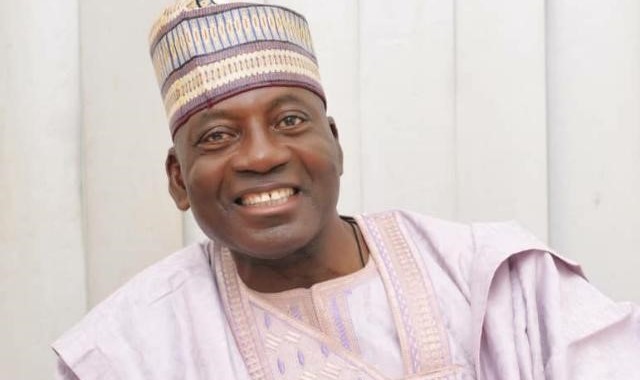
Yet there is something more than experience that Dr Odo brings to the Red Chamber, something that cannot be acquired through years of service alone. Hailing from the Efoyo Community in Okonobo Ward of Edumoga in Okpokwu LGA of Benue State, Odo carries with him the rich cultural DNA of the Idoma nation.
In Idoma philosophy, there is high premium on a personal character trait known as Ijeyi (a close semantic approximation in English is ‘native intelligence’) – a combination of wisdom, patience, and deep understanding of the human condition. It is generally believed that book-learning (education) alone cannot provide Ijeyi (native intelligence) or that book-learning without Ijeyi translates to nothing. In other words, it is a mix of education and Ijeyi that makes a man or woman. It is a prized asset by Idoma society as it embodies a sense of self, consensus-building and rationality which are very essential for communality, order and institutional cohesion. Dr. Odo is a symbol of this virtue; a child in whom this morality is deeply ingrained.
This quality was in display long before now – when Odo served for two terms as the National President of EDE-MA, the highest socio-cultural organisation in Edumoga land over a decade ago. Just recently, this trait was vividly on display when a delegation from the EDUMOGA CHE NCHE, a socio-political group also from Edumoga, visited him in Abuja to offer congratulations. His response was not that of a detached federal bureaucrat, but of a son of the soil deeply concerned about unity and development in his ancestral home.
He recounted past efforts for peaceful coexistence that had not yielded the desired success and urged his kinsmen to build a more cohesive community that could take its rightful place not just in Okpokwu LGA but in Benue State and Nigeria in general.
This is the philosophy of a leader who understands that true progress is communal – a philosophy directly transferable to the Senate floor, where balancing diverse interests and forging consensus is the daily currency of progress. The pride his community feels, viewing his appointment as a beacon of collective progress, reinforces the idea that his success is a shared accomplishment.
Odo showcased this trajectory of thought during his months as Acting Clerk, when he demonstrated that leadership is not about the volume of one’s voice, but the level of one’s presence. Reports from within the National Assembly indicate a significant boost in staff morale and teamwork under his guidance. He has been credited with introducing discipline, decorum, professionalism, and service delivery, earning him the quiet admiration of the workforce.
Noting that a single hand cannot tie a bundle, Odo set about ensuring that every hand is engaged and valued. This positive shift can be attributed to a leadership style characterised by humility, respect, and a deep understanding of the Senate’s processes. Where others might rely on the authority that goes with the office, Dr Odo reportedly leverages emotional intelligence, ensuring that job descriptions are clear, timelines are respected, and common goals are shared.
His academic credentials have more than honed his analytical mind. He holds a Bachelor of Science (B.Sc) Degree in Sociology from University of Jos (1988), a Master of Science (M.Sc) Degree in Sociology from Nasarawa State University (2014) where he also got a Doctor of Philosophy (PhD) Sociology (2021). The study of Sociology, in particular, moderated by Ijeyi definitely equipped him with the basic tools to question, to reason, and to see the ethical dimensions of administration.
Odo has therefore exhibited that bureaucracy can be a smooth engine for the constitutional duties of the legislature – transforming the administrative culture into a more efficient and engaged unit, redefining the Senate for optimal performance.
Beyond the nuances official performances, Odo is widely regarded as a figure of profound empathy. His lamentation to his Edumoga kins about the failures of past unity efforts was not just rhetoric but a real reflection of a conscious and passionate heart that feels deeply and seeks healing.
This generosity of heart is not a weakness in an administrator; in a system often characterised by pressure and competition, it is his greatest strength. It fosters an environment where staff feel psychologically safe, valued, and heard, leading to greater loyalty and productivity. It allows for a humane approach to management, one that can navigate the high-stakes pressures of legislative work with compassion while uncompromisingly upholding the highest standards of integrity.
As the substantive Clerk, this empathy will guide his interactions with Senators, staff, and the public. Stepping into the role of a Clerk embodies the spirit of a Custodian – a guardian of the Senate’s processes, its history, and its democratic essence.
In a positive way, Dr Odo is carrying the bag of the Nigerian Senate with a familiar, steady, and the confident gait of one who has grown up within its walls, guided by the Idoma wisdom that a child who carries a father’s bag does not do so with the manners of a stranger. He has stepped into a role where the Clerk serves as the chief administrative officer, the custodian of the official record, and the guide on parliamentary rules – a weighty responsibility that demands not just knowledge, but wisdom.
Odo’s confirmation as Clerk of the Senate is a fitting testament to a career built on a granite foundation of hard work and perseverance. As he assumes this pivotal role, he brings a powerful combination of deep institutional knowledge, the grounded wisdom of his Idoma heritage, and a leadership style that prioritises teamwork and human dignity.
In the Red Chamber, where the fate of legislation and the voice of a nation converge, this unique blend of professional excellence and personal integrity promises to guide the administration of the Senate towards a future of unparalleled service.
