


Book Title: Nigeria Media Renaissance: GOCOP Perspectives on Online Publishing
Pages: 250
Author: Guild of Corporate Online Publishers (GOCOP)

Publisher: GOCOP
Year of Publication: 2025
Place of Publication: Lagos, Nigeria
I AM DELIGHTED to report that Nigeria has just secured the hosting rights for the 37th Conference of the African Public Relations Association (APRA), following a successful bid led by the Honorable Minister of Information and National Orientation in Mombasa, Kenya. This marks the first time a country will host both the World Public Relations Forum and the APRA Conference — a historic achievement made possible through the leadership of Minister Mohammed Idris, FNIPR.
A Title That Provokes Thought
The book’s title — Nigeria Media Renaissance: GOCOP Perspectives on Online Publishing — immediately arrests attention, if not stirs mild controversy. At first glance, one might question how a decade-old organization could claim a “renaissance.” However, the dual distinctions — “GOCOP Perspective” and “Online Publishing Perspective” — clarify the book’s unique vantage point.
A Collective Intellectual Effort
The book lists six editors and sixteen committee members (with some serving dual roles), totaling at least twenty-two contributors. The acknowledgments reveal an even broader collaboration, incorporating diverse social and cultural perspectives to enrich the book’s depth and scope.
The contributors include seasoned online journalism pioneers like Tom Chiahemen, analytical minds like Danlami Nmodu, resilient voices like Ken Ugbechie, and vibrant writers like Jessica Uwadaze. The foreword, expertly penned by Dapo Olorunyomi, OON, traces the historiography of online publishing in Nigeria—from Post Express (1996) to early diaspora platforms like Elendureports.com (2004), TimesofNigeria.com (2005), and Saharareporters.com (2006). His narrative provides an engrossing foundation for the book.
Perception, Perspective, and the Power of Documentation
GOCOP President Maureen Chigbo’s introduction invokes Marshal McLuhan’s “the medium is the message” and Yves Decat’s assertion that “perception is even more important than the message itself.” In an era rife with misinformation, this book serves as a vital documentation of online journalism’s evolution, celebrating the individuals and institutions that shaped it.
Seven Core Contributions of the Book
A Historical Record – An evidence-based account of online publishing’s growth in Nigeria.
Pioneering Recognition – Highlights the indelible contributions of early online journalists.
Industry Insider Perspectives – Chronicles developments through the eyes of practitioners.
Political Interference Exposé – Examines how public institutions’ autonomy is often undermined.
Ethical Distinction – Clarifies the difference between professional online publishing and social media.
Quality Benchmark – Showcases the pedigree of GOCOP members, many of whom are veteran journalists.
Self-Regulation Advocacy – Reinforces the importance of ethical standards in digital journalism.
Chapter Highlights
Chapter 1 (Segun Adeleye) details GOCOP’s formation, including naming challenges with the Corporate Affairs Commission.
Chapter 2 underscores GOCOP’s commitment to ethics, with its disciplinary committee handling few cases—a testament to members’ professionalism.
Chapter 3 dispels the conflation of social media with online journalism, emphasizing the latter’s structured standards.
Chapters 5–9 present case studies from Delta, Kwara, Osun, Lagos, and Kogi States, illustrating online publishing’s impact on governance and digital literacy.
Chapter 10 (Tom Chiahemen) outlines challenges and future prospects for online publishing.
Chapter 11 (Max Amuchie) compiles key speeches from GOCOP conferences (2017–2024), addressing national issues like security, elections, and economic recovery.
Minor Criticisms
A typo on page xvi misquotes McLuhan’s “the medium is the message.”
Some assertions (e.g., politicians’ social media abuses on pp. 43–44) lack scholarly citations.
The Osun State section omits details on digital literacy policies.
Layout errors include misplaced appendix pages (A1–24) under Chapter 11.
A chapter on democracy and GOCOP’s role in national reputation management would have been valuable.
Final Verdict
Despite these minor flaws, Nigeria Media Renaissance is a compelling, well-researched chronicle of online journalism’s rise in Nigeria. Its storytelling, supported by photographs and first-hand accounts, makes it an engaging read.
I highly recommend this book to media professionals, policymakers, and academics. It not only preserves history but also sets a benchmark for future discourse on digital journalism. GOCOP has indeed come of age — and perhaps now needs a permanent home to nurture the next generation of ethical online publishers.
As Dapo Olorunyomi cautions in the foreword: “Freedom must never be taken for granted. The online journalism community must collaborate to strengthen ethical, fact-based journalism.”
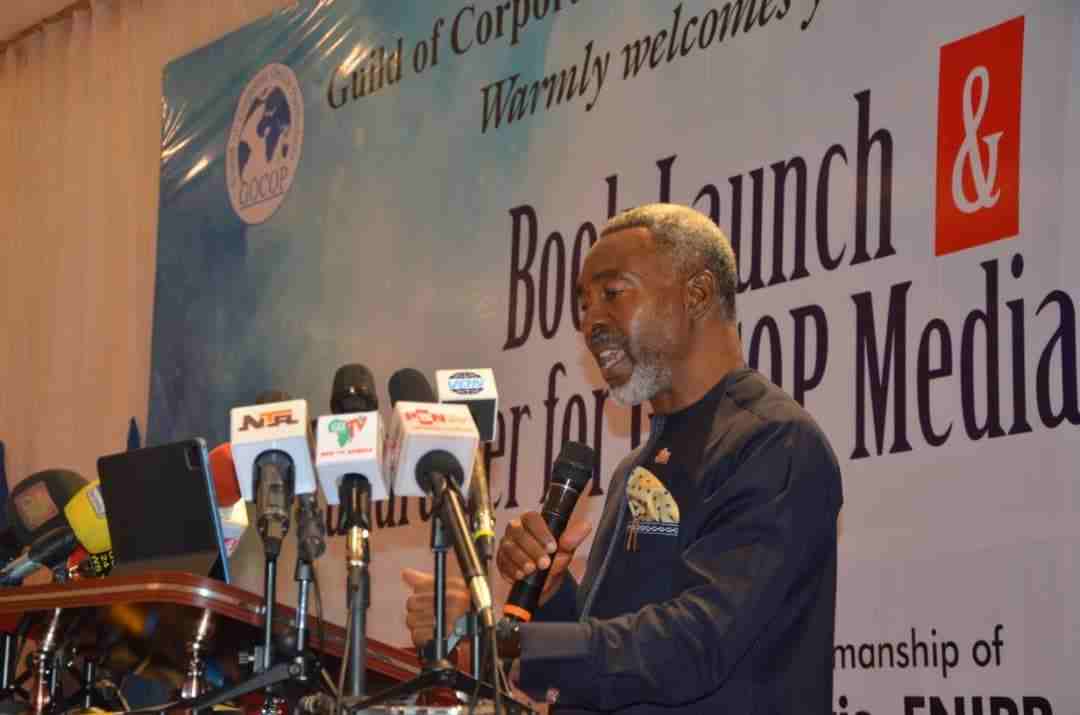
Being an abridged version of the book review delivered at the GOCOP book presentation on Tuesday, June 17, 2025. Dr Ike Neliaku, FNIPR, is the President & Chairman of Council, Nigerian Institute of Public Relations (NIPR), Abuja.
