


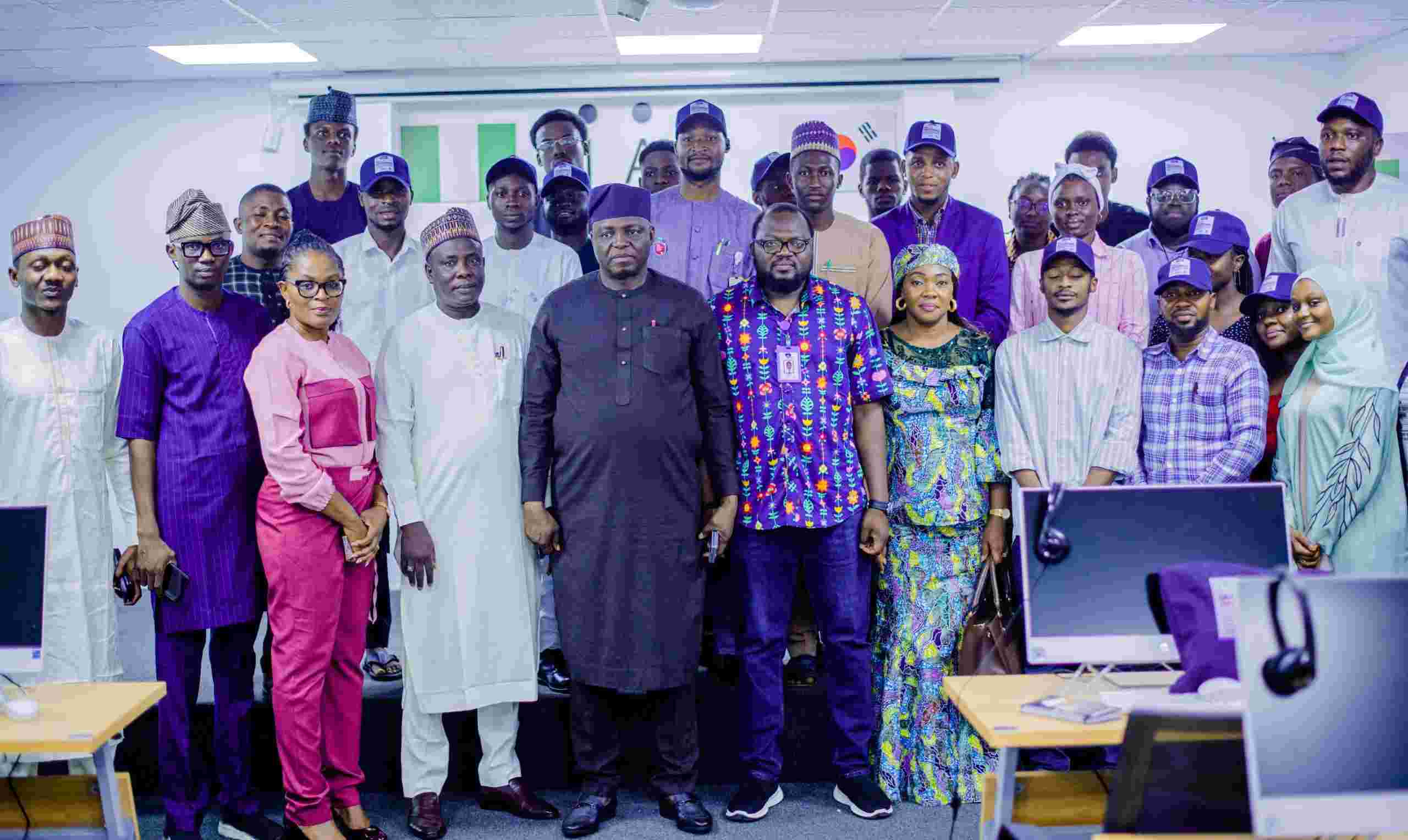
- Ministry and DBI Train 35 Youths In Digital Skills
THE MINISTER of Humanitarian Affairs and Poverty Reduction, Prof. Nentawe Yilwatda Gashwer, declared on Monday that President Bola Ahmed Tinubu’s administration is actively working toward transforming Nigeria into a nation where digital skills are exported as a key economic resource, much like crude oil.
He emphasized that the government’s vision is to shift Nigerian citizens from being mere consumers of technology to becoming its creators.
Prof. Gashwer made these remarks during the graduation ceremony of 35 Nigerian youths who completed a digital skills training program organized by the Federal Ministry of Humanitarian Affairs and Poverty Reduction in collaboration with the Digital Bridge Institute (DBI).
The event, held at DBI’s headquarters in Abuja, marked a significant milestone in the administration’s efforts to empower youths with market-relevant digital competencies.
A Future Built on Digital Empowerment
Speaking on the theme “Skills for Empowerment,” the Minister underscored the critical role of digital skills in today’s global economy, which he described as being “rewritten in code, driven by data, and powered by creativity.”
He stressed that digital literacy has become the foundation of economic power worldwide and that Nigeria must position its youth to compete and thrive in this evolving landscape.
“This initiative, under President Tinubu’s Renewed Hope Agenda, was not designed to distribute aid but to empower individuals with agency.
“The future we envision is not one where people wait to be rescued, but where they rise as solution creators, job makers, and wealth builders,” Prof. Gashwer stated.
Addressing the graduates, he said: “You are not just graduates; you are the vanguard of a new Nigeria—a Nigeria where young people do not flee from poverty but defeat it with knowledge; a Nigeria where digital skills are exported like oil; a Nigeria where we are no longer consumers of technology, but its creators.”
Expanding Opportunities Through Tech Hubs and Digital Platforms
The Minister further outlined the government’s plans to establish community tech hubs across the country, where skills development and innovation will be fostered.
He also highlighted ongoing efforts to create online platforms that connect skilled Nigerians with both local and global opportunities, as well as funding pathways to help innovators transition their ideas from conception to commercialization.
“If we want to reduce poverty sustainably, we must make wealth inclusive, digital, and locally driven,” he added.
DBI CEO Highlights Importance of Skills for Economic Self-Reliance
In his remarks, the President and CEO of DBI, Mr. David Daser, commended the Minister for his dedication to national development and his support for the program.
He noted that the theme of this year’s training, “Skills for Empowerment,” directly addresses the urgent need for economic self-reliance through practical skill acquisition.
“As a nation striving toward sustainable development, equipping individuals with relevant, income-generating skills is indispensable,” Daser stated. He revealed that the training program was not confined to Abuja but extended to DBI’s campuses in Enugu, Lagos, Yola, and Kano, ensuring broader accessibility and inclusivity.
Participants received hands-on training in high-demand areas such as Web Application Design, Graphic Design, and Image Editing, equipping them with tools to thrive in the digital economy.
“These are not just technical skills — they are instruments of transformation, pathways to independence, creativity, and sustainable livelihoods,” Daser said.
A Call to Action for Graduates
The DBI CEO urged the graduates to view their certification not as an endpoint but as the beginning of a journey toward innovation and value creation.
“I encourage you to see yourselves not just as job seekers, but as job creators — as catalysts of hope and change,” he said.
Daser reaffirmed DBI’s commitment to advancing Nigeria’s development through technology, capacity building, and strategic partnerships aimed at reducing poverty and empowering citizens nationwide.
The event concluded with the presentation of certificates to the graduates, symbolizing their readiness to contribute to Nigeria’s digital economy and the Tinubu administration’s broader vision of a self-reliant, technologically driven nation.
