


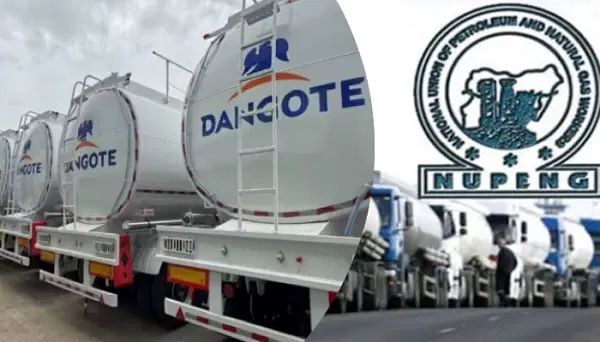
A SIGNIFICANT confrontation is brewing between organised labour and one of Africa’s largest conglomerates, as workers’ rights organisations are throwing their full support behind the Nigeria Union of Petroleum and Natural Gas Workers (NUPENG) in its dispute with the Dangote Group.
The conflict centres on allegations that Dangote is engaging in anti-union practices, including the forceful formation of a company-controlled union and the persecution of labour activists.
In separate press statements, the Campaign for Democratic and Workers’ Rights (CDWR) and Socialist Labour declared unflinching solidarity with both NUPENG and the Nigeria Labour Congress (NLC) in their fight against the Dangote Group’s policies.

The CDWR commended the NLC for supporting NUPENG’s planned protest action, calling it a crucial step for all Nigerian workers facing “increasing exploitation and denial of rights.”
The core of the dispute is Dangote’s reported refusal to allow tanker drivers and other workers at its new refinery to join NUPENG, the statutorily recognised union for petroleum sector workers. Instead, the CDWR alleges the company is insisting workers join a management-controlled “yellow union,” a practice they describe as “undemocratic and unlawful.”
“This decision is not only illegal, it is deeply immoral,” stated a separate advisory from the group Socialist Labour, which also called for mass public support of the NUPENG strike.
CDWR argues that non-unionised drivers, desperate for work and without collective bargaining power, are forced into unsafe working conditions.
CDWR also sees the current standoff as part of a broader, systemic issue in Nigeria. They condemn the widespread use of “casualisation, contract staffing, outsourcing, and indecent work conditions” designed to deny workers job security, decent wages, and pension benefits while maximising corporate profits.
To address this, the CDWR is urging the NLC to broaden its solidarity into a nationwide campaign against casualisation.
It called for the establishment of anti-casualisation committees across all states and sectors to organise collective resistance and demand the absorption of casual workers into permanent employment.
On its part, Socialist Labour, in a strongly-worded statement of support, condemned Dangote’s move as “illegal” and “deeply immoral.”
It argued that the absence of independent union representation leaves workers vulnerable to exploitation and creates significant public safety risks. Socialist Labour cited the recent death of Ruth Otabor in Edo State as a tragic example of these risks.
Ms. Otabor was reportedly injured by a non-unionised Dangote cement truck driver, although the conglomerate has since denied the claim, and instead alleged that the truck belonged “certain truckers with no affiliation to Dangote” but who continued to display its logo on their trucks “often for personal gain or other undisclosed motives.”
The statement alleges that non-unionised drivers, under pressure to meet demanding schedules without regulated rest periods, often drive in a manner that endangers public safety.
The organisation accused Dangote of leveraging its significant influence to exploit Nigerian workers and resources, adding that the company benefits from state-backed advantages, such as land acquisitions and import duty exemptions, while paying workers less than industry competitors and employing a majority on a contract basis, denying them full employee benefits.
“A desperate non-unionized worker will not question their employer, even when directed to drive while tired or for excessively long hours,” the statement reads.
It positions NUPENG as the essential defense for workers against such practices, giving them the collective power to refuse unsafe working conditions.
Socialist Labour commended the NLC for its solidarity with NUPENG in the dispute, urging the public to understand that potential fuel scarcity arising from the strike is a direct result of the Dangote Group’s policies.
