


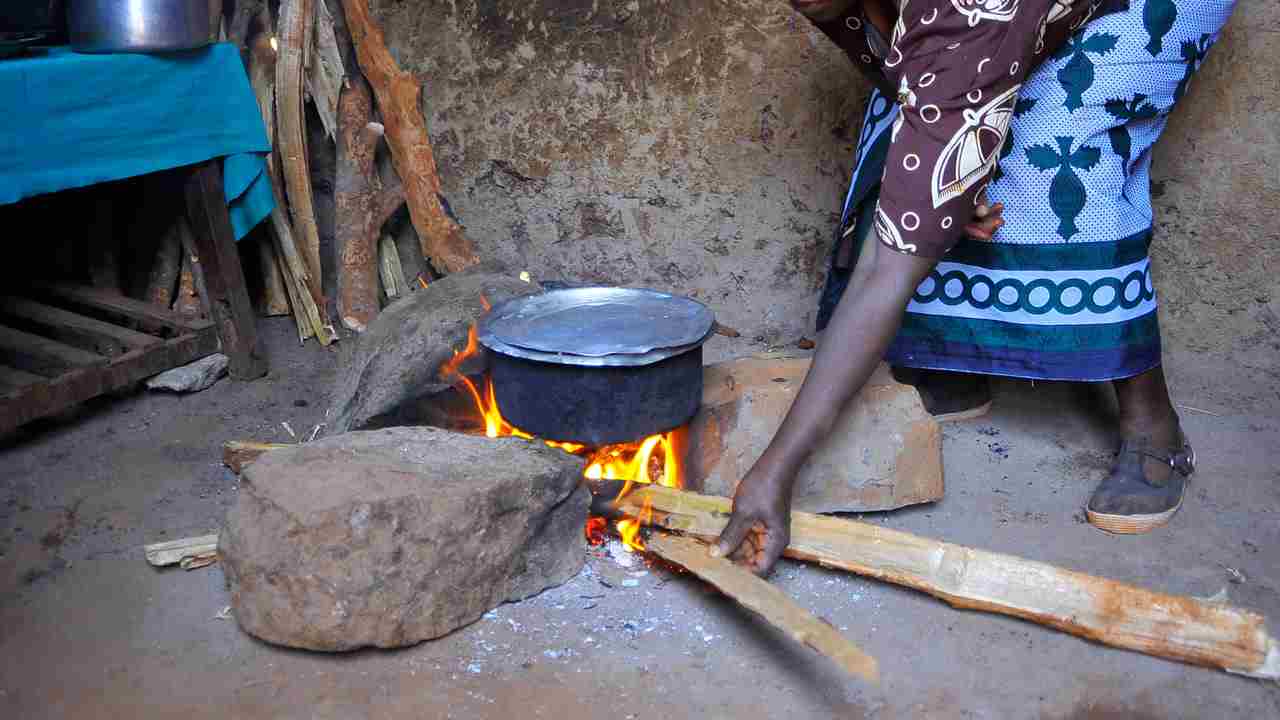
THE FEDERAL Ministry of Women Affairs (FMoWA) has partnered with key stakeholders in the energy sector to address premature deaths caused by exposure to toxic smoke from firewood and traditional cooking stoves.
The Minister of Women Affairs, Hajiya Imaan Sulaiman-Ibrahim, announced the initiative during a multi-stakeholder engagement held in Abuja on Wednesday. She emphasized that the program aims to alleviate energy poverty among Nigerian women by promoting clean energy solutions.
Sulaiman-Ibrahim stated that the initiative would introduce solar-powered equipment for agricultural development and household use, reducing reliance on harmful traditional cooking methods.

“Over 80,000 women die prematurely each year due to toxic smoke from firewood and traditional stoves,” she said. “This initiative seeks to reach women across all 774 local government areas in Nigeria.”
She described energy poverty as both a technical and social issue, noting its disproportionate impact on women. “Energy poverty perpetuates cycles of unpaid labour, economic dependence, and health risks. In many communities, women spend up to eight hours a week gathering firewood,” she explained.
“Through this program, we will expand access to solar home systems, clean cooking technologies, solar water pumps, e-mobility tools, and other productive-use appliances nationwide,” she added.
Mr. Abba Abubakar-Aliyu, Managing Director of the Rural Electrification Agency (REA), reported that under the $550 million Nigerian Electrification Project, approximately eight million Nigerians and 35,000 businesses—including 12,000 women-led enterprises—had already benefited.
He further disclosed that President Bola Tinubu had approved a 750 million dollars off−grid energy project, with 410 million dollars allocated for mini-grids and 240 million dollars for solar home systems.
“This presents a significant opportunity to scale these interventions across the country,” he said.
Mr. Khalil Halilu, Executive Vice Chairman and CEO of the National Agency for Science and Engineering Infrastructure (NASENI), highlighted energy poverty as a major obstacle to women’s progress, particularly in rural areas.
Represented by Dr. Olayode Olasupo, Director of Manufacturing Services at NASENI, he noted that limited access to clean energy restricts economic opportunities and endangers health and safety.
“Energy poverty encompasses not only a lack of clean cooking solutions but also limited access to lighting and other essential services,” he stated. (NAN)
