



By Amos Aar
THE 18th edition of the Wole Soyinka Award for Investigative Reporting (WSAIR) held at the Abuja Continental Hotel (former Sheraton Hotel and Towers) ended without an overall winner, usually known as Investigative Reporter of the Year, although there were five runners-up out of the eleven finalists that had been announced by the Wole Soyinka Centre for Investigative Journalism prior to the event.
According to Prof. Abigail Ogwezzy-Ndisika, the chairperson of the 2023 Panel of Judges, and professor of Mass Communication at the University of Lagos, a total of two hundred and nine (209) entries were received and after the first level screening, the number reduced to ninety-nine (99).

Prof. Ogwezzy-Ndisika gave a breakdown of the 99 entries to include 29 from print; 45 from online; 7 from television, 2 from radio; 8 editorial cartoons; and 8 entries from photo. She added that further screening trimmed down the number to ten finalists. According to Prof. Ogwezzy-Ndisika, most of the entries were discovered not to be investigative reports but rather in-depth researches hence their disqualification.
ALSO READ: How WSCIJ Sustained Advocacy For Independent Media, Accountability Reporting – Motunrayo Alaka
“This shows that most of the entries were not investigative stories but in-depth researches. So, for today’s awardees, their stories showed depth of research, that is, use of primary and secondary data and provision of evidence and documentation. They demonstrated good journalistic skills through quality reporting and delivery,” Prof. Ogwezzy-Ndisika explained.
The first runners-up include Kemi Busari of Premium Times (online category), Victor Asowata of the TheWill newspaper (editorial cartoon category) who was given award for his pictorial skills even as the category did not have a runner-up, Lami Sadiq of the Daily Trust (print category) and Sharon Ijesan of TVC (television category).
Prof. Ogwezzy-Ndisika noted that while some categories produced three finalists, some had two, others had only one and the radio had none based on the quality entries.
In the categories with three finalists, the third runner up was commended with a cash price of one hundred thousand naira (N100,000) and a plaque, the second runner-up got two hundred thousand naira (N200,000) with a smart phone and plaque while first runner-up got three hundred thousand naira (N300,000), a laptop and an opportunity to travel abroad.
Popular among the stories that enabled the runners-up to win awards include Kemi Busari’s story entitled: “INVESTIGATION: Baba Aisha Herbal Medicine: The deadly concoction consumed by many Nigerians,” “Human trafficking spotlight,” by Sharon Ijesan, story on organ harvesting in the country Abuja by Lami Sadiq, a cartoon entitled: “fear him not. He is doing his job while I do what I know best” that captured the kind of hardship Nigerians encountered during the cash crunch experienced at the beginning of 2023 occasioned by naira redesign policy, among others.
ALSO READ: 40 Speakers For Amplify In-depth Media Conference As 11 Finalists Picked For 18th WSAIR In Abuja Weekend
A posthumous award was also conferred on the Late Prof. Lai Oso, who was a human rights lawyer for being the voice of the voiceless and for his contribution to investigative journalism in the country.
While Simisola Oso, daughter of the posthumous awardee, thanked the organisers for recognising and honouring her father who she said had built the future of many young people, other awardees expressed appreciation to WSCIJ and promised to redouble their efforts in investigative reporting.
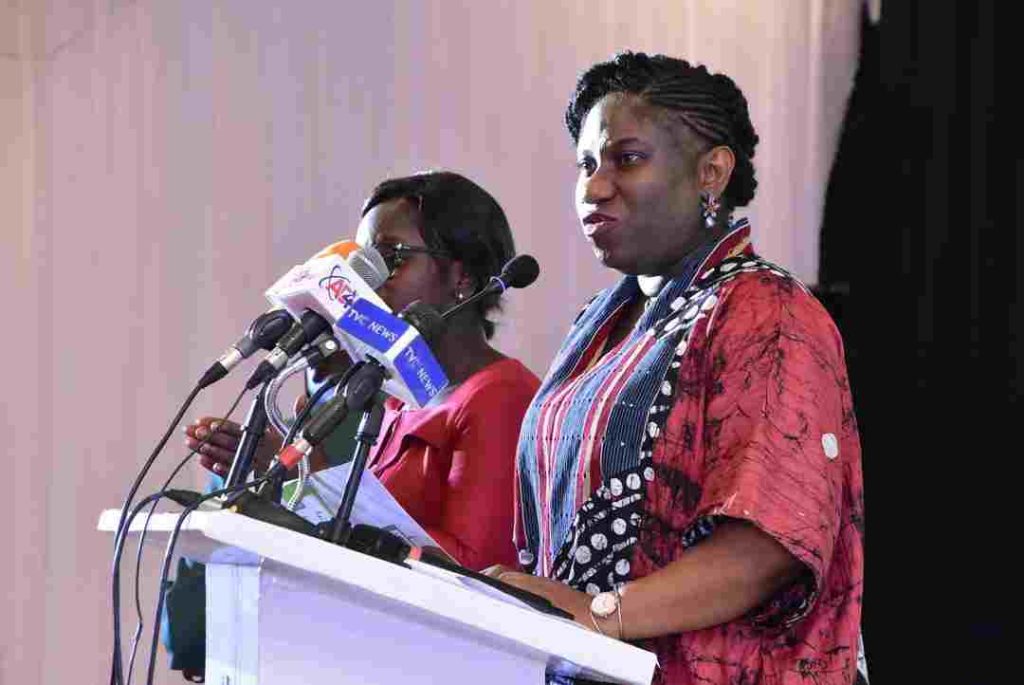
In her closing remark, Mrs Motunrayo Alaka, Executive Director/CEO of WSCIJ, said the fact that there was no WSCIJ Investigative Reporter of the Year as a result of the failure to meet the criteria is a wake-up call for journalists to intensify their efforts in holding people in government positions and all levels of leadership accountable so that poverty and underdevelopment will be reduced in Nigeria.
“The WSCIJ award is not a souvenir, so we don’t share it round. It’s a statement of fact that we need to do more by holding every government, every authority, not just political leaders, but leaders in all sectors, accountable. We need to ask the right questions,” Mrs Alaka stressed as she assured that the WSCIJ would continue to hold conversations with security agencies to protect investigative journalists, noting the risks they face in the course of carrying out investigations.
ALSO READ: Trade Unionism In The Era Of Economic Crisis: Addressing The Increasing Poverty Level Of Nigerian Workers Part 1; By Omotoye Olorode
Alaka, who appreciated WSCIJ partners for being supportive since 2010, urged journalists to also tell the stories of “great people” who are making positive impact in the society in one way or another.
