


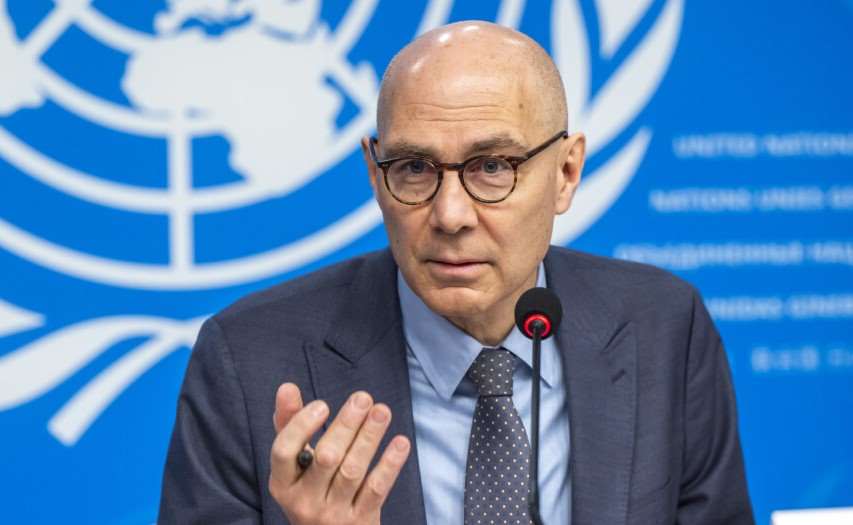
UN HUMAN Rights Chief, Volker Türk, has raised concerns about the human rights risks of a proposal to transfer people from five European Union countries to Rwanda.
Türk said this on Tuesday in response to media queries concerning the proposal between five EU countries and Rwanda, where they have no genuine connection and which has its own set of human rights challenges”.
Türk said his Office was not privy to the text of the proposal.

“The solution does not lie in single measures – often very costly – of finding countries far away to deal with one aspect of migration governance, or in externalising human rights obligations,” he said in a statement.
Instead, he called for the drivers of migration to be tackled head-on, including through investment that creates viable opportunities at home.
Those drivers include human rights challenges, huge inequalities, an inequitable economic and financial system that disadvantages many countries in the Global South, a surge in violent conflicts and heightened geopolitical tensions.
At the same time, societies in the Global North are rapidly ageing and grappling with labour shortages, Türk said.
He called for a comprehensive approach to migration governance anchored in human rights, including expanded regular migration pathways.
In a related development, the UN Human Rights Office has said that gang violence continued to have a devastating impact on the population in Haiti, while intensified security operations also pose human rights risks when they are not conducted in full compliance with international human rights law.
The UN Human Rights Office has documented 4,595 people killed and 2,050 injured as a result of armed violence, since the beginning of the year until Oct. 31, and 1,497 cases of sexual violence from Jan. 1 to Sept. 30.
It, however, noted that gangs were adapting their tactics as security operations intensify, including through retaliatory attacks, kidnappings, the forced recruitment of children and restrictions on people’s movements. (NAN)
