


I DO NOT have access, yet, to the book, Tinubu: From Renewed Hope to Despair, which was reported to have been prevented from being launched at the Arewa House of Ahmadu Bello University.
The conversation regarding the book on the Osoba for Eternity (O4E) WhatsApp platform was triggered by a review of the book by Comrade Professor Jibrin Ibrahim (Ibrahim), titled: “Bola Ahmed Tinubu: the Most Consequential President”. Jibrin Ibrahim’s review of the book was sufficiently authoritative, one can assume he reflected the main issues in the book on Tinubu’s administration since May 29, 2023.
Neither the claims of availability or affordability of electricity are credible. Most Nigerians, especially working class Nigerians, do not have access to, or cannot afford, reasonable supply of electricity. Supply is neither steady nor predictable. Yes, less and less number of Nigerians are using power generators; but that is not because electricity from the national grid is available or accessible. It is simply because practically only millionaires can afford generators or fuel to power them! Most consumers still cannot afford pre-paid meters; many, like me (in Ogbomoso), who have paid the charges, including installation charges, still don’t have the meters.
Notwithstanding the ramified contextualisation of the Tinubu (2023-2026) administration in the overall history and character of Nigeria’s federal administrations of the Fourth Republic (1999 to 2006), the Ibrahim review singled out Bola Ahmed Tinubu (BAT) as the “Most Consequential”. I will return to the paradox of that “ramified contextualisation” and indeed, continuity of the disaster that neo-liberal capitalism under Nigeria’s ruling class foisted on Nigeria’s working people (especially since Obasanjo’s second coming on May 29, 1999), and the focus on the allegedly unique consequentiality of BAT’s presidency. If indeed there’s anything unique about the BAT’s incumbent presidency, I will assert, as a starter, that it is the current disastrous outing of Nigeria’s ruling class!

ALSO READ: Uzodimma And Okorocha: Big Politicians And Tricks Of Politics; By Owei Lakemfa
I will return to the implications of what I characterised in the paragraph above as the paradox of at once contexualising a particular presidential disaster in the overall ruling class disaster that had befallen Nigeria (especially since Obasanjo’s inauguration of the Third Republic in 1979), towards fully apprehending and neutralising the illusion that segments of Nigeria’s ruling class and the Nigerian elite had come to internalise.
I request a detour to address the response, loaded in places, to Ibrahim’s “Bola Ahmed Tinubu: The Most Consequential President”, by Professor Tunde Bewaji (Bewaji) who sought to defend, and asked us to respond to, “…my [his] enumerated developments from 2023 which differs (sic) from 1999 to 2023 or admit evidence tendered as rebuttal of feudal….”.
I sympathize with Comrade John Odah’s indignation at Bewaji’s “…enumerated developments from 2023…” and the distractions they may constitute, but we must take on the challenge of appropriate response to Bewaji because large segments of the Nigerian middle class are on all fours with his enumeration, and the ethnic-regional nuances embedded in them! The ethnic, sub-ethnic, regional and confessional nuances are always needed by Nigeria’s elite across the board for their intra-elite, intra-ethnic and regional competition and negotiations, especially among members of the middle class — the social base of the political and economic wings of the ruling class! The Nigerian middle class, certainly a significant segment of it across the country, we must emphasise, is a victim of the mentality that produces, reproduces and actively ventilates the carefully nuanced and embedded support for the various transactional factions of the Nigerian ruling class which they call political parties.
Before moving to the substantive issues on which Tinubu is alleged to have made progress, we must ask why the twin matters of “feudalism” “feudalist” and “pastoralism” surfaced, practically from nowhere, in Bewaji’s response to Jibrin Ibrahim! The plain answer is, of course, that over time, the politicisation of ethnic, cultural and regional categories and differences among the Nigerian masses have always been the mainstay of elite hegemonies and intra-elite negotiations and horse-trading, even among segments of the elite which parade “left” credentials!
ALSO READ: When The Gulf Looks Beyond U.S.: The Limits Of American Security Primacy In A Region Searching For Its Own Answers; By Lanre Ogundipe
Due to the constraints of time and space, I will respond to just three (according to Bewaji) of Tinubu’s alleged achievements: better roads, tertiary institutions (sic), and energy (electricity and fuel subsidy removal). The “better roads” claim is particularly tragic. The Lagos-Ibadan road project is not even a Tinubu invention, and it remains far from being a model. But leave Ibadan and try to reach Oyo City, Ogbomoso and Ilorin. Don’t bother to proceed to Jebba, Minna, Abuja! My niece spent fourteen hours almost on one spot around Lapai just outside Abuja (en route Ogbomoso) only about four weeks ago; tanker drivers were protesting against the terrible condition of the roads. Nigeria’s roads are a nightmare. Every regime does grha-ghra for eight years, contractors and their friends in the government laugh a whole lot to their banks; and that’s been always it!
Good roads, as example of government (any government) achievement is pure hallucination! We are not even raising the issue of the cost of the road contracts or the source of the funds. I have also found that roads across most of Nigeria are simply horrible — Lagos to Benin, Benin to Asaba, Onitsha to Otukpo. Generally, hardly anyone who has a choice travels by road in Nigeria today.
Bewaji supported the removal of fuel subsidy by Tinubu with the same excuses the Nigerian ruling class deployed periodically since the 1970s for taxing Nigerians and imposing pain on them. Tinubu and Buhari were on record opposing removal of fuel subsidy: Tinubu, even as late as 2012 Occupy Nigeria Protests. Tinubu’s government, all ruling class parties, even some of the alleged labour leaders, endorse this excruciating burden being imposed on Nigerians.
Neither the claims of availability or affordability of electricity are credible. Most Nigerians, especially working class Nigerians, do not have access to, or cannot afford, reasonable supply of electricity. Supply is neither steady nor predictable. Yes, less and less number of Nigerians are using power generators; but that is not because electricity from the national grid is available or accessible. It is simply because practically only millionaires can afford generators or fuel to power them! Most consumers still cannot afford pre-paid meters; many, like me (in Ogbomoso), who have paid the charges, including installation charges, still don’t have the meters.
ALSO READ: The Rule of Law, Nigeria’s Only Hope For Survival (3); By Hassan Gimba
Immediately following his inauguration as Nigeria’s President, Tinubu announced the cessation of fuel subsidy. PMS price per litre was raised from N165 to over N1,000! The siege on public-funded refineries were led by the functionaries of Tinubu’s government. The then chairman of government’s Fiscal Committee declared publicly that Nigerians should pray that government refineries will not work; that same minister recently threatened Nigerians that Tinubu’s goverment will make laws that will prevent reversal of Tinubu’s so-called economic reforms! The Nigerian government bought 20% of Dangote shares for 2.2 billion US dollars and guaranteed 600,000 barrels daily crude supply; we are now told that that 20% equity is now worth only 7%! Any wonder Dangote fully supports Tinubu’s so-called economic reforms including removal of fuel subsidy. This is not incompetence of government; it is conspiracy between those who hold state power and those who hold money power.
Professor Bewaji asserted “… no govt (sic) before this has done more for, tertiary institutions.” I think he was referring to tertiary (education) institutions. Notwithstanding his attendant and rather grudging “…lots more need to be done…”, this assertion is the most unfortunate in my view because it shows how deeply “political” biases endanger public purpose even among people who have access to information and should, therefore, know better. I will focus on the university the Nigerian in the last eleven years or so had been perhaps the most traumatic years for the Nigerian University System and the education sector generally.
Budgeting allocation to Education, under terribly devalued naira, had never been as low as it is in 2026 at 6%. Tinubu’s government, like those before it, had to cover-up these and related disasters with huge and multiplying bureaucracies (with cronyism and appropriate propaganda) like TETFUND, NELFUND and TISSF (Tertiary Institutions Staff Support Fund). At the same time and like previous ruling class regimes in both PDP and APC, more and more universities are being established across the country — universities have become progressively underfunded, and especially understaffed, constituency projects. FG’s NUC had become fully complicit in the creation of mushroom universities not just by the FGN but by the state governments and private (local and foreign) traders across Nigeria.
ALSO READ: Ibrahim Muazzam And The Quest For Philosophical Understanding; By Jibrin Ibrahim
ASUU’s press conference statement following the May 9-10, 2026 at NEC Meeting at Modibo Adama University (Yola) not only exposed the continuing irresponsibility of the FGN regarding Nigerian University system, it exposed the unending siege on Nigeria’s education sector and the government propaganda that divert attention from the siege. The said press conference, among other things, complained about arbitrary directives and “objectionable” education policy pronouncements by governments and their bureaucracies, to universities by governments and their bureaucracies, shoddy implementation or total non-implementation of the 2025 FGN-ASUU Agreement, and unresolved lecturers’ welfare issues.
For like fifty years now, nobody had any business taking the ruling class promises of “hope”, “old” or “renewed”, seriously. Various segments of Nigeria’s working class, their organizations and even segments of the Nigerian elite, in the last five decades saw today’s disaster developing; they warned and organized against it! Because some of us are not victims of the illusions which the ruling class manufactures every four years in what they call “elections”, we have always insisted that the task of Nigeria’s working class is to organize, independently and as a class, towards overthrowing ruling class power in its totality and by all means necessary. This task subsists, 2027 or not!
All the other issues “enumerated” by Bewaji are related especially regarding their traceability to their neo-liberal IMF/World Bank foundations erected by military force since the close of the 1970s and renewed when the (more or less) same personnel returned as “civilian” presidents post-1999!
ALSO READ: Pension Week 2026: Pension Protection As A Matter Of Dignity, Security And Social Justice; By Ivo Takor
It is the neo-liberal prescriptions implemented and supervised by international finance capital and Nigeria’s ruling class (Babu’s “The Two Vultures”) that keep manifesting in the social and economic policies. Most critiques of ruling class economic and social policies, especially since 1978, tend to ignore the evil wrought by the combined powers of “the two vultures”.
The tendency to focus on the “here and now”, the specificity of incumbent presidencies or regimes, produces a spectrum of political tendencies. One tendency is to simply organize for electoral opposition backed with a campaign that the incumbent regime is morally compromised (allegations of stealing or embezzlement of public funds, rigging of elections, tribalism, religious intolerance, certificate and other forgeries, nepotism, etc.), or simply “incompetent”. This tendency does not accept that a ruling class exists that subscribes to social and economic policies which perpetuate the class irrespective of the particular political party to which a particular public officer, president or an individual belongs. The tendency also entrenches the superstition of “good leaders”, “bad leaders”; even messiahs or “satanic” leaders which the elite propagate massively among the victims of class rule.
There is also the tendency that may be characterized as the reform-and/or-revolution tendency. It is from here that conspiratorial and revolutionary insurrectionist tendencies emerge. It is also from here that the ruling class recruits those who sell the illusions of change or actual programs of amelioration (DFRRI, Better Life for Rural Women, SURE-P, PTF, all sorts of First-Lady” projects, etc., etc.) without fundamental relief for the masses of victims of exploitation and oppression. Because of the power of the ruling class to impose its world view and policies, having regard to its position of advantage to co-opt a significant segment of the middle class (no matter how decrepit that class gets) the necessity and inevitability of the revolutionary option and overthrow of the ruling class in today’s peripheries of capitalism like Nigeria must underpin any support for, or articulation of, ameliorative reformist polices.
In concluding this intervention on Professor Bewaji’s response to Professor Jubrin Ibrahim’s review/response to “Tinubu; From Hope to Despair”, I seek to evaluate what to make of the two positions each time the ruling class confronts the Nigerian working people with their electoral processes — the processes of their largely intra-class regrouping, negotiations, and re-negotiations.
ALSO READ: Nigeria And The Metaphor Of Fake Sleep; By Iduh Onah
I hope that my “evidence” to show that the claims of Tinubu’s success on roads, education, and economic policy direction (taxes, value of naira, privatization, demobilization of public-owned refineries, fuel subsidy removal, education etc.) are sufficiently objective to persuade all concerned that Tinubu had merely continued the logic of World Bank/IMF recolonization of Nigeria which the ruling class embarked on since 1978!
There is no single question concerning Nigeria’s social and economic policies that the Nigerian ruling class and their so-called parties disagree about. Jibrin Ibrahim made the point in his review of the CEDDERT book when he opined: “Journeys from HOPE TO DESPAIR are a re-current theme in the politics of Nigeria’s Fourth Republic as each government arrives with the zeal to perform worse than its predecessor”! He also made the point that “Ahmed Tinubu is in keen contest with Ibrahim Badamasi Babagida (IBB) in the race to establish the most consequential president in Nigeria’s post-independence history”.
On “… the zeal (of regimes) to perform worse than its predecessor” point by Ibrahim, I think President Umaru Yar’Adua was on his way to being an exception when his bad health led to his early death. I refer specifically to Yar’Adua’s courage to countermand some of the looting called privatization under Obasanjo’s regime, his reduction of petrol price, and the regime’s amnesty programme for some of the Niger Delta activists.
Contrary to Comrade Ibrahim’s glowing verdict of approval of Obasanjo’s Administration (“… looking back at the past 27 years, his [Obasanjo’s] government had more commitment, competence, purpose and planning than subsequent ones”), I will think that Obasanjo’s administration (1999-2007) was the foundation of the social and economic crisis of Nigeria’s Fourth Republic: a “civilian” return to the scene of the ruling class crimes which debuted under Obasanjo in 1978 and, as always, fully superintended by Washington and International finance capital.
The foregoing is why we insist that Tinubu and the social and economic disaster appertaining to the performance of APC since May 29, 2023, is the continuation, a logical one at that, of the IMF disaster which its Nigerian agents, the ruling class, imposed especially since 1978!
Tinubu is also “the leader” of the party which ran, some will say “which ruined”, Nigeria under Buhari’s eight year long regime before 2023. The party’s manifesto, if any exists or is different from that of PDP, didn’t change!
For like fifty years now, nobody had any business taking the ruling class promises of “hope”, “old” or “renewed”, seriously. Various segments of Nigeria’s working class, their organizations and even segments of the Nigerian elite, in the last five decades saw today’s disaster developing; they warned and organized against it! Because some of us are not victims of the illusions which the ruling class manufactures every four years in what they call “elections”, we have always insisted that the task of Nigeria’s working class is to organize, independently and as a class, towards overthrowing ruling class power in its totality and by all means necessary. This task subsists, 2027 or not!
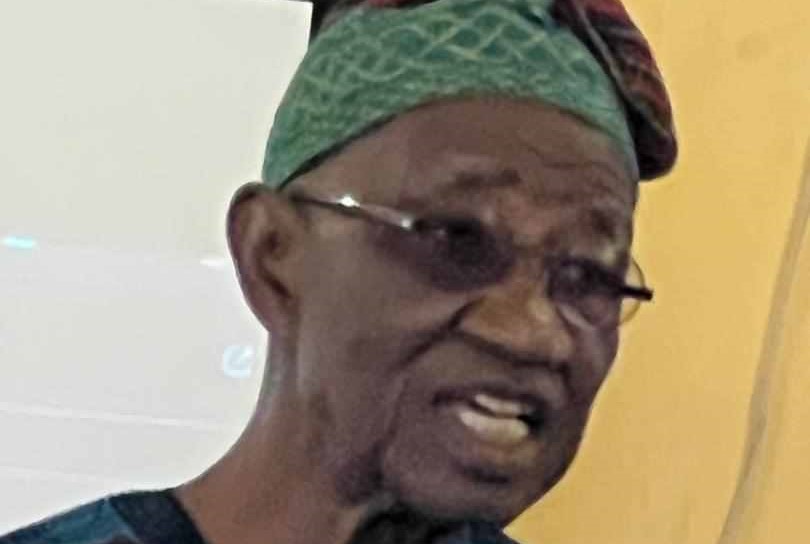
Being a paper presented at Osun State University, Oṣogbo on Thursday, August 20, 2026, by Emeritus Professor Olorode, Member, Secretariat Collective, Movement for Socialist Transformation (MOST-Nigeria). Prof Olorode can be reached via e-mail: omotoopo@gmail.com
