


By Iduh Onah
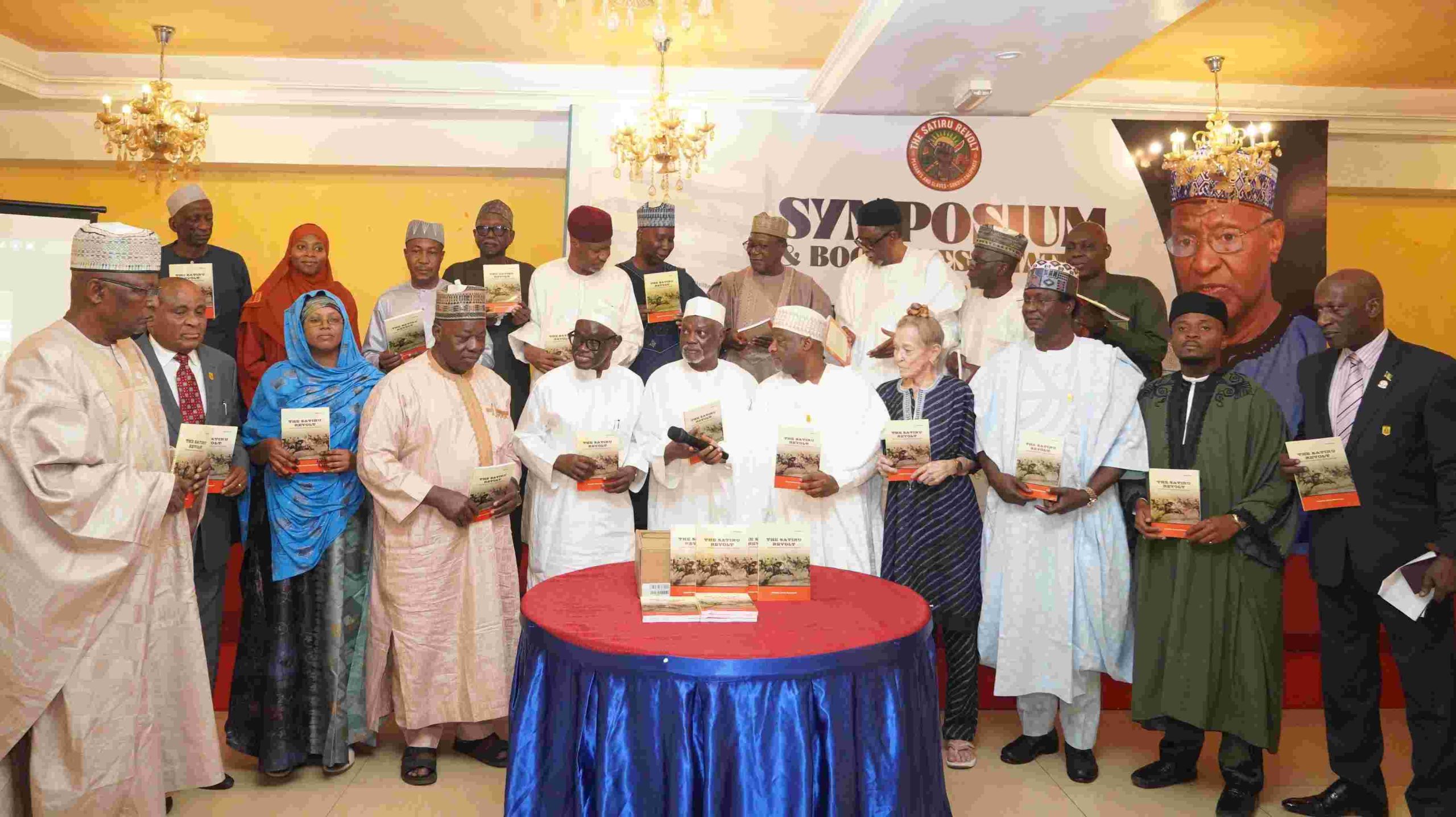
WEDNESDAY, April 29, 2026, was indeed a sobering day, when veteran but still intensely engaging generation of public intellectuals and activists gathered for a deeper reflection in memory of one of their own – Professor Abubakar Sokoto Mohammed – who died late last year.
From the opening remarks through the goodwill messages to the panel of discussants, audience interrogation and the book review, there were unmistakable mixed narratives – of lamentation, celebration, heroism and humanism – all of which combined to unveil Prof Mohammed’s iconic and exemplary life – life of service, of commitment, of selfless dedication to popular causes.
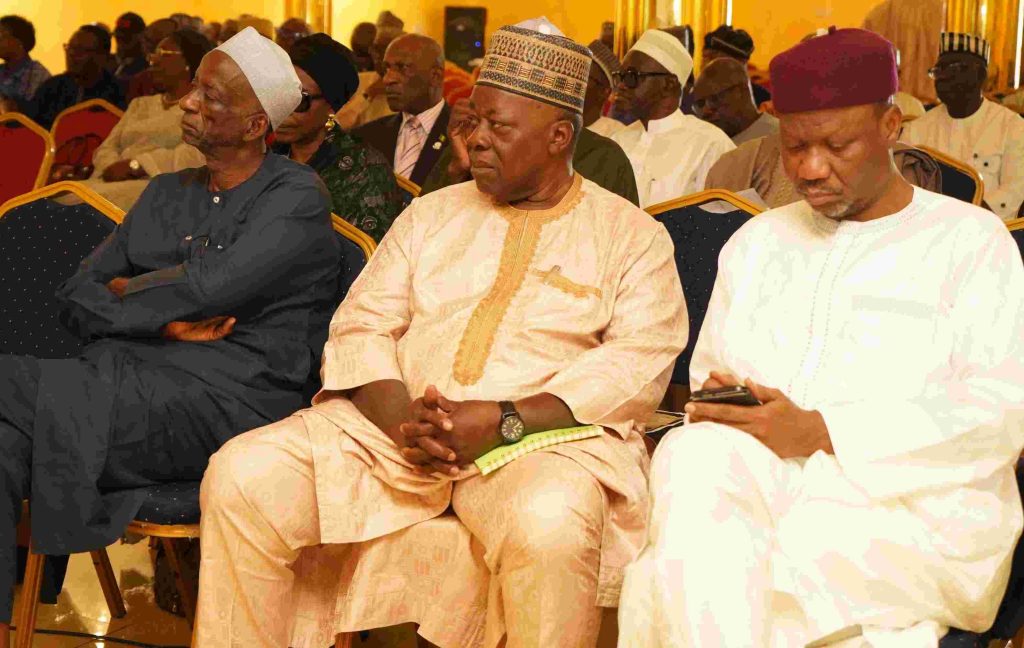
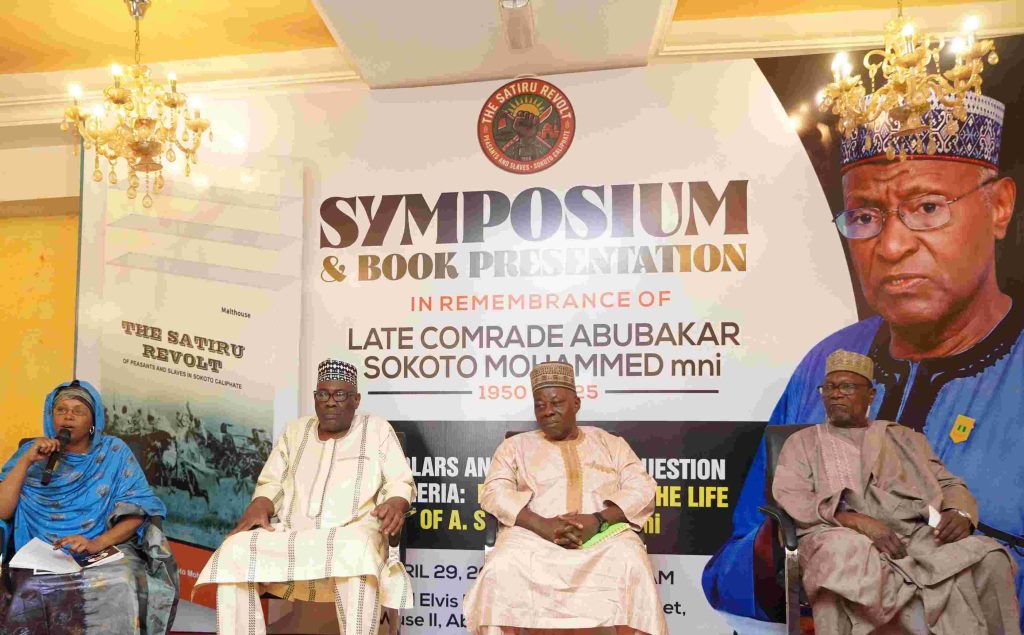
The occasion was the Symposium and Book Presentation anchored by the Centre for Democracy and Development (CDD) to honour Prof. Mohammed, whose death on December 11, 2025 at the age of 75 created a vacuum many testified would not only be difficult to fill but worthy of emulating.
What emerged from that gathering goes beyond memorial oration but a mosaic of memory, a collective attempt to assemble the many facets of a man who defied easy categorisation. Scholar, activist, principled troublemaker, gentle networker, Marxist intellectual, Fulbright scholar, trade union educator, and patron of liberation movements – Professor Abubakar Sokoto Mohammed was all these and more.
To those who closely knew him, he was simply AS: a name that invoked significance, as Dr Otive Igbuzor would later remark, recalling that Mohammed once served as Secretary General of the Socialist Congress of Nigeria (SCON), the highest position available within that formation. His name, Igbuzor insisted, carries weight; a symbolism of what committed intellectuals ought to be doing with their lives.
The narrative around this symbolism began in Sokoto, where Prof. Mohammed received his primary education at a Catholic-owned school – an early exposure to religious and cultural diversity that would shape his lifelong refusal to allow identity politics to frame his persona.
Born the son of a World War II veteran, he made what Dr. Junaid Maina, who read Mohammed’s biography, called an incredible act of independent self-identification: he changed his name from Garba Mamman to Abubakar Sokoto Mohammed, a decision that signalled a mind unwilling to accept inherited labels without question.
Absorbed in the Marxist ferment that swept through Nigerian universities in the 1970s and 1980s, Prof. Mohammed would go on to become a Fulbright scholar to the United States, a journey that broadened his intellectual horizons without ever diluting his commitment to the struggles of Nigerian peasants, workers, and the dispossessed.
Prof. Tijani Bande, a scholar-diplomat who knew Mohammed well, offered a characteristically sharp observation: that Mohammed possessed the special attribute of speaking clearly – a trait Bande noted as unusual for sociologists.
For Bande, Mohammed, “lived the life of a scholar,” stressing that “scholarship is fundamental, and scholars are central to society.”
That principle – the centrality of scholarship to social transformation – animated everything Mohammed did. He was not, as Prof. Dung Pam Sha of the University of Jos, described him, merely a classroom intellectual, but the archetype of the “organic scholar”, enmeshed in struggles in multiple fronts – struggles of peasants, of workers, amongst others. Prof Pam, who said he succeeded Mohammed as president of the Fulbright scholars in Nigeria, put it simply: “Abubakar Sokoto tells the story of what we should be doing”: that is – scholarship as practice, theory as weapon, teaching as liberation.
Prof. Musa Umar of NIPSS offered a vivid illustration of Mohammed’s principled stubbornness. At NIPSS, Mohammed got into serious trouble, Musa said – his salary stopped for six months on an issue of principle. The details matter less than the pattern: here was a man willing to suffer material deprivation rather than compromise on what he believed was right. When a list of ‘troublemakers’ was drawn up following a planned protest, Mohammed’s name appeared at the top, despite the fact that he had not even been involved in organising the protest.
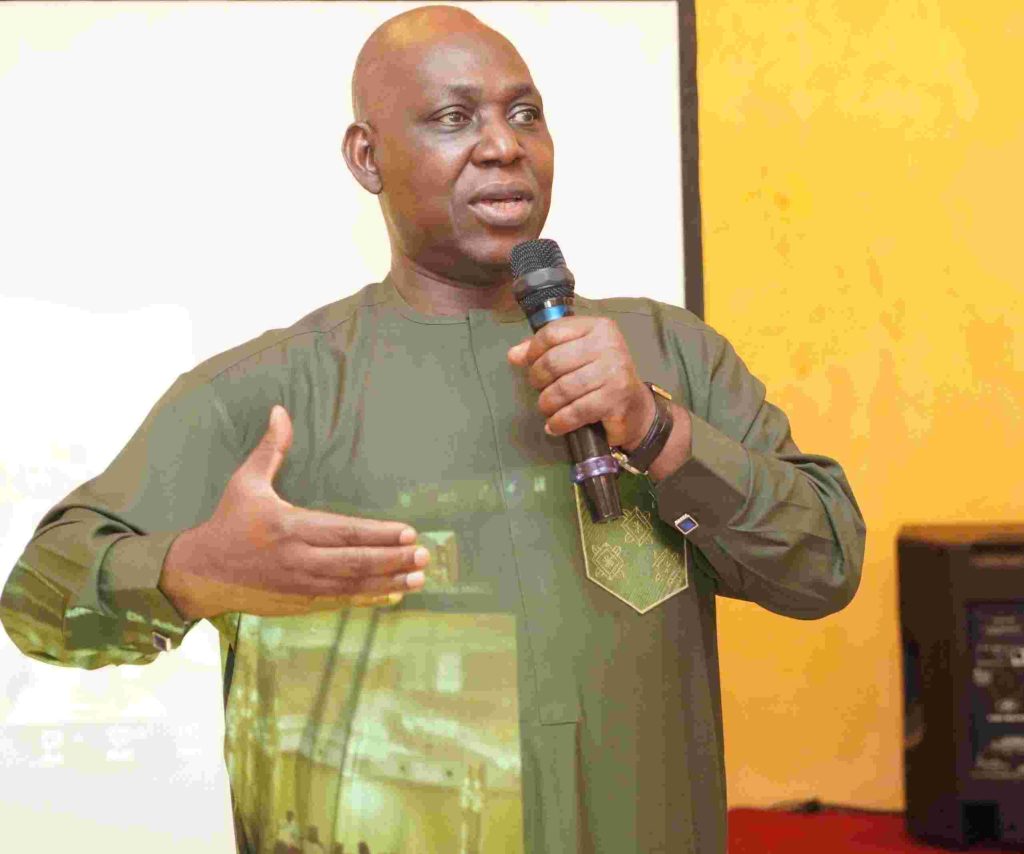
But his reputation for integrity preceded him, fairly or otherwise, Umar said, while also noting that Mohammed served in every department at NIPSS except finance – a telling detail that speaks to his unwillingness to be associated with anything that might compromise his ethical standing. He was, Umar revealed, a patron of YUSSAN, the Youth Solidarity on South Africa in Nigeria, connecting local struggles to the continental anti-apartheid movement.
That bond between the local and the global, the intellectual and the activist, found perhaps its most poignant expression in Mohammed’s relationship with the labour movement.
Comrade Ayuba Wabba, former president of the Nigeria Labour Congress (NLC), testified that Mohammed formed a strong bond with him after an introduction by Comrade John Odah, former General Secretary of NLC, when he went to NIPSS. That bond was not merely social but deeply pragmatic as, according to Wabba, Mohammed later became deeply involved in the educational programme of Wabba’s union, the Medical and Health Workers Union of Nigeria. The outcome, Wabba said, was immensely beneficial in building trade union consciousness of the union’s rank and file.
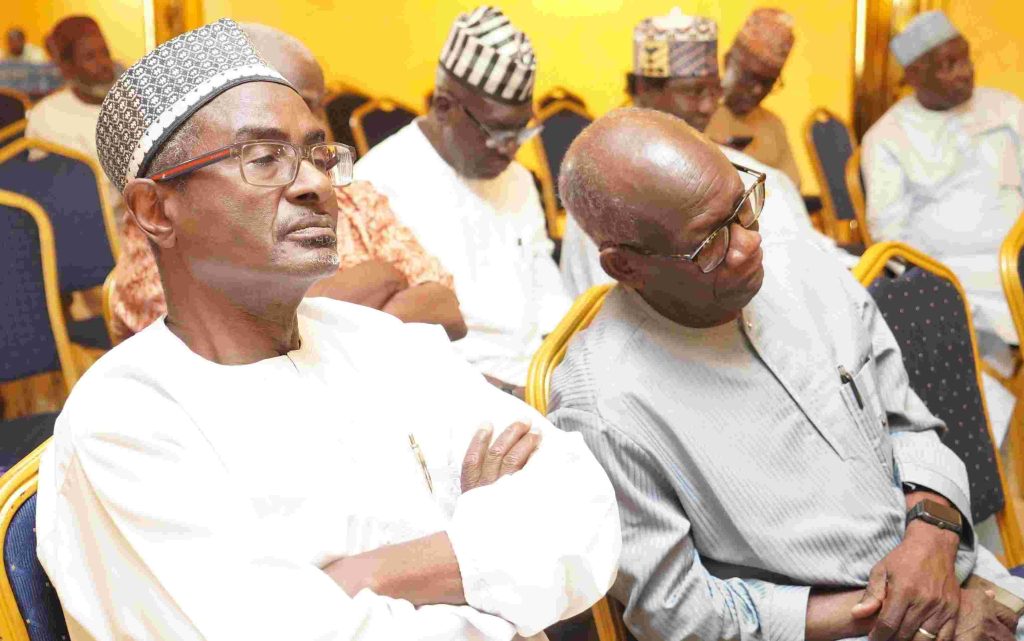
Wabba’s narrative painted a portrait of a professor who did not lecture workers from a distance but sat with them, learned with them, and helped forge the intellectual tools of class struggle, not carrying his scholarly identity on his shoulders, as Dr Julie Sanda, a one-time colleague, observed. There was no performance of radicalism, no theatrical politics. Just steady, unglamorous, relentless work.
Perhaps the most touching revelation came from Prof. Aliya Ahmad of Usmanu Dan Fodio University, Sokoto (UDUS) who disclosed that Mohammed constantly pressured her from behind to exceed routine limits – a pressure she said resulted in more publications. She grew up knowing Mohammed as more or less a father, because he and her father had been together through the trenches of academic and political struggle.
This inter-generational dimension of Mohammed’s life – he was a father to many who were not his biological children – emerged repeatedly. Prof. Benedicta Daudu captured this when she argued that Mohammed’s scholarship touched everyone and serves as a form of immortality. Her challenge to the audience was direct and uncompromising: follow in the direction of Mohammed’s endeavours. Do not merely mourn him; emulate him.
For veteran journalist, Mallam Mahmud Jega, Prof. Mohammed was a practitioner of what he called “the front strategy” in radical democratic politics. According to Jega, Mohammed not only initiated him into the Marxist/socialist ideological conclave, but also got him immersed in numerous meetings. He noted that Mohammed fervently believed that the work of building a just society required endless, patient, often tedious gathering and organising.
To further illustrate his activist cum scholarly passion, Jega recounted a telling tale of how upon consulting Mohammed for a brief background on the Satiru revolt when he heard about it the first time a couple of years back, he (Mohammed), instead of a few paragraphs, sent him over a 100-page thesis. For Mohammed, the Satiru revolt was not a historical footnote; it was a living testament to the capacity of the oppressed to rise, and its lessons remained urgent.
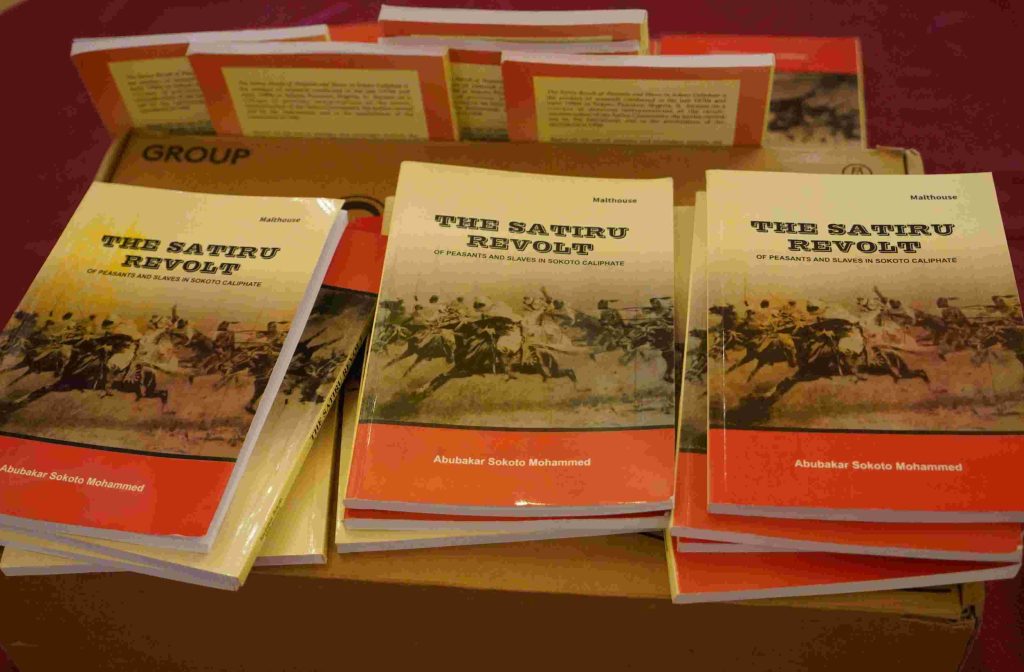
Prof. Mohammed Kuna, formerly of UDUS, who reviewed the book, elaborated on this point, noting that in The Satiru Revolt of Peasants and Slaves in Sokoto Caliphate, Mohammed transcended ethnic, religious, and racial interpretations of the uprising, bringing instead a rigorous materialist perspective. The The Satiru Revolt of Peasants…, Kuna argued, is a continuation of Mohammed’s struggle against oppression and his vision of an alternative society.
Prof. Jibrin Ibrahim, a fellow activist and renowned political scientist, offered one of the most refined summaries of Mohammed’s character, asserting that Mohammed was a very gentle, networking-minded activist who did a lot in his lifetime and did not do any of it for recognition.
Mohammed’s gentleness, iced on a corresponding absence of any iota of ego, Prof. Ibrahim intimated, was not weakness but rather a calm confidence of a man who knew that the cause was larger than any individual, that the work would outlast the worker.
Another renowned Political Science scholar, Prof. Liasu Adele Jinadu, situated Mohammed within the radical tradition of confronting the national bourgeoisie, noting that like Mohammed, all progressives must come together to recant prevailing but disruptive insular identity politics being pushed by contemporary politicians in favour of nationalist framing.
All the testimonies and narratives at the about four-hour ceremony stand more or less as an epiphany – a moment of understanding – of the profound symbolism of the late Prof. Abubakar Sokoto Mohammed as a figure of deep and unconventional integrity – a ‘model’ defined not by flawless sainthood but by principled action across every facet of life.
The event succeeded in presenting him as a man who deliberately chose difficulty over ease (refusing the “path of least resistance,” sacrificing six months’ salary for principle), who transcended professional, ethnic, and ideological boundaries (serving in all non-finance departments, marrying across ethnic lines, remaining a Marxist as a Fulbright scholar), and who prioritised substance over recognition.
The ultimate conclusion is that his legacy is not passive admiration but an active challenge, not just to all comrades, but also every citizen, to follow his example – a life of relentless dedication, clarity over obfuscation, and tangible contribution over self-interest.
