


STAKEHOLDERS have emphasized the need for proactive implementation of the Freedom of Information (FOI) Act at sub-national levels to strengthen democracy, accountability, and public engagement in Nigeria.
The call was made during the South-South Regional Roundtable held in Benin on Monday, organized by the Centre for Transparency Advocacy (CTA) under the Strengthening Accountability and Governance in Nigeria Initiative (SAGNI).
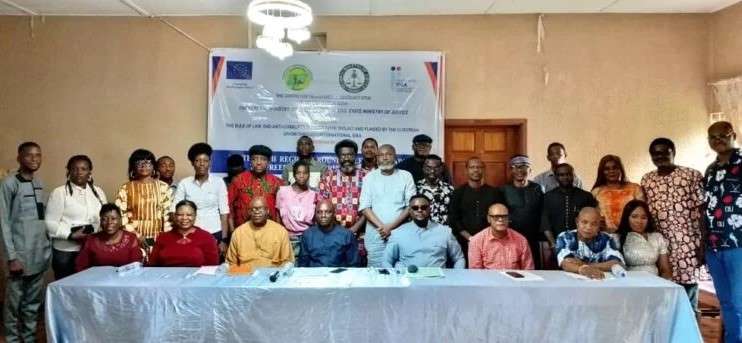
In his keynote address, Mr. Samson Osagie, Edo State’s Attorney-General and Commissioner of Justice, described the FOI Act as a vital tool against corruption, stating that “secrecy fosters corruption, while openness and proactive disclosure serve as the antidote.”
While acknowledging progress in FOI compliance within the state, he urged ministries, departments, and agencies (MDAs) to adopt proactive transparency measures.
“Public data on budgets, contracts, procurements, and health should be readily available without waiting for formal requests,” Osagie said.
He also stressed the importance of collaboration with civil society and the media, capacity-building for public officials, and simplifying FOI request processes.
Earlier, CTA’s Executive Director, Faith Nwadishi, highlighted persistent challenges in FOI implementation, noting that many state and local institutions still operate under a culture of secrecy.
She cited instances where exorbitant fees were demanded for public documents and some agencies outsourced FOI responses to private firms—practices she described as unacceptable.
Nwadishi welcomed a 2024 Supreme Court ruling affirming the FOI Act’s applicability across all states, calling it a significant step forward.
She however referenced a CTA study revealing that over 70% of respondents had never used the FOI Act, and among those who did, 75% received no response.
To address these gaps, CTA announced plans to reintroduce its FOI Service Delivery Awards and host a hackathon in Benin and Awka to promote innovative use of the FOI Act.
The roundtable was supported by the Rule of Law and Anti-Corruption (RoLAC) Programme and the European Union, through International IDEA, as part of a 12-month project to improve access to information and governance in Nigeria.
