
• Home
  • News
    • BREAKING!
    • Investigation
    • Media
    • Interview
    • NEWS ANALYSIS
    • PRESS RELEASE
  • Politics
  • Business
    • OIL & GAS
    • AVIATION
    • ENERGY
    • ECONOMY
    • Agriculture
  • Crime
  • Entertainment
    • MUSIC&ENTERTAINMENT
    • PEOPLE/SOCIETY/CELEBRATION
  • Sports
  • About Us
    • Contact Us
    • Mission Statement
  • More
    • INTERNATIONAL
      • AFRICA
      • DIPLOMATIC
      • FOREIGN
    • DISASTER
    • Civil Society/Human Rights
    • EDUCATION
    • Health
    • Columnist
    • ENVIRONMENT
    • Workers World
    • Judiciary
    • Guest Column
    • Opinion
    • RELIGION
    • ADVENTURE
    • HISTORY
    • DEFENCE
    • SEXUAL VIOLENCE
    • ICT
    • SUNDAY SERMON
    • OBITUARY
    • FOR THE RECORD
    • REACTION
  • Advertise on National Record
Facebook Twitter Instagram
Trending
  • Thank You, CBCN: A Call For Truth, Accountability, Responsible Leadership; By Abba Dukawa
  • Chevening-UK Scholarship Applications Open
  • ILO, FG Task Policymakers On Sustainable Social Protection Systems
  • NSITF Boss Urges MSMEs To Pair AI Adoption With Worker Protection
  • Wike Unveils Plan To Transform Life Camp Recreation Park As First Lady Applauds Minister’s Green Initiative
  • Pension Adjustments: Oyo NUP Directs Pensioners To Commence Protests At LAUTECH, EAUED
  • Dangote Cement Deepens Education Support In Kogi
  • Dangote, Sinoma Sign $800m MoU To Expand Itori Cement Plant Capacity To 12 MTA
Facebook Twitter Instagram
National RecordNational Record
  • Home
  • News
    1. BREAKING!
    2. Investigation
    3. Media
    4. Interview
    5. NEWS ANALYSIS
    6. PRESS RELEASE
    Featured

    Chevening-UK Scholarship Applications Open

    By National RecordAugust 3, 202603 Mins Read
    Recent

    Chevening-UK Scholarship Applications Open

    August 3, 2026

    Wike Unveils Plan To Transform Life Camp Recreation Park As First Lady Applauds Minister’s Green Initiative

    August 3, 2026

    CBN Lists Five Strategies To Drive Next Stage Of Fintech Growth In Nigeria

    August 3, 2026
  • Politics
      Featured

      Finance Minister Taiwo Oyedele Says Subsidy Savings Swallowed By Debt Burden, Higher Public Spending

      By National RecordJuly 30, 202604 Mins Read
      Recent

      Finance Minister Taiwo Oyedele Says Subsidy Savings Swallowed By Debt Burden, Higher Public Spending

      July 30, 2026

      2027: Plateau Youths Pledge One Million Votes For Tinubu, Applaud Creation Of Army Divisions

      July 27, 2026

      CIMBO Backs Middle Belt Forum, Rejects Northern Security Trust Fund Contribution

      July 27, 2026
    1. Business
      1. OIL & GAS
      2. AVIATION
      3. ENERGY
      4. ECONOMY
      5. Agriculture
      Featured

      Dangote Cement Deepens Education Support In Kogi

      By National RecordAugust 3, 202603 Mins Read
      Recent

      Dangote Cement Deepens Education Support In Kogi

      August 3, 2026

      Dangote, Sinoma Sign $800m MoU To Expand Itori Cement Plant Capacity To 12 MTA

      August 3, 2026

      Dangote Refinery Critical To Nigeria’s $1 Trillion Economy Vision, Says FG

      July 30, 2026
    2. Crime
        Featured

        Benue Govt Inaugurates SGBV Response Team

        By National RecordJuly 15, 202603 Mins Read
        Recent

        Benue Govt Inaugurates SGBV Response Team

        July 15, 2026

        Nigeria Cannot Achieve Peace Without Defeating Corruption – ICPC Chairman

        July 14, 2026

        SGBV: Abia Secures Convictions Of Two Child Molesters, Reaffirms Zero Tolerance

        July 14, 2026
      1. Entertainment
        1. MUSIC&ENTERTAINMENT
        2. PEOPLE/SOCIETY/CELEBRATION
        Featured

         ‘Project Hail Mary’ Grosses N39m At West African Box Office Debut

        By National RecordMarch 31, 202601 Min Read
        Recent

         ‘Project Hail Mary’ Grosses N39m At West African Box Office Debut

        March 31, 2026

        Documentary Film, ‘Mothers Of Chibok’, Hits Cinemas Feb 27

        February 23, 2026

        Nollywood Blockbuster ‘Son Of The Soil’ Set For Premiere At Pan-African Film Festival

        February 4, 2026
      2. Sports
          Featured

          UEFA Declares Loss Of Confidence In Infantino Even As FIFA Drops $20bn World Cup Investment Plan

          By National RecordAugust 1, 202603 Mins Read
          Recent

          UEFA Declares Loss Of Confidence In Infantino Even As FIFA Drops $20bn World Cup Investment Plan

          August 1, 2026

          FIFA Faces Global Revolt As UEFA Vows World Cup Boycott

          July 30, 2026

          Cape Verde Hold European Champions Spain To Barren Draw

          June 15, 2026
        1. About Us
          • Contact Us
          • Mission Statement
        2. More
          • INTERNATIONAL
            • AFRICA
            • DIPLOMATIC
            • FOREIGN
          • DISASTER
          • Civil Society/Human Rights
          • EDUCATION
          • Health
          • Columnist
          • ENVIRONMENT
          • Workers World
          • Judiciary
          • Guest Column
          • Opinion
          • RELIGION
          • ADVENTURE
          • HISTORY
          • DEFENCE
          • SEXUAL VIOLENCE
          • ICT
          • SUNDAY SERMON
          • OBITUARY
          • FOR THE RECORD
          • REACTION
        3. Advertise on National Record
        National RecordNational Record
        Home»News»NEWS ANALYSIS»Shadows Of Xenophobia: South Africa’s Recurring Shame
        NEWS ANALYSIS

        Shadows Of Xenophobia: South Africa’s Recurring Shame

        National RecordBy National RecordJune 17, 2026Updated:June 17, 2026No Comments6 Mins Read
        Facebook Twitter Pinterest LinkedIn Tumblr Reddit WhatsApp Email
        President Tinubu with President Ramaphosa on Thursday in Johannesburg, South Africa
        File photo of President Tinubu, left, and President Ramaphosa in Johannesburg, South Africa.
        Share
        Facebook Twitter LinkedIn Pinterest WhatsApp Email

        SOUTH Africa’s Justice Minister, Mmamoloko Kubayi, recently admitted what has long been obvious to the rest of Africa: xenophobic attacks are damaging South Africa’s image abroad.

        Her warning came amid yet another wave of violence against African migrants, with reports of killings, assaults, looting of businesses, displacement of families and the forced repatriation of citizens from countries such as Nigeria, Ghana, Malawi and Mozambique.

        The minister’s acknowledgement is welcome, but it also raises a troubling question: how many times must Africa witness the same shameful spectacle before South Africa confronts the deeper roots of its recurring xenophobic nightmare?

        For more than two decades, xenophobic violence has erupted with disturbing regularity in South Africa.

        One cannot help but wonder what Nelson Mandela would think if he could witness these scenes today: Africans hunted by Africans, migrants living in fear, and the ideals of solidarity tarnished by hatred. It is difficult to imagine anything other than profound sorrow. For every drop of innocent African blood spilled on South African soil diminishes the legacy of reconciliation, dignity and Pan-African brotherhood that Mandela championed throughout his life.

        The horrors of 2008, when more than 60 people were killed and tens of thousands displaced, remain etched in Africa’s collective memory. The attacks of 2015 in Durban and Johannesburg followed the same ugly pattern: foreign-owned businesses looted, migrants hunted, and entire communities terrorised.
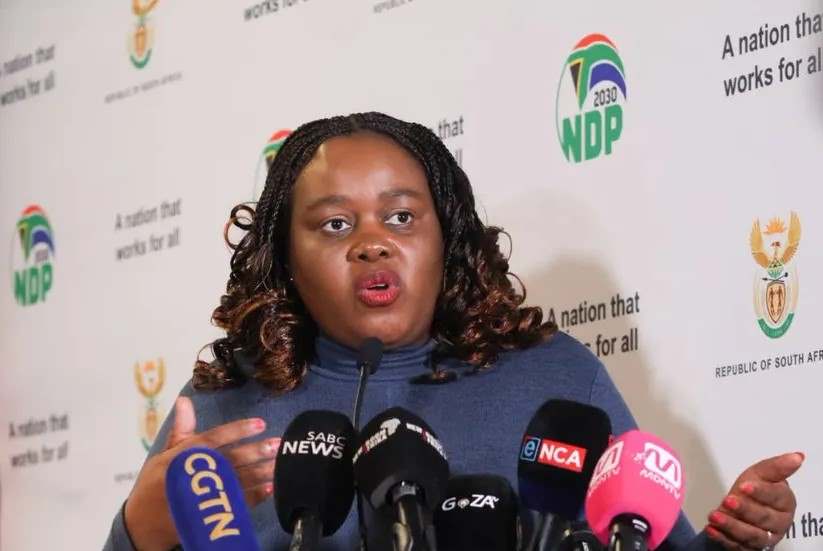
        Mmamoloko Kubayi, South Africa's Minister of Justice and Constitutional Development. Credit - X@mmkubayi.
        Mmamoloko Kubayi, South Africa’s Minister of Justice and Constitutional Development. Credit: X@mmkubayi.

        In 2019, violence again targeted African migrants, particularly Nigerians, Zimbabweans and Somalis, triggering diplomatic tensions across the continent.

        Today, in 2026, South Africa is once again contending with yet another xenophobic attacks on fellow Africans, fuelled by anti-immigrant rhetoric and the dangerous scapegoating of foreigners for unemployment, crime and economic hardship.

        The tragedy is not merely that these attacks continue; it is that they have become cyclical, predictable and, in the eyes of many observers, insufficiently confronted by those with the responsibility to stop them.

        Every fresh outbreak is followed by official condemnations, promises of investigations and appeals for calm. Yet the violence returns, often in even more organised forms, suggesting that the underlying cause remains untreated.

        There is no denying that South Africa faces enormous socio-economic challenges. High unemployment, inequality, crime and frustrations over poor governance have created fertile ground for populist narratives. But no economic hardship can justify the targeting of innocent people solely because of where they come from. No grievance can excuse the burning of shops, the destruction of livelihoods, or the spilling of blood on the basis of nationality.

        More troubling is the historical amnesia that appears to accompany these attacks. The democratic South Africa of today did not emerge from isolation or xenophobic sentiment. The struggle against Apartheid was sustained by the solidarity, sacrifice and generosity of countless African nations as a result of the oppressively inhuman features inherent in the system. Countries across the continent opened their borders to South African exiles. They provided sanctuary, education, training and diplomatic support. Many accepted economic and political costs for standing against the racist Apartheid regime.

        Nigeria occupies a particularly prominent place in that history. For decades, successive Nigerian governments provided financial assistance to the liberation struggle, funded educational programmes for South African students and mobilised international pressure against Apartheid.

        Ghana, Tanzania, Zambia, Zimbabwe, Angola and numerous others also played pivotal roles. African states offered safe havens to liberation fighters, hosted political movements and, in some cases, paid a heavy price for their solidarity. The struggle against Apartheid was never solely South Africa’s struggle; it became Africa’s struggle.

        That historical reality makes today’s scenes all the more painful. When African migrants are attacked in South African townships and cities, it is not simply a law-and-order problem; but rather a betrayal of a shared continental history. It is a rejection of the very spirit of Pan-African solidarity that helped secure South Africa’s freedom from the barbaric system.

        Until South Africa decisively confronts this recurring stain on its national conscience, the shadows of xenophobia will continue to haunt not only its image abroad, but also its moral standing within the African family.

        Some may argue that many of those involved in the attacks were born after Apartheid and therefore cannot be held responsible for the past. That is true. They did not create Apartheid, nor did they directly experience the sacrifices made by other African nations. But that is precisely why the burden falls heavily on South Africa’s leaders.

        A nation that fails to teach its history risks repeating its moral failures. Every generation of South Africans should know that freedom was not won alone. They should learn how African countries welcomed South African refugees, provided scholarships, supported liberation movements and stood firmly against one of the most brutal systems of racial oppression in modern history. Historical gratitude cannot solve unemployment or crime, but it can foster empathy, perspective and a sense of moral obligation towards fellow Africans.

        Instead, the persistence of xenophobia suggests a troubling failure of political and civic education. Worse still, some politicians have chosen to weaponize anti-immigrant sentiment for electoral advantage, reinforcing dangerous narratives that foreigners are responsible for South Africa’s woes. Such rhetoric may generate short-term political gains, but it carries devastating long-term consequences. It legitimises prejudice, emboldens vigilante groups and undermines social cohesion.

        The damage extends beyond South Africa’s borders. The country’s reputation as a continental leader is increasingly undermined by images of Africans fleeing violence on its streets. Businesses face backlash. Cultural exchanges suffer. Diplomatic relationships become strained. More importantly, the dream of African unity suffers another wound each time an African is attacked simply for being foreign.

        South Africa remains a nation of immense promise, extraordinary resilience and remarkable achievements. It is home to countless citizens who reject xenophobia and continue to defend the values of tolerance and human dignity. But good intentions from the silent majority are not enough. The recurring pattern of violence demands stronger political leadership, more effective law enforcement and a sustained effort to confront the prejudices that continue to fester beneath the surface.

        Ultimately, the bloody shadows of xenophobia hanging over South Africa are a profound shame. They stand as a painful testament to a collective failure of tolerance, leadership and historical memory. They mock the sacrifices made by African nations that stood shoulder to shoulder with South Africans during the darkest days of Apartheid.

        One cannot help but wonder what Nelson Mandela would think if he could witness these scenes today: Africans hunted by Africans, migrants living in fear, and the ideals of solidarity tarnished by hatred. It is difficult to imagine anything other than profound sorrow. For every drop of innocent African blood spilled on South African soil diminishes the legacy of reconciliation, dignity and Pan-African brotherhood that Mandela championed throughout his life.

        Until South Africa decisively confronts this recurring stain on its national conscience, the shadows of xenophobia will continue to haunt not only its image abroad, but also its moral standing within the African family.

        Follow the National Record Channel on WhatsApp

        Recurring Shame shadows South Africa Xenophobia
        National Record

          Related Posts

          Xenophobia: FG Evacuates 1,490 Nigerians From South Africa

          July 15, 2026

          Xenophobia: Reps Seek Comprehensive Review Of Bilateral Relations With South Africa

          July 9, 2026

          Can NYSC’s Reinvention Deliver Real Change?

          July 1, 2026
          Recent Posts
          • Thank You, CBCN: A Call For Truth, Accountability, Responsible Leadership; By Abba Dukawa
          • Chevening-UK Scholarship Applications Open
          • ILO, FG Task Policymakers On Sustainable Social Protection Systems
          • NSITF Boss Urges MSMEs To Pair AI Adoption With Worker Protection
          • Wike Unveils Plan To Transform Life Camp Recreation Park As First Lady Applauds Minister’s Green Initiative
          About Us
          About Us

          Contest Communications Limited is a company incorporated to operate a purely ideologically progressive and working class news establishment. Registered in 2019 to bring this idea into reality, National Record, with the domain name: https://nationalrecord.com.ng/ was conceived to operate as an online news publication.

          Contact Us

          Contest Communications Limited

          Address: 2nd Floor, Suite 21B, Dagep Plaza, Opposite Anaconda Garden and Resort, Off Karu Roundabout, Karu-Site, AMAC, Abuja-FCT.

          Phone: +2348033209749

          Email: Nationalrecordng@gmail.com

          Facebook Twitter Instagram Pinterest
          © 2026 All Right Reserved. National Record. Designed By DeedsTech.

          Type above and press Enter to search. Press Esc to cancel.