


By Our Reporter; With Agency Reports
RUSSIA launched one of its most intense missile attacks on Ukraine in recent weeks on Wednesday, killing at least 17 people, injuring more than 40 others and destroying key logistics and warehouse facilities around Kyiv, as Ukrainian officials warned that the country’s worsening air defence shortages could become even more critical with an alleged expansion of North Korea’s military support for Moscow.
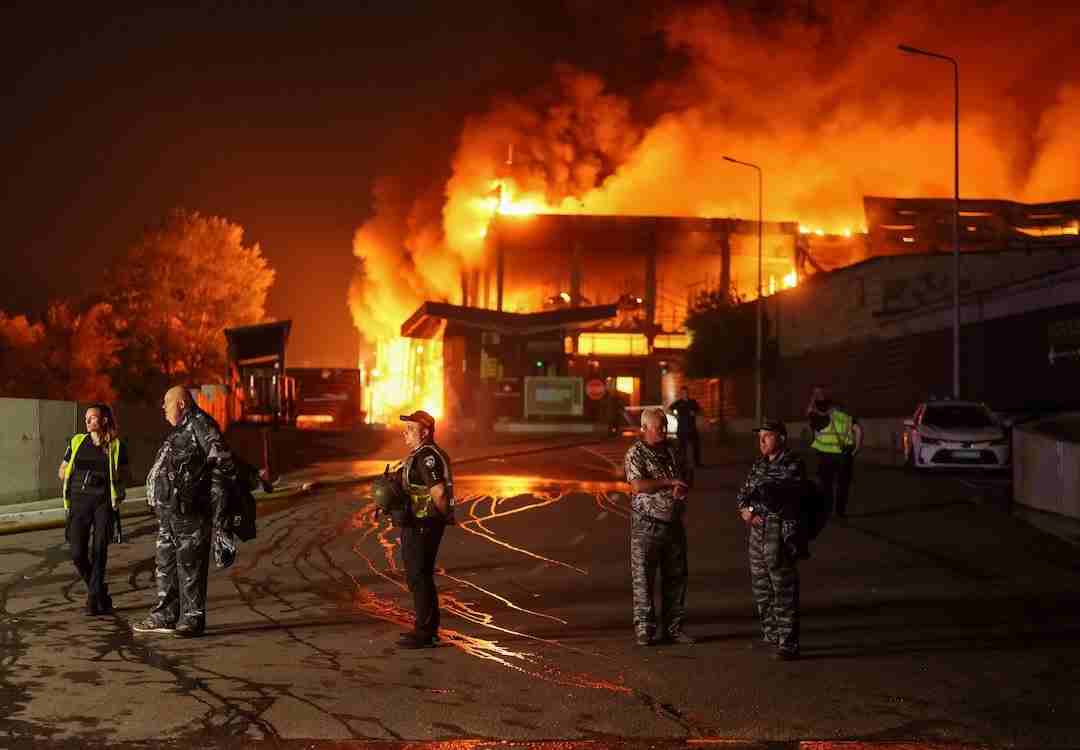
The overnight assault saw dozens of ballistic missiles and drones fired at Kyiv and surrounding areas, triggering multiple explosions and widespread fires. Ukrainian authorities said the strikes hit civilian infrastructure, including commuter transport facilities, warehouses, manufacturing plants and distribution centres belonging to some of the country’s largest retailers.

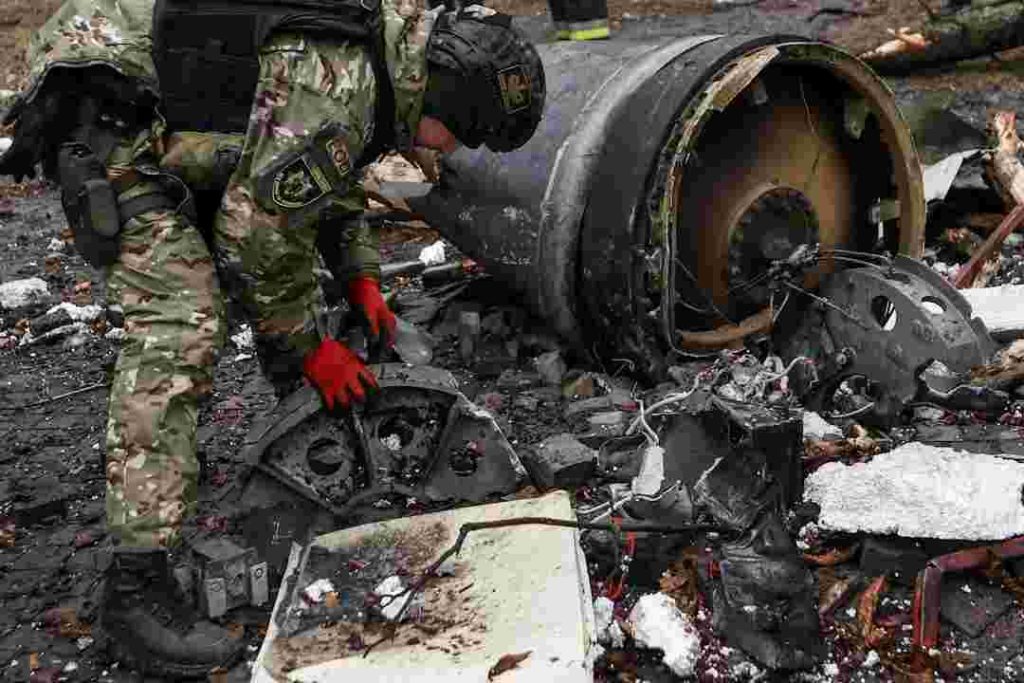
Ukraine’s military said its air defence systems intercepted nearly 90% of the 115 drones launched during the attack but failed to shoot down any of the 24 ballistic missiles and four Zircon cruise missiles fired by Russia, highlighting what officials described as a severe shortage of interceptor missiles.
President Volodymyr Zelenskiy said additional supplies of ballistic missile interceptors could have prevented many of the deaths, urging Ukraine’s Western allies to urgently replenish dwindling stocks.
According to Zelenskiy, deliveries of air defence missiles this year have fallen to roughly one-third of last year’s levels. Ukrainian officials have repeatedly warned that shortages of missiles for the U.S.-made Patriot air defence system — currently the country’s only effective defence against Russia’s ballistic missiles — have left major cities increasingly exposed to attack.
Russia’s Defence Ministry said it had targeted seven logistics centres in Kyiv and the surrounding region, claiming they were being used to store or distribute dual-use goods and drone components. Ukraine has consistently rejected Russian assertions that such facilities are legitimate military targets, saying the strikes primarily hit civilian infrastructure.
The latest bombardment comes as Russia has intensified its missile campaign against Kyiv and other Ukrainian cities, launching attacks every few days despite relatively limited progress along the front lines this year.
One of the worst-hit locations was the commuter town of Brovary, northeast of Kyiv, where Reuters television footage showed bodies scattered across a railway platform after the strike. Local officials said eight people died there alone.
Authorities also reported damage to 13 warehouses, a manufacturing facility, four private homes and dozens of vehicles across the Kyiv region.
Several of Ukraine’s biggest retail companies said the attacks inflicted devastating economic losses.
Epicentr, the country’s largest home improvement retailer, said two major logistics centres and a factory were destroyed within minutes.
Food retailer Silpo said two distribution centres were set ablaze and at least six of its employees were killed.
Leading online retailer Rozetka also reported severe damage after three ballistic missiles struck one of its facilities. Co-founder Iryna Chechotkina said she watched “the work of my entire life” burn during the attack but pledged that the company would continue operating.
The strikes represent another setback for Ukraine’s economy, which has remained operational throughout more than four years of war largely because of substantial financial support from Western partners. However, business leaders say losses to logistics and industrial infrastructure are mounting as Russia increases attacks on economic targets.
Prime Minister Sergii Koretskyi said the government would convene an emergency meeting with businesses to ensure logistics and trade operations continue despite the destruction.
At the same time, Ukraine is seeking additional PAC-3 interceptor missiles, the latest version used by Patriot systems. Discussions are continuing over possible future production of Patriot missiles in Ukraine, although uncertainty remains after U.S. President Donald Trump questioned aspects of the proposed arrangement.
Meanwhile, Ukrainian military intelligence claimed North Korea is preparing to deepen its direct involvement in the conflict by deploying a missile unit to western Russia.
According to Andrii Cherniak of Ukraine’s Main Directorate of Intelligence, about 90 North Korean personnel are expected to join Russia’s 112th Missile Brigade in the Voronezh region, potentially operating six launchers and as many as 120 ballistic missiles for use against Ukraine.
Reuters could not independently verify the claim, and neither Russia’s Defence Ministry nor North Korea’s mission to the United Nations immediately responded to requests for comment.
If confirmed, the deployment would mark a significant expansion of military cooperation between Moscow and Pyongyang, which has steadily grown since Russia’s full-scale invasion of Ukraine in 2022.
Ukraine says North Korea has already supplied Russia with millions of artillery shells, around 150 KN-23 and KN-24 ballistic missiles since late 2023, and approximately 14,000 troops who were deployed to Russia’s Kursk region.
Cherniak said Pyongyang has recently delivered another batch of 40 ballistic missiles, adding that the final structure of the deployment would be determined during high-level talks expected next month.
The Ukrainian intelligence official also said Russia recently resumed using North Korean ballistic missiles after nearly a year without recorded launches, including an attack last week that Ukrainian authorities said destroyed a residential home in the village of Radushne and killed at least five members of the same family.
Military analysts say North Korea’s KN-23 and KN-24 ballistic missiles have longer range and larger warheads than Russia’s Iskander missiles, although they are considered less accurate. Nevertheless, any increase in Russia’s stockpile of ballistic missiles would place additional strain on Ukraine’s already overstretched air defence systems.
Analysts also warn that Ukraine’s air defence capabilities may face their greatest test during the coming winter, when Russia has previously launched sustained attacks on the country’s electricity infrastructure.
The reported North Korean deployment, if confirmed, would underline the growing military partnership between Moscow and Pyongyang under a mutual defence pact signed in 2024, further internationalising a conflict that has already drawn extensive military and financial support from both Russia’s and Ukraine’s foreign allies.
