



THE NEED to send diagnostic samples across state borders or outside Nigeria for confirmation has reduced significantly in states supported by the Resolve to Save Lives project, strengthening the country’s capacity for faster disease detection and response.

The project is being implemented by the Institute of Human Virology Nigeria (IHVN) in collaboration with the Federal Ministry of Health’s Medical Laboratory Services Directorate and the Nigeria Centre for Disease Control and Prevention (NCDC).
IHVN’s Head of Clinical Laboratory Field Operations and Project Manager of the project, Mrs. Pankemwa Joy Shamang, told National Recordthat the initiative has improved turnaround times and strengthened specimen referral pathways for frontline laboratory scientists.

She said the project established and inaugurated State Laboratory Technical Working Groups in Bayelsa, Kano, Nasarawa and the Federal Capital Territory, creating functional structures to coordinate laboratory quality and specimen referral systems in the supported states.
Shamang stressed that strong laboratory systems are central to Nigeria’s health security, noting that disease outbreaks cannot be effectively contained without rapid and accurate confirmation.
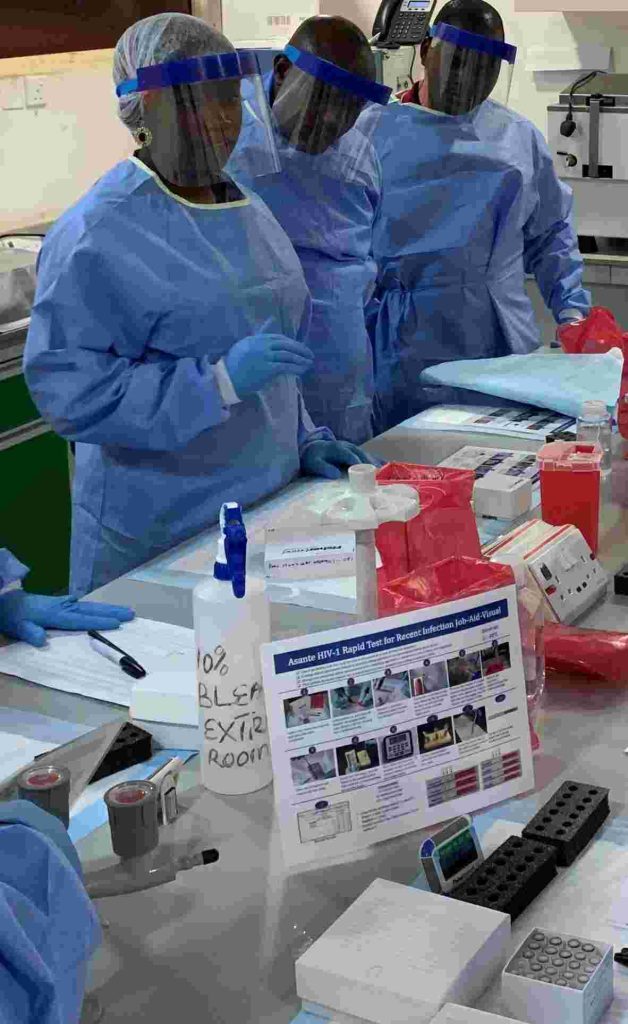
“Every disease confirmation begins from the laboratory,” she said, adding that laboratory strengthening requires people, infrastructure, quality systems, governance and referral networks to work seamlessly together.
She explained that strong laboratory systems enable early disease detection, accurate diagnosis, disease surveillance and evidence-based responses to outbreaks.
“The faster we detect a threat, the greater our chances of containing it before it becomes a full-blown epidemic or pandemic,” she said.
The Resolve to Save Lives project was implemented by IHVN in two phases, the first from 2020 to 2021 and the second from 2024 to 2025, with both phases funded by Resolve to Save Lives.
The project’s gains point to a broader shift in Nigeria’s laboratory landscape: strengthening diagnostic capacity closer to where patients are tested can reduce delays, improve disease surveillance and give public health authorities the evidence they need to act before outbreaks escalate.
