


THE NIGERIAN Supreme Council for Islamic Affairs (NSCIA) has expressed concern over what it described as persistent attacks, marginalisation and negative profiling of Islam and Muslims in Nigeria, warning that continued provocation could threaten the country’s peace and stability if not urgently addressed.
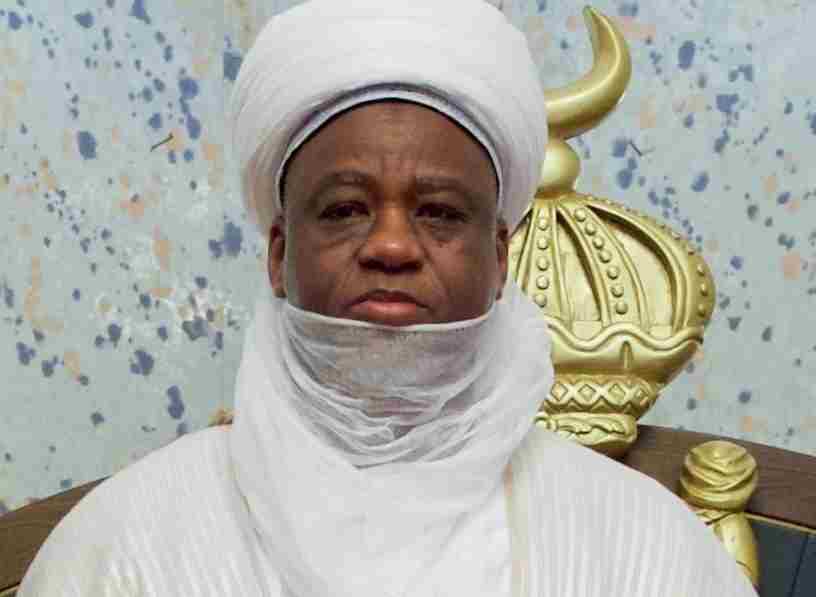
In a press statement issued on Saturday by its Public Affairs Officer, Abbas Jimoh, on behalf of the President-General of the Council and Sultan of Sokoto, Alhaji Muhammad Sa’ad Abubakar, the NSCIA reaffirmed its commitment to national peace and unity but stressed that the restraint consistently shown by Muslims should not be mistaken for weakness.
The Council said it had deliberately exercised patience in the face of what it called repeated provocation and unwarranted assaults on Islam and Muslims, adding that there was a limit to such endurance.

The NSCIA alleged that Muslims were increasingly being marginalised in Nigeria’s public space while simultaneously being accused of oppressing others. It further claimed that some foreign interests were exploiting religious narratives to sow division and create instability in the country.
The Islamic body also criticised comments reportedly made by a former President of the Christian Association of Nigeria (CAN) during a recent television programme, describing the remarks as reckless, baseless and capable of inflaming religious tensions. It argued that the programme should have attracted the attention of relevant regulatory and security agencies in the interest of national security.
According to the Council, inflammatory comments against Islam and Muslims often receive little official response, whereas similar remarks from Muslim leaders would likely prompt immediate action by security agencies.
The NSCIA also rejected allegations linking Muslims or Fulani people to a recent kidnapping incident in Oyo State. It maintained that those arrested in connection with the crime were not Muslims, adding that one suspect arrested over the kidnapping and murder in Orire LGA was identified as a Christian pastor.
The Council accused some media organisations of applying double standards in their coverage of such incidents.
The statement further condemned the recent killing of the Benue State Chairman of the Miyetti Allah Cattle Breeders Association of Nigeria (MACBAN), Alhaji Ardo Risku Muhammad, and his associate, Mallam Yakubu Isah, after what it described as a peace meeting in Otukpo LGA of Benue State.
The Council alleged that the attack formed part of a systematic attempt to provoke Muslims into retaliatory actions.
The NSCIA also raised concerns over what it described as the under-representation of Muslims in government appointments, citing the replacement of former Minister of Power, Adebayo Adelabu, as one example and argued that concerns over religious balancing were not raised in previous administrations when Christians occupied both leading positions on electoral tickets or in government.
While reiterating its appeal for Muslims to remain peaceful and law-abiding, the Council urged the Federal Government and security agencies to take decisive steps to address what it called persistent attacks and discrimination.
Specifically, NSCIA called for the perpetrators of killings in Kaduna and Benue states to be arrested and prosecuted without delay. It also demanded a thorough investigation into allegations involving police officers said to have handed over a female Muslim scholar to a mob and officers reportedly connected with the circumstances leading to the killing of the MACBAN chairman.
The Council further urged authorities to curb what it described as increasing public attacks on the integrity of Islam and Muslims, warning that failure to act could undermine national peace and security.
NSCIA insisted that justice, fairness and equal treatment for all religious groups remain essential for preserving unity and preventing further escalation of tensions across the country.
