


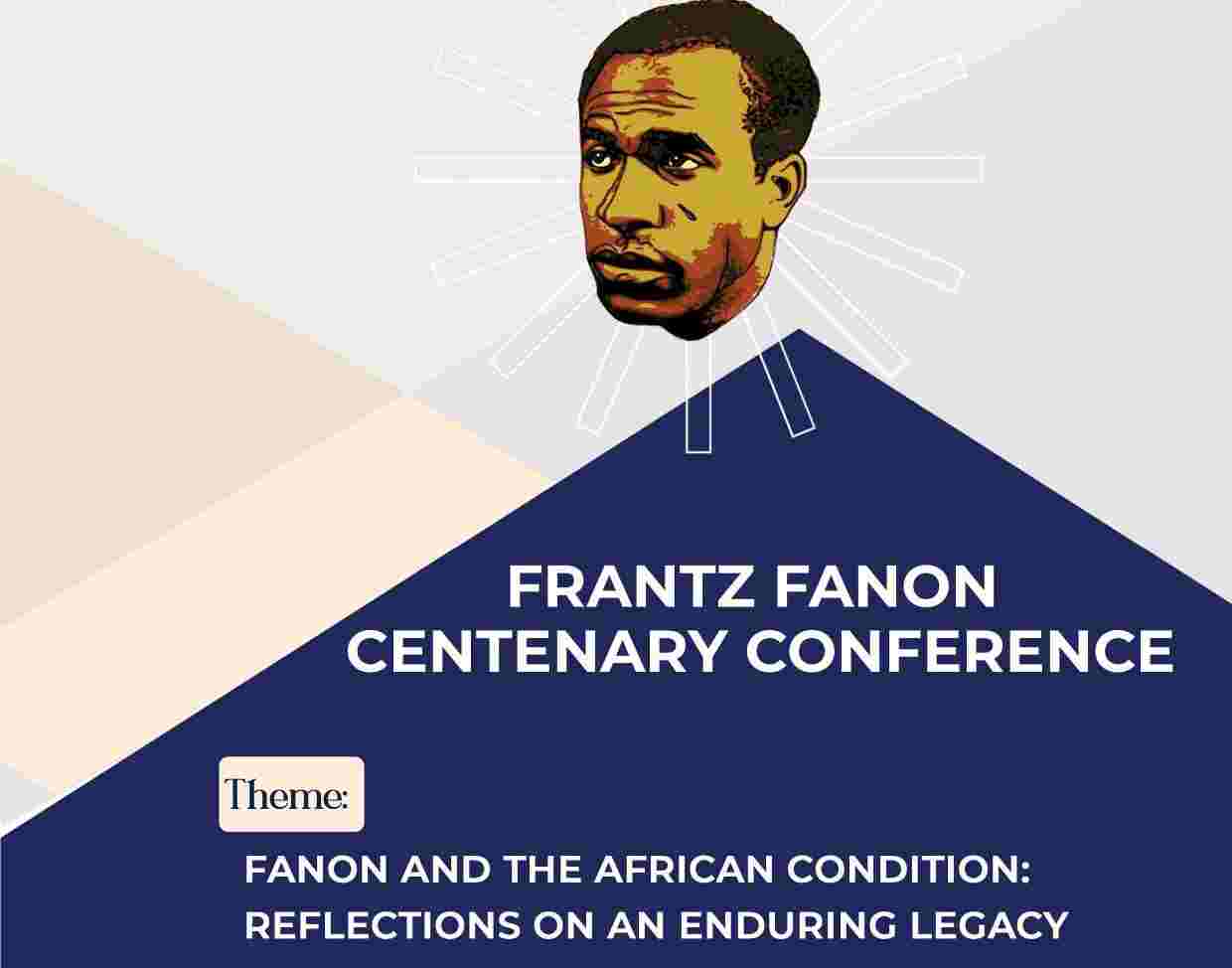
A MAJOR international conference commemorating the 100th anniversary of the birth of revolutionary thinker, Frantz Fanon, is underway at the University of Jos, Plateau State, in North-Central Nigeria.
The two-day conference, which opens today, Thursday, November 27 and will close on Friday, November 28, 2025, is holding under the theme: “Fanon and the African Condition: Reflections on an Enduring Legacy.”
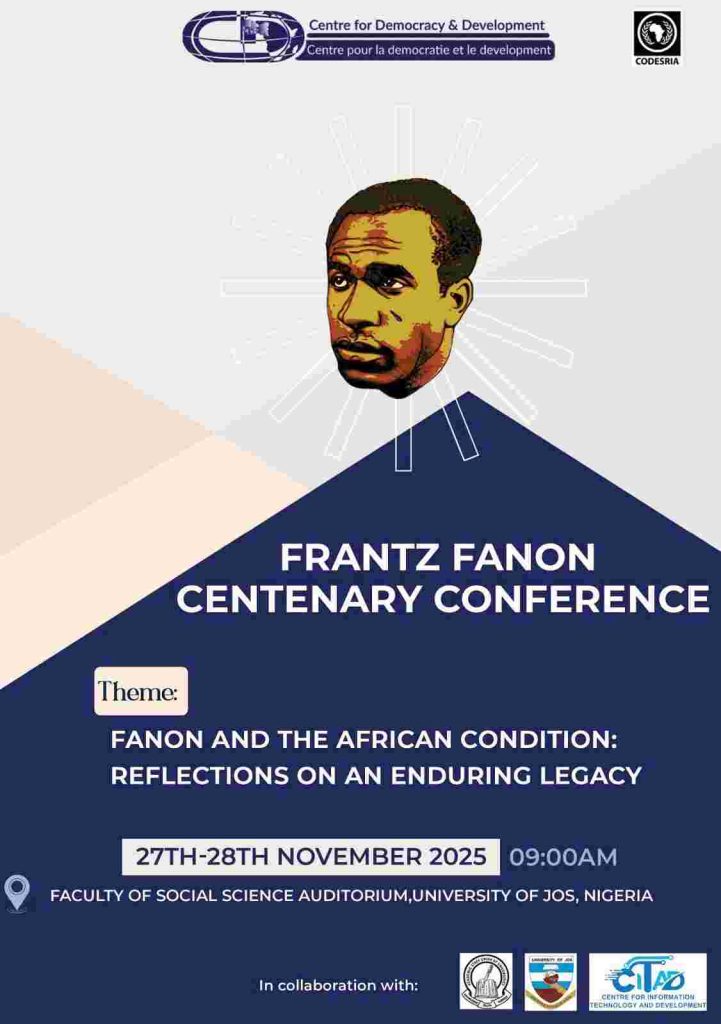
The Fanon centenary gathering is poised to be one of the most significant academic and political assemblies of the year, seeking to bridge intellectual discourse with practical strategies for achieving the de-colonial and emancipatory future envisioned by Frantz Fanon, as the event aims to critically explore the continued relevance of his (Fanon’s) ideas in contemporary Africa and the wider world.

Organised by the Centre for Democracy and Development (CDD-West Africa) in collaboration with the Council for the Development of Social Science Research in Africa (CODESRIA), the conference features a prestigious roster of participants, including scholars, activists, trade unionists, and public intellectuals from across Africa and its diaspora.
The opening ceremony will be chaired by Prof. Georges Nzongola-Ntalaja from the Democratic Republic of Congo, with a keynote address to be delivered by Nigeria’s distinguished political scientist, Prof. Adele Jinadu.
The Vice Chancellor of the University of Jos, Prof. Tanko Ishaya, will officially declare the conference open, with special guests including the Executive Governor of Plateau State, Caleb Mutfwang, and veteran trade unionist, Comrade John E. Odah, who, apart from being the Chair, International Governing Council of CDD, is also the Executive Secretary of the Organisation of Trade Unions of West Africa.
Over the two days, the conference will delve into Fanon’s legacy through a series of plenary sessions, parallel panels, and intergenerational dialogues. The programme is structured around several core themes, reflecting the breadth of Fanon’s work and its modern applications.
Key thematic areas include: “Fanon and the Colonial Present”, with sessions that will explore the persistence of colonial-era structures, the role of national elites, and trends in “state capture” and corruption in post-colonial Africa; “Protest and Resistance in the Image of Fanon”, with discussions structured to analyse contemporary social movements, digital activism (including reflections on #EndSARS), and youth political consciousness through a Fanonian lens; and, “Pan-Africanism in the Shadow of Fanon”, under which panellists will re-evaluate the project of continental unity and regional integration, questioning whether current institutions have escaped the trap of neo-colonialism.
Other thematic areas include: “Fanonist Gaze and Popular Culture”, where presentations will seek to apply Fanon’s theories to analyse African cultural production, including Nollywood films, the music of Fela Kuti and Lucky Dube, and contemporary soundscapes; and, “Fanon: Innovations and Outcomes in Strategy”, with sessions that will engage with Fanon’s ideas on national consciousness, language, gender relations, economic liberation, and their strategic implications for Africa’s future.
Prominent intellectual figures such as Prof. Horace Campbell (Jamaica), Prof. Peter Anyang’ Nyong’o (Kenya), Prof. Bayo Olukoshi (Nigeria), trade unionist, Zwelinzima Vavi (South Africa), and Prof. Mahlengi Bhengu-Motsiri (South Africa) are slated to chair sessions and contribute to dialogues.
The conference will conclude on November 28th with the formulation and presentation of a communiqué, synthesising the insights and resolutions from the intensive deliberations, under the chairmanship of Prof. Jibrin Ibrahim.
