


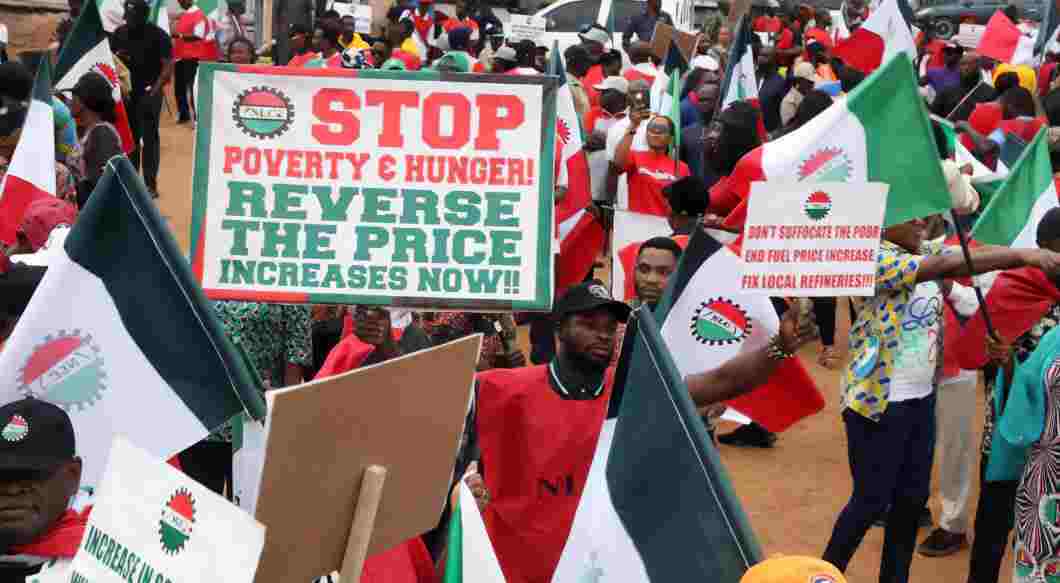
THE INTERNATIONAL Trade Union Confederation (ITUC) has released its 12th annual Global Rights Index, painting a grim picture of workers’ rights worldwide.
The report, which ranks Nigeria as a new entrant into the world’s 10 worst violators of workers’ rights (page 45), sign-posts a world where workers’ rights are under unprecedented assault by governments and corporate elites, painting a dystopian picture of escalating repression, with three out of five global regions hitting their worst scores ever, with only seven out of 151 countries rated as having “sporadic violations” of labour rights — the highest possible score.
The findings underscore a sustained assault on democratic freedoms, driven by authoritarian governance, corporate exploitation, and far-right policies.

Key Findings: A Crisis for Workers
Key findings of the report indicate widespread violations, noting that:
- 87% of countries violated the right to strike, matching 2024’s record high.
- 80% restricted collective bargaining, up from 79% in 2024.
- 75% denied workers the right to unionize, with 74% obstructing union registration, and,
- 72% limited access to justice, a sharp rise from 65% in 2024.
Deadly Consequences
According to the report, trade unionists were killed in Cameroon, Colombia, Guatemala, Peru, and South Africa. In Cameroon, police fatally shot a seasonal worker during a sugar plantation strike.
Regional Breakdown:
Middle East & North Africa (MENA) remained the worst region (average rating: 4.68), with 100% of countries violating collective bargaining and union rights.
Europe recorded its worst score since 2014 (2.78), with 52% denying access to justice.
Americas hit a historic low (3.68), marked by violent crackdowns in Argentina, Panama, and Colombia.
The 10 Worst Countries for Workers
The 2025 report ranked the 10 worst countries globally, which include:
- Bangladesh: Garment workers face violent repression; 23 killed in student protests.
- Belarus: Union leaders imprisoned, labelled “terrorists.”
- Ecuador: Only 1% of workers can access collective bargaining.
- Egypt: Arbitrary union dissolutions and arrests.
- Eswatini: Protests banned; union leaders exiled.
- Myanmar: Junta executes activists; unions outlawed.
- Nigeria (new entry): Union raids and illegal strike bans.
- Philippines: “Red-tagging” of labour activists persists.
- Tunisia: Free speech criminalized under Decree No. 54; and,
- Türkiye: Mass dismissals of unionized workers.
Authoritarian Trends
The report highlights a global “coup against democracy,” with far-right governments — such as those in Argentina (Javier Milei), Finland (Petteri Orpo), and the U.S. (Donald Trump) — rolling back labour protections.
Key tactics include: criminalizing protests: Italy’s Meloni proposed prison terms for roadblock strikes; “foreign agent” laws: used in Georgia, Hong Kong, and Russia to stifle dissent; union busting: Amazon closed unionized warehouses in Canada, while Tesla bypassed negotiations in Sweden.
Resistance and Reforms
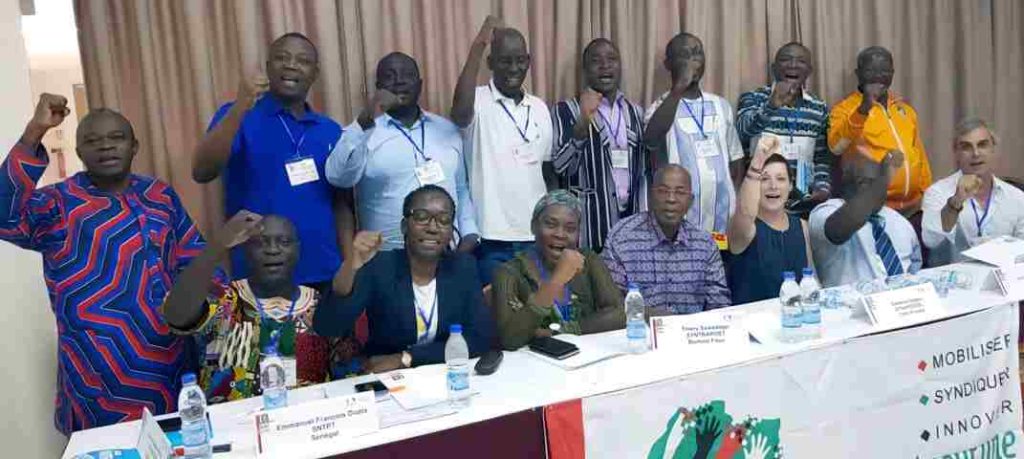
Despite repression, unions were however not to have achieved victories in Côte d’Ivoire where DHL workers won union representation after years of organizing; Canada passed an “anti-scab” law banning strike replacements; Oman, Mexico, and Australia improved ratings due to labour reforms.
A Call to Action
ITUC General Secretary, Luc Triangle, warned of a “concerted assault by billionaires and governments” on workers’ rights.
The report urges global solidarity to counter authoritarianism, emphasizing unions as “the largest democratic force” for change.
“The erosion of labor rights is the erosion of democracy itself,” Triangle stated. “Without collective action, inequality will deepen,” he stressed.
The Index rates countries from 1 (best) to 5+ (worst) based on 97 indicators, including freedom of association, collective bargaining, and strike rights.
Data used in the report cover violations from April 2024 to March 2025.
