


By Our Reporter, With Agency Reports
THE IRANIAN government has expressed total lack of trust on the United States government, as tensions between Tehran and Washington continue over the Strait of Hormuz, Iran’s nuclear programme and the wider regional conflict involving Israel.
Iranian Foreign Minister, Abbas Araghchi, said on Friday that the Strait of Hormuz remains accessible to countries considered friendly to Iran, stressing that restrictions are directed only at nations Tehran regards as hostile.

Speaking on the sidelines of the BRICS foreign ministers’ meeting in New Delhi, Araghchi stated that from Iran’s perspective, the strategic waterway had not been fully closed.
“From our point of view, the Strait of Hormuz is not closed, particularly not to friendly nations. It is closed only to our enemies,” he said.
The foreign minister also indicated that Iran could ease naval restrictions in the strait if the conflict involving the United States and Israel comes to an end.
According to him, Iran would guarantee safe passage for all vessels once what he described as the war launched by Washington and Tel Aviv against Iran is halted.
Shortly after hostilities began at the end of February, Iranian forces assumed control of the Strait of Hormuz, a critical global shipping route through which a large share of the world’s oil and liquefied natural gas supplies passes.
Since then, threats against commercial vessels, inspections and attacks on shipping have severely disrupted maritime traffic in the area, contributing to sharp increases in global energy and fuel prices. Iran has also acknowledged that parts of the strait have been mined.
Although Tehran insists the strait has not been officially blocked, shipping companies are currently required to coordinate movements through Iranian contact points before being allowed to transit via a designated corridor close to Iran’s coastline.
Iranian authorities have also imposed significant transit charges, a move some international law experts argue violates established rights of passage under international maritime law.
Meanwhile, the United States imposed a naval blockade on Iran in mid-April in an effort to curb Tehran’s oil exports and increase economic pressure on the Iranian government.
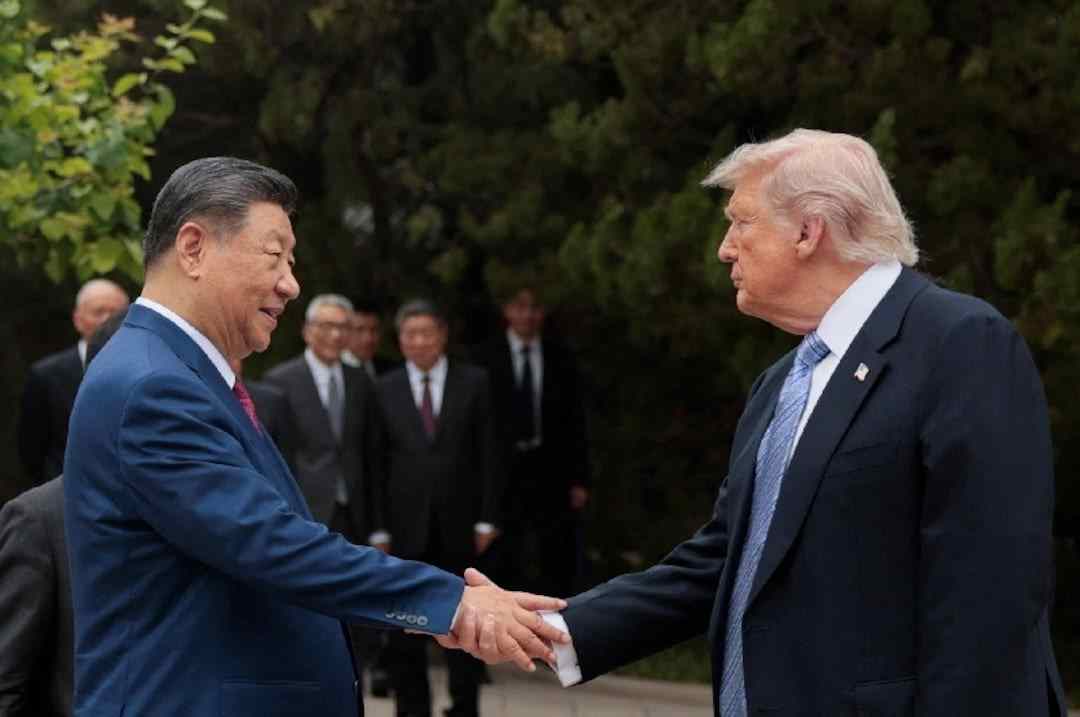
U.S. President Donald Trump said his patience with Iran was diminishing and disclosed that Chinese President Xi Jinping shared Washington’s position that the Strait of Hormuz should be reopened fully to international shipping.
Speaking aboard Air Force One while returning from Beijing, Trump said he and Xi had discussed the Iran crisis extensively and agreed on the need to restore unrestricted access through the strategic waterway.
Trump, however, stopped short of saying whether China had committed to using its influence to pressure Tehran directly.
“I’m not asking for any favours because, when you ask for favours, you have to do favours in return,” Trump said when asked if Xi had made any promises regarding Iran.
The U.S. president also claimed that Iran’s armed forces had been significantly weakened during the conflict, adding that Washington might still undertake what he described as “cleanup work.”
China’s foreign ministry later issued a statement criticising the ongoing war, saying the conflict should never have started and had no justification to continue.
The remarks reflected Beijing’s growing concern over the impact of the crisis on global energy markets and economic stability.
Iran effectively restricted most shipping traffic through the strait following joint U.S.-Israeli attacks launched on Feb. 28, causing major disruptions to global supply chains and energy exports.
Trump reiterated that Washington’s objectives included preventing Iran from acquiring nuclear weapons and restoring normal maritime traffic through the Strait of Hormuz.
“We don’t want them to have a nuclear weapon, we want the strait open,” Trump said during his meetings in Beijing.
Araghchi confirmed that Tehran had received messages from the United States suggesting Washington remained open to continued negotiations.
He expressed hope that diplomatic progress could eventually lead to the full restoration of secure navigation through the strait and the normalisation of shipping activities.
Iran, however, maintains that it does not trust the U.S. government despite ongoing diplomatic contacts.
According to Araghchi, Tehran remains prepared for either renewed military confrontation or a negotiated settlement.
He reiterated that vessels not connected to countries involved in attacks against Iran would continue to be allowed passage through the strategic waterway.
Before the conflict escalated, approximately one-fifth of global oil and liquefied natural gas supplies passed through the Strait of Hormuz, alongside major shipments of fertiliser and other critical commodities.
Despite continuing security threats, a large Chinese oil tanker and another vessel linked to Japan reportedly crossed the strait earlier this week.
The United Arab Emirates has also announced plans to accelerate construction of an alternative pipeline route to the port of Fujairah, located outside the Strait of Hormuz, following recent attacks on vessels in the region.
At the same time, diplomatic efforts are continuing in Lebanon, where officials are seeking to extend a fragile ceasefire between Israel and the Iran-backed Hezbollah movement.
Discussions involving Lebanese and Israeli representatives were expected to resume on Friday ahead of the expiration of the ceasefire agreement.
Trump has defended the military campaign against Iran by saying the United States aims to dismantle Tehran’s nuclear programme, limit its regional military influence and encourage political change within Iran.
Iran, on the other hand, is demanding the lifting of sanctions, compensation for war-related damage and international recognition of its authority over the Strait of Hormuz.
In a related development, Trump concluded a high-profile visit to China without securing major breakthroughs on trade or concrete Chinese assistance in resolving the Iran crisis.
Although both leaders exchanged warm public remarks during the Beijing summit, analysts noted the absence of significant agreements on trade, tariffs, rare earth exports or security issues.
Trump described the visit as productive and praised Xi’s leadership, while the Chinese president promoted what he called “constructive strategic stability” in bilateral relations, a phrase seen as an alternative to the previous U.S. approach of “strategic competition.”
However, major differences remained unresolved, particularly regarding Taiwan, trade disputes and the Iran conflict.
Trump revealed that Xi had expressed opposition to Taiwan’s independence during private discussions, though the U.S. president said he made no commitments on the issue.
On Iran, the White House said both leaders agreed on the importance of reopening the Strait of Hormuz, but analysts observed that Beijing did not publicly commit to taking direct action against Tehran.
China has continued to oppose the war and called for diplomatic efforts to end the conflict, while also maintaining close strategic ties with Iran.
The summit also failed to produce major economic announcements. Boeing shares fell after Trump disclosed that China would purchase 200 aircraft, fewer than expected by investors and industry observers.
There was also no clear resolution to disputes over rare earth mineral exports, advanced semiconductor technology or long-term tariff arrangements between the world’s two largest economies.
Observers said the Beijing visit highlighted the widening gap between Washington’s search for immediate political and economic gains and China’s focus on long-term strategic positioning.
