


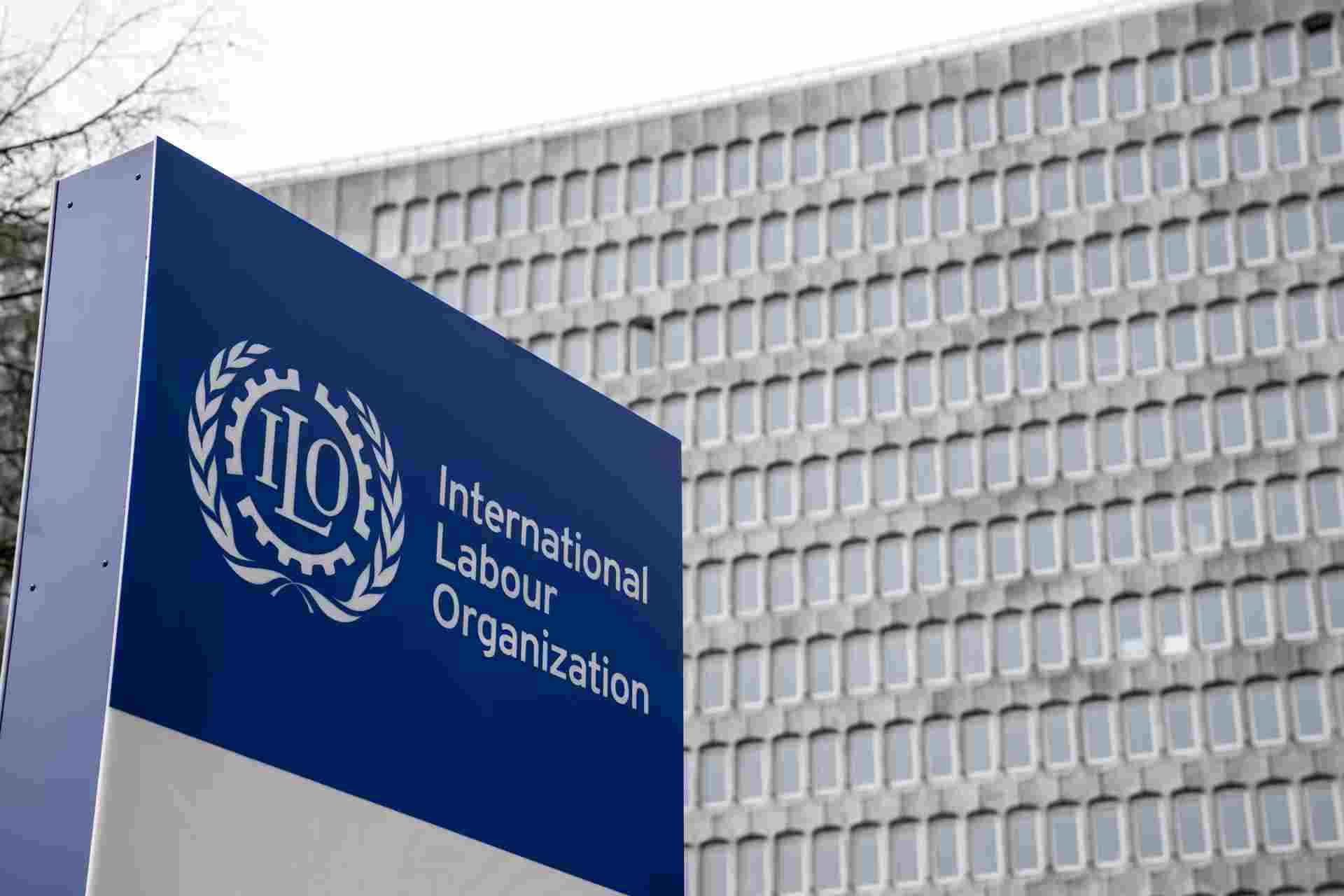
THE INTERNATIONAL Labour Organisation (ILO) and its Staff Union have strengthened their social dialogue mechanisms through a series of agreements aimed at ensuring transparency, fairness and the protection of workers’ interests as the organisation implements major institutional reforms and responds to financial challenges.
The agreements, negotiated between the ILO Administration and the Staff Union, establish procedures for managing workforce adjustments, including redeployment, individual consultations, possible involuntary separation and support measures for affected employees.
According to information published on the ILO’s official website, the Administration and the Staff Union signed a Memorandum of Understanding on the applicable framework for social dialogue in March 2026. This was followed in June 2026 by a Framework Agreement on Workforce Adjustment, negotiated at the initiative of the Staff Union.

Between June and the end of October 2026, both parties negotiated and signed five annexes to the Framework Agreement, setting out the successive stages and procedures for implementing workforce adjustments.
The annexes address workforce mapping and matching, individual consultation and communication, redeployment, involuntary separation and support measures for affected staff members.
The support provisions include training grants, transition leave days, reskilling and professional development opportunities, as well as information and administrative assistance.
The measures are intended to avert or minimise staff terminations, particularly in response to contingency measures introduced to address an immediate shortfall in the organisation’s regular budget.
The ILO said sustained engagement between management and staff representatives remains essential to ensuring that decisions arising from the reform are implemented through clear, transparent and fair procedures.
It also acknowledged that the reform and associated workforce adjustments involve difficult decisions, noting that dialogue does not necessarily eliminate differences in opinion between the Administration and staff representatives.
Nevertheless, the organisation maintained that constructive, effective and good-faith social dialogue is necessary to safeguard the wellbeing of affected employees and uphold its duty of care towards its workforce.
Social dialogue is a fundamental principle of the ILO and a central component of its mandate to promote social justice and decent work. Within the organisation, it involves information-sharing, consultation and negotiation between the Administration and the Staff Union through the Joint Negotiating Committee.
The process is guided by a recognition and procedural agreement signed by both parties in March 2000, which provides the basis for their engagement on workplace matters.
The latest agreements form part of a wider reform programme designed to make the ILO more streamlined, agile and resilient, while improving operational efficiency and strengthening its capacity to deliver on its mandate.
The reform is structured around three pillars: reprioritisation and reorganisation, reinforcement of field capacity, and improvements to strategic planning, support services and office infrastructure.
Under the first pillar, the organisation has restructured its headquarters to align resources, responsibilities and organisational arrangements with its strategic priorities. The new headquarters structure comprises four clusters and 17 departments and bureaux, with the revised branch structure taking effect in September 2026.
The second pillar focuses on strengthening the ILO’s regional and country-level operations through reviews of field structures, staffing arrangements and working methods. Approximately 20 technical specialist positions are envisaged for relocation to regional offices in 2027.
The third pillar seeks to improve corporate systems, business processes, strategic planning and service delivery. It also includes consideration of a Global Service Centre to consolidate selected administrative and support functions.
The organisation said the reform is being implemented progressively, taking into account its financial position and developments under the United Nations 80th anniversary reform initiative, known as UN80.
To monitor progress, the ILO has established a strategic framework containing metrics and indicators for assessing implementation and results over the 2026–2029 period. The findings will inform adjustments to the reform and, where appropriate, reporting to the ILO Governing Body.
As the reform moves into its next stages, the Administration has pledged to maintain engagement with the Staff Union through the Joint Negotiating Committee, reaffirming its commitment to meaningful and good-faith social dialogue.The organisation said this engagement would remain important in ensuring that institutional changes are managed through fair procedures, with due consideration for employees and the ILO’s broader responsibilities in promoting decent work and social justice.
