


GILBERT F. Houngbo of Togo has been re-elected Director-General of the International Labour Organisation (ILO) for a second five-year term, extending his leadership of the United Nations agency until September 2032.
Houngbo secured 51 votes in favour, with five abstentions, in a secret ballot conducted by the ILO Governing Body during its 358th Session in Geneva on Monday, November 16.
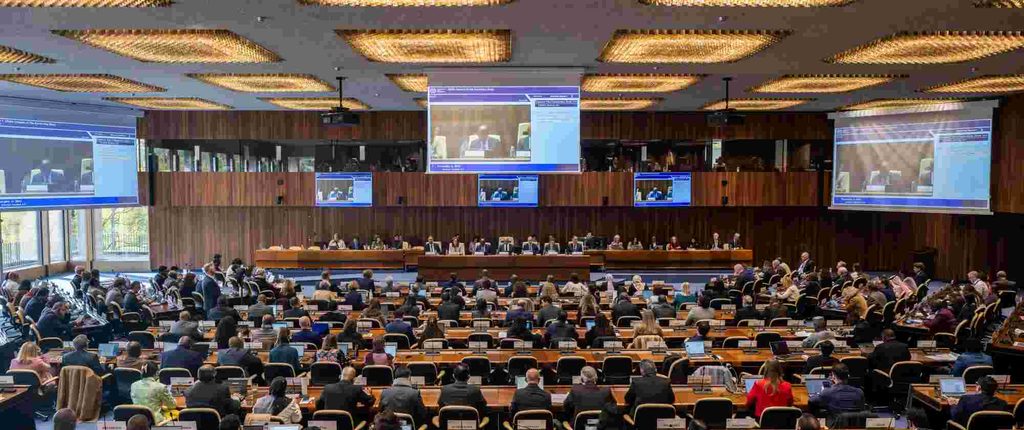
His new term will commence on October 1, 2027, and run until September 30, 2032. The re-election gives Houngbo, who assumed office in October 2022, another five years to advance the organisation’s mandate of promoting social justice and decent work globally.

He is the ILO’s 11th Director-General and the first African to occupy the position.
During his first term, the organisation strengthened its international labour standards, launched the Global Coalition for Social Justice and introduced institutional reforms aimed at improving operational efficiency and effectiveness.
It also intensified efforts to address emerging challenges in the world of work, particularly those associated with digital technologies.
Outlining his priorities for the second term, Houngbo pledged to strengthen the ILO’s standard-setting and supervisory functions, expand its presence in the field and address the implications of artificial intelligence for employment and the future of work.
He also committed to pursuing further institutional reforms to improve operational efficiency and ensure the organisation’s long-term financial sustainability.
Speaking after the election, Houngbo reaffirmed the ILO’s commitment to social justice as the foundation of universal and lasting peace, stressing the importance of cooperation among governments, employers and workers.
“More than a century after its founding, our Organization remains committed to a mission that is more relevant than ever: promoting social justice as the foundation of universal and lasting peace,” he said.
He described tripartism – the collaboration of governments, employers and workers – as the organisation’s greatest strength, particularly in a world characterised by tensions, conflicts and uncertainty.
Houngbo emphasised that meaningful cooperation did not require stakeholders to share identical views but demanded dialogue, mutual respect, responsible action and a willingness to reach compromises in the common interest.
Two other candidates, Yolanda Díaz Pérez of Spain and Javier González-Olaechea Franco of Peru, withdrew their candidacies before the election.
The selection process included a public interactive session on September 23, during which candidates presented their visions for the ILO and engaged with representatives of its tripartite constituents.
The Governing Body subsequently held private hearings on November 9 before conducting the election.Founded in 1919, the ILO became the first specialised agency of the United Nations in 1946, bringing together governments, employers and workers from 187 member states to promote social justice, workers’ rights and decent employment opportunities worldwide.
