


LEADING diplomats and international law experts have described Nigeria’s successful bid to host the $5 billion Africa Energy Bank as a major diplomatic achievement, while calling for sustained investment in capacity-building in international law and diplomacy to consolidate the country’s growing influence on the African continent and beyond.
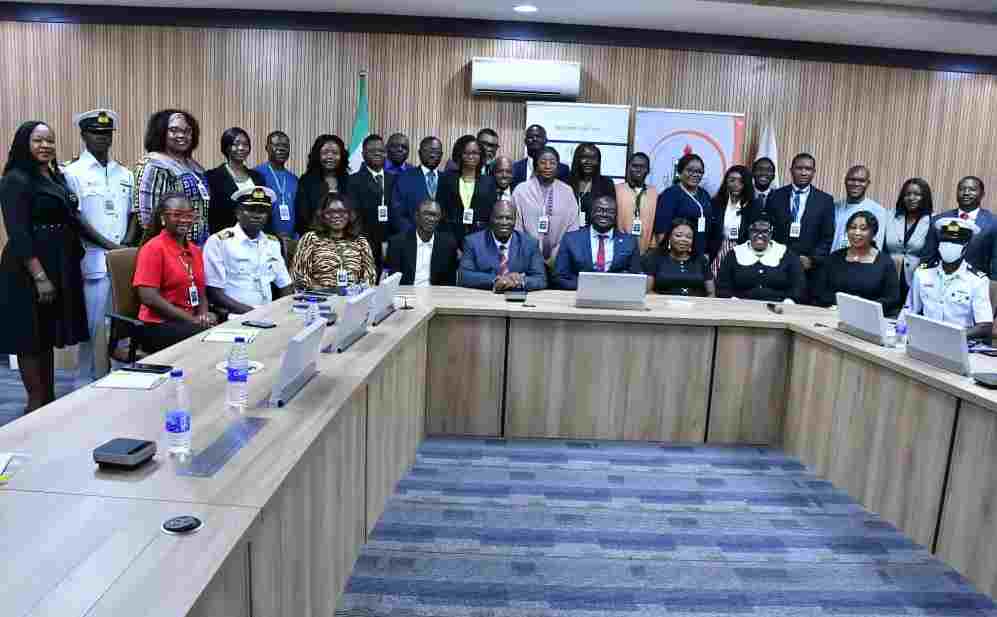
The call was made during the opening ceremony of the 2026 Certificate of Advanced Studies in International Law and Diplomacy, a one-week executive programme organised by the Nigerian Institute of Advanced Legal Studies (NIALS) in partnership with the Nigerian Branch of the International Law Association (ILA).

The programme, which focuses on leveraging international diplomacy for investment, finance and sustainable development, aims to equip participants with the specialised skills required to attract foreign trade and investment opportunities and strengthen Nigeria’s engagement in international affairs.

The event brought together senior diplomats, legal scholars and policy experts, including former Permanent Secretary of the Ministry of Petroleum Resources, Ambassador Nicholas Agbo Ella; Director-General of NIALS, Professor Ibrahim Abdulqadir Abikan; President of the International Law Association (Nigeria), Professor Damilola S. Olawuyi, SAN; and Professor Olufemi Elias, Judge ad hoc of the International Court of Justice and member of the International Law Commission.
In his welcome address, Professor Abikan emphasised the importance of deploying highly skilled professionals to represent Nigeria in international negotiations, noting that the quality of diplomatic engagement can significantly influence the country’s ability to secure mutually beneficial trade and investment agreements.
He urged lawyers, practitioners and law students to develop competencies suited to the demands of modern international legal practice, expressing confidence that the programme would prepare participants to contribute meaningfully to Nigeria’s development through effective application of international law and diplomacy.
Delivering the keynote address, Ambassador Ella underscored the central role of diplomacy in national development, describing trust as the foundation of successful international relations.
According to him, while countries may enter into treaties and agreements, long-term cooperation depends on confidence that commitments will be honoured.
He noted that investors, development partners and citizens all rely on transparent and accountable institutions, adding that international law provides the predictability necessary for stable international engagement.
Amb. Ella highlighted Nigeria’s successful bid to host the Africa Energy Bank as a recent example of effective diplomacy translating into economic opportunity.
He commended the administration of President Bola Ahmed Tinubu for securing the hosting rights for the institution, which is expected to play a significant role in financing energy projects across Africa.
Nigeria emerged as the preferred host nation after competing against several countries, including Ghana, Benin, Algeria, South Africa and Côte d’Ivoire.
The Africa Energy Bank, being established by the African Petroleum Producers Organization (APPO) in partnership with Afreximbank, is scheduled to commence operations in Abuja in September 2026.
He described the achievement as evidence of Nigeria’s increasing diplomatic influence and leadership within Africa’s energy sector.
The former diplomat also praised NIALS and the International Law Association for their commitment to advancing legal scholarship and professional excellence, describing initiatives such as the course as investments in future leadership for both Nigeria and the wider African continent.
Speaking at the ceremony, Professor Olawuyi stressed the growing importance of international law in addressing complex global challenges.
He cited recent geopolitical tensions, including conflicts affecting global energy markets, trade disputes, competition over critical minerals needed for clean energy technologies, and the escalating impacts of climate change.
According to him, these developments underscore the need for highly skilled international law practitioners capable of promoting cooperative and collaborative solutions to global problems.
He said the programme offers participants a unique opportunity to strengthen Nigeria’s and Africa’s voice in international affairs and contribute to shaping responses to emerging global challenges.
The week-long course will feature lectures and training sessions on a wide range of contemporary issues in public and private international law.
Topics include international trade, finance and investment negotiations, artificial intelligence and emerging technologies, international human rights and humanitarian law, international criminal law, energy and petroleum transactions, climate change and sustainable development, conflict resolution, international commercial arbitration, the African Continental Free Trade Area (AfCFTA), international economic integration, and professional ethics in diplomacy.
Founded in 1979, NIALS serves as Nigeria’s apex legal research and training institution. The International Law Association, established in 1873, promotes the study, clarification and development of international law and advances international understanding and respect for legal norms.
The Nigerian Branch of the association regularly organises lectures, seminars, conferences and professional development programmes aimed at strengthening international legal knowledge and practice in the country.
Participants and organisers expressed optimism that the programme would contribute to building a new generation of legal and diplomatic professionals capable of advancing Nigeria’s interests in an increasingly interconnected and competitive global environment.
