


NIGERIA must accelerate the adoption of digital health solutions across public and private healthcare institutions to improve data-driven decision-making and health outcomes, a public health information systems expert has said.

Mr Bright Ibezim, Unit Head, Health Informatics, Institute of Human Virology Nigeria (IHVN), told National Record that the growing reliance on data-driven decision-making made the deployment of health information systems increasingly critical to the country’s health sector.
He said healthcare providers could improve the quality of care by making better use of historical medical data generated through Health Information Systems (HIS), including Electronic Medical Records (EMRs), Laboratory Information Systems and Radiology/Imaging Information Systems.

According to him, access to accurate and timely patient information enables doctors and other healthcare providers to make better-informed decisions about patients’ treatment and care plans.
Ibezim also said Health Information Systems could help healthcare organisations improve operational efficiency and reduce costs. “For example, it is easier for doctors to locate a patient’s records in an EMR than through traditional filing systems,” he said. “Hospital administrators can also use consumption data captured in HIS to accurately estimate commodity and human-resource needs, thereby reducing operating costs and eliminating waste.”
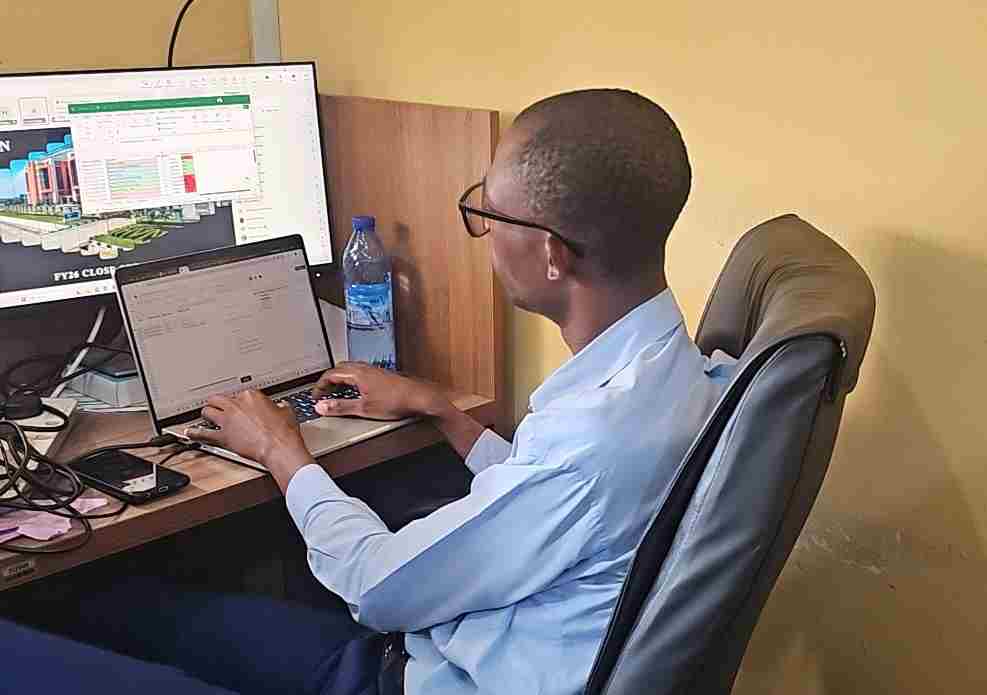
He added that HIS serve as a critical source of data for government, donor agencies and other public health stakeholders. Ibezim said the data could be used to track disease trends across populations, detect outbreaks early and develop evidence-based strategies to contain epidemics.
“The world is becoming increasingly data-driven. In business, for example, if you don’t have data, you won’t succeed. The same applies to education, politics, warfare and almost every other sector. Data is the bedrock of decision-making,” he said.
He said health information systems provide data not only to healthcare workers but also to governments, public health officials, programme managers and other stakeholders responsible for planning and delivering health services.
According to Ibezim, Nigeria’s digital health infrastructure is evolving, with increasing adoption in both public and private facilities. However, private hospitals are generally ahead in digital maturity because of stronger incentives to improve efficiency.

He noted that digital health goes beyond electronic medical records to include laboratory information systems, the Surveillance Outbreak Response Management and Analysis System (SORMAS), the National Data Reporting System (NDARS), the National Data Repository (NDR), the District Health Information System (DHIS), and other platforms for managing health commodities, samples and results.
Ibezim identified fragmentation and poor interoperability as major challenges, noting that many digital health systems currently operate in isolation and cannot easily exchange data.
“People are deploying different kinds of digital health solutions, but these systems often do not communicate with one another,” he said, adding that governance and regulation were also struggling to keep pace with technological development.
He acknowledged government efforts, including the Nigeria Digital Health Architecture (NDHA), which is designed to enable digital health systems to communicate and exchange data, but called for faster action on legislation needed to strengthen digital health governance.
Ibezim also stressed the need for digital public infrastructure to connect the country’s health information systems. “There is no doubt that Nigeria is making progress with digital health solutions, but when it comes to digital public infrastructure, we are not there yet,” he said.He compared the gap to the financial sector, where the Nigeria Inter-Bank Settlement System (NIBSS) enables banks to exchange data and facilitate transactions. “The health sector does not yet have an equivalent system,” he said, stressing that interoperable infrastructure would improve data sharing, strengthen decision-making and ultimately support better healthcare delivery across Nigeria.
