


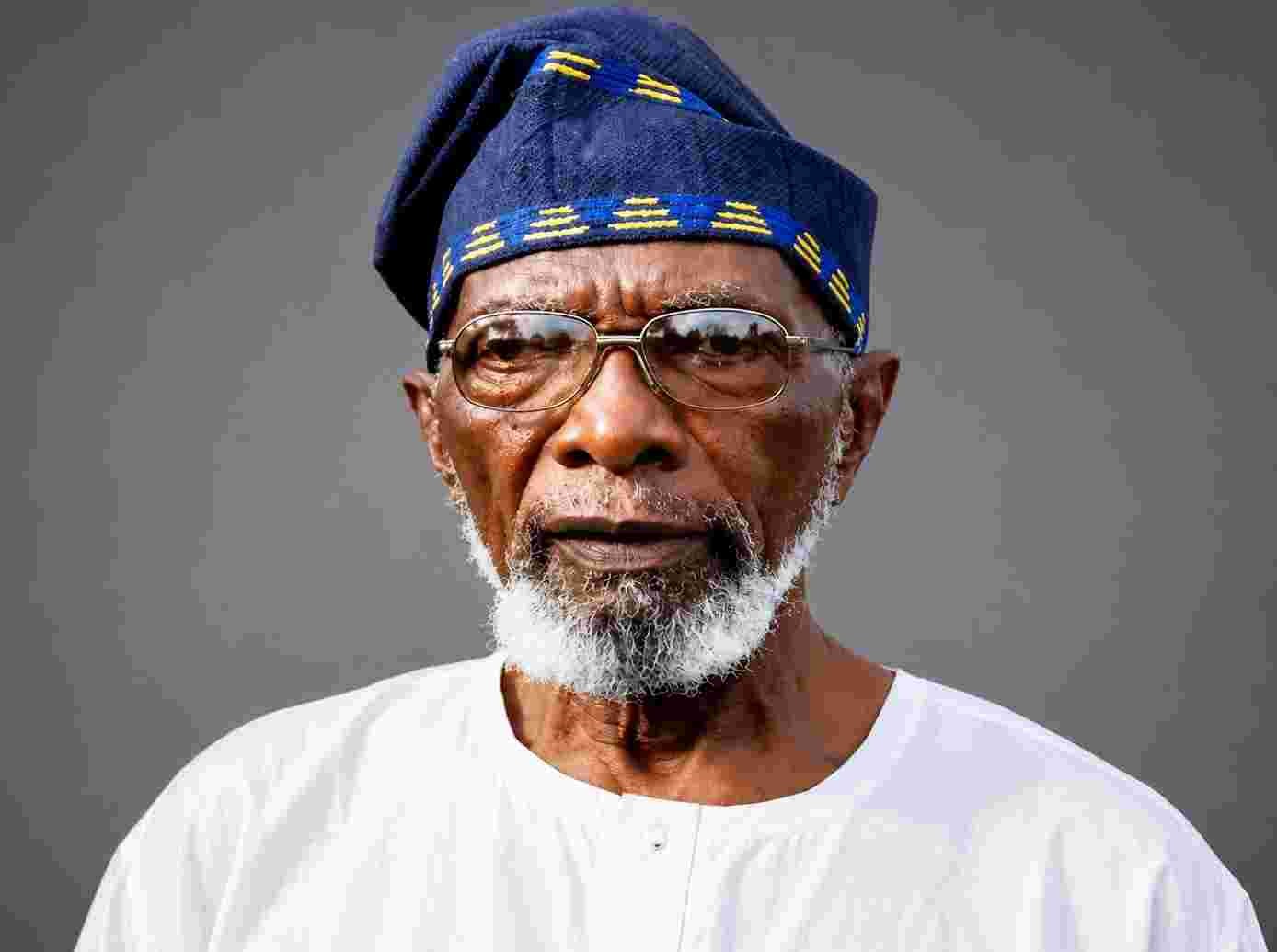
THE EMINENT socialist historian, avowed Marxist scholar, and unwavering patriot, Dr Ṣẹ́gun Ọṣọbá, whose intellectual fire and moral clarity shaped generations of Nigerian activists and thinkers, has passed on peacefully at his residence in Ijẹbu-Ode on the morning of Thursday, May 14, 2026. He was 92.
His death was confirmed to National Record through an unimpeachable source close to the family some minutes ago.
Our source, a progressive intellectual and contemporary of Dr Ọṣọbá, quoted family sources, who he said revealed that the renowned academic and former lecturer at Obafemi Awolowo University (OAU) died at 11:35am on Thursday.

Other sources from the academic community said the news of Ọṣọbá’s passing has sent ripples of grief through Nigeria’s academic, leftist, and civil society circles, where Dr Ọṣọbá was revered and addressed simply as ‘Comrade.’
A Life of Scholarship and Struggle
Born on January 9, 1934, in Ijẹbu-Ode, Ogun State, Comrade Ọṣọbá was a product of the finest educational institutions of his era. He attended Ijẹbu-Ode Grammar School (1947–1953) and the Nigerian College of Arts, Science and Technology in Ibadan, before moving to University College, Ibadan.
However, it was his tenure at Moscow State University (1963–1967) that profoundly shaped his intellectual framework, cementing his commitment to historical materialism and the liberation of the African working class.
Comrade Ọṣọbá spent the bulk of his academic career at the University of Ife (now Obafemi Awolowo University, Ile-Ife) from 1967 until his retirement as a Senior Lecturer in History in 1991.
Despite his immense scholarly output, it is widely noted that his open adherence to Marxist-Leninist ideology led to him being repeatedly passed over for a full professorship; a slight he bore with the stoic defiance that characterised his life.
The Minority Report: A Constitutional Legacy
While Comrade Ọṣọbá was a prolific scholar whose work dissected the Nigerian bourgeoisie, his most tangible impact on the nation’s governance came in the late 1970s.
At the height of the Generals Murtala Muhammed/Olusegun Obasanjo military regime, Comrade Ọṣọbá was selected as one of the “49 wise men” tasked with drafting the 1979 Constitution, which would usher in the Second Republic.
Alongside his close comrade, the late Dr Yusuf Bala Usman, Comrade Ọṣọbá broke ranks with the conservative majority to produce a fiery Minority Report.
That report, radical for its time, recommended the total removal of immunity clauses for Presidents and Governors, allowing them to be sued in civil court during their tenure. It also proposed a minimum age of 30 for elective office.
Although the military regime summarily rejected the report, it remains a foundational text for activists and constitutional lawyers arguing for executive accountability in Nigeria today.
His academic work, including the seminal 1978 paper: “The Deepening Crisis of the Nigerian National Bourgeoisie,” remains required reading for students of Political Economy, offering a scathing critique of the parasitic nature of Nigeria’s ruling elite.
The Comrade Who Declined a Title
Unlike many of his peers, Comrade Ọṣọbá viewed the title of ‘Professor’ with suspicion, believing it to be a tool of bourgeois co-optation.
According to colleagues, when the university administration eventually attempted to correct the decades of oversight and offer him a professorship, Comrade Ọṣọbá declined, preferring to end his career as a “Dr”; a title earned through study rather than institutional hierarchy.
He was, however, a giant in the classroom. At “Great Ife,” as OAU is popularly called by its students graduates, Comrade Ọṣọbá mentored a generation of student activists, teaching them to view history not as a series of dates, but as a dialectical struggle against imperialism and oppression.
In 2023, a major international conference titled: “History and the Persistent Struggle”, was held at the Tai Solarin University of Education in his honour, acknowledging his role as a pioneer of social and economic history in Nigeria.
Final Years and Passing
In his twilight years, Comrade Ọṣọbá retired to his ancestral home in Ijẹbu-Ode. Even as he approached his tenth decade, he remained intellectually fierce. During celebrations for his 90th birthday in January 2024, he reportedly led mourners in a clenched-fist rendition of the revolutionary “Victory Song” anthem; declaring that old age had done little to diminish his fight against oppression.
President Bola Tinubu, in a tribute issued upon the scholar’s 90th birthday, described Comrade Ọṣọbá as “one of Nigeria’s finest minds” and thanked him for his “intense patriotism.”
Comrade Ṣẹ́gun Ọṣọbá is survived by his children, grandchildren, and a vast community of comrades and former students who continue to carry the torch of his socialist ideology.
