


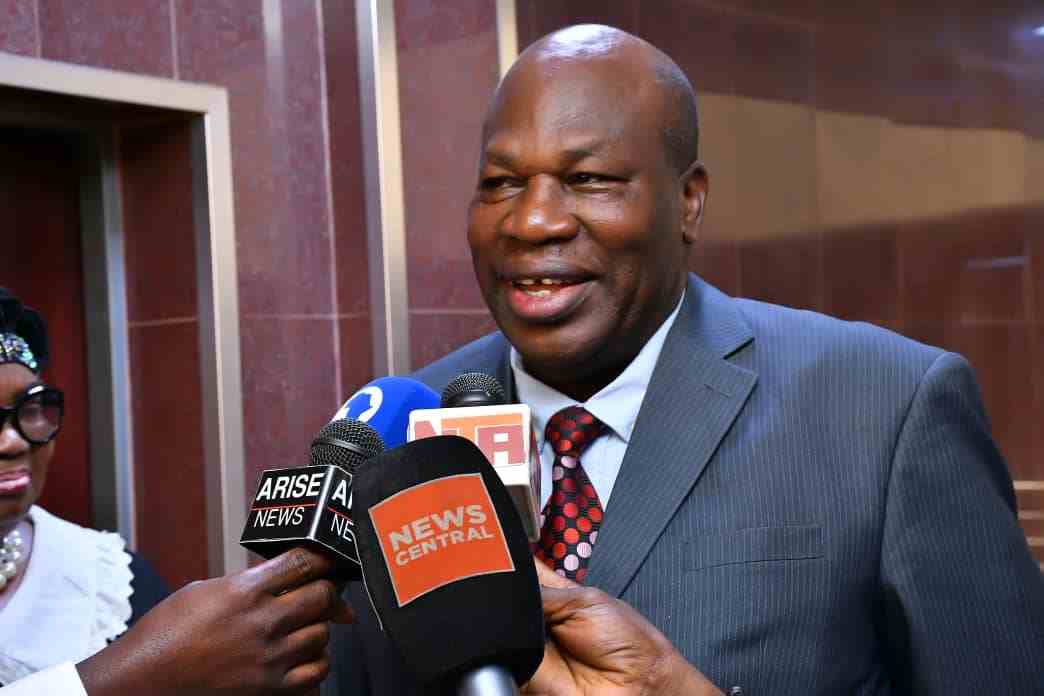
FORMER Permanent Secretary of the Federal Ministry of Petroleum Resources, Ambassador Nicholas Agbo Ella, has urged Nigeria and other African countries to deploy international diplomacy as a strategic instrument for attracting investment, expanding access to finance and driving sustainable development, stressing that trust, the rule of law and strong institutions remain the foundation of enduring national prosperity.
Speaking at the opening ceremony of the Certificate of Advanced Studies in International Law and Diplomacy held at the Supreme Court Complex, Abuja, Amb. Ella described the programme’s theme, “Leveraging International Diplomacy for Investment, Finance and Sustainable Development,” as timely in light of profound changes reshaping the global order.
According to him, today’s international environment is characterised by geopolitical competition, economic uncertainty, technological disruption, climate concerns and shifting global influence, requiring nations to compete not merely through military strength or political alliances but through “ideas, innovation, economic attractiveness, institutional credibility and diplomatic engagement.”

He declared that diplomacy has evolved beyond the traditional management of interstate relations into a vital economic asset.
“Diplomacy today is a powerful economic tool. It influences where investors choose to invest. It affects access to finance. It shapes trade opportunities. It determines strategic partnerships. It facilitates technology transfer and increasingly drives sustainable development.”
He added that “in many respects, diplomacy has become one of the most important currencies of national development.”
Drawing from decades of experience as a diplomat, legal practitioner and public servant, Ella identified trust as the indispensable foundation of successful international engagement.
“Countries may sign treaties. Governments may enter agreements. Institutions may establish partnerships. But without trust, such arrangements rarely endure,” Ellas said, and observed that investors require confidence that contracts will be honoured, development partners expect commitments to be fulfilled, while citizens demand transparent, accountable and fair institutions, concluding that “trust remains the invisible currency that sustains international cooperation.”
The former Permanent Secretary also stressed the importance of international law in fostering stability and economic development.
“International law provides predictability in an often-unpredictable world. It creates frameworks through which nations with different interests, cultures and political systems can cooperate peacefully… No nation, regardless of its size or influence, can successfully navigate today’s interconnected world without respect for the rule of law.”
He argued that respect for legal norms enables peaceful dispute resolution while creating the certainty required for global commerce to flourish.
Turning to Africa’s development prospects, Ella noted that the continent possesses abundant natural resources, a youthful population, expanding markets and enormous entrepreneurial potential. However, he cautioned that these advantages alone are insufficient to guarantee prosperity.
“To unlock these opportunities, Africa must continue to strengthen governance, deepen regional integration, improve investment climates and engage strategically with the global community.”
He identified the African Continental Free Trade Area and the Africa Energy Bank as transformative initiatives capable of attracting investment, creating jobs and accelerating economic development across the continent if effectively implemented.
Ella stressed that sustainable development cannot be achieved through economic growth alone. “True development requires strong institutions. It requires visionary leadership. It requires responsible governance. It requires partnerships. And above all, it requires people who are willing to think beyond immediate interests and focus on long-term national and continental priorities.”
He described diplomacy as the bridge connecting governments, businesses, development partners, academia and civil society in pursuit of shared development goals.
Sharing lessons from his professional journey, the veteran diplomat highlighted preparation, listening and integrity as the three pillars of effective diplomacy and leadership.
“Successful negotiations are rarely won by eloquence alone. They are won through diligent preparation, rigorous analysis and a deep understanding of both your own interests and those of your counterparts.”
He also stated that “those who listen carefully often discover opportunities that others miss,” before warning that “once integrity is lost, rebuilding trust becomes exceedingly difficult.”
Ella devoted a significant portion of his address to the establishment of the Africa Energy Bank, describing it as a practical demonstration of diplomacy delivering tangible development outcomes.
“The Africa Energy Bank is more than a financial institution. It represents Africa’s determination to shape its own development agenda and finance its own priorities.”
He revealed that he participated in diplomatic engagements that helped Nigeria secure the hosting rights for the institution in Abuja, including hosting representatives of member countries.
“That experience reinforced a lesson I have learned repeatedly throughout my career: Diplomacy produces results. When pursued strategically, diplomacy attracts investment, unlocks opportunities and advances national interests.”
On environmental sustainability, Ella argued that economic development and climate responsibility should complement rather than contradict one another. “The challenge before us is not choosing between economic growth and environmental responsibility. The challenge is ensuring that both reinforce each other.”
He said effective diplomacy and international cooperation can help nations mobilise climate finance, encourage technology transfer and pursue balanced energy transitions that reflect their developmental realities.
Addressing participants in the programme, Ella urged them to embrace intellectual curiosity, ethical leadership and lifelong learning, noting that future leaders must possess expertise beyond legal knowledge alone.
“The world you are preparing to serve will demand more from you than technical knowledge alone. You will be expected to understand law, economics, technology, governance, sustainability and international relations.”
He advised participants that the true measure of success lies not in titles or honours but in their ability to strengthen institutions, promote justice and build bridges among people and nations.
In his concluding remarks, the former Permanent Secretary maintained that national prosperity depends fundamentally on institutions, confidence, knowledge and purposeful engagement with the international community.
“History teaches us that nations do not prosper simply because they possess resources. They prosper because they build institutions. They prosper because they inspire confidence. They prosper because they invest in knowledge. They prosper because they engage the world with clarity, purpose and vision.”
Calling for renewed commitment to diplomacy and the rule of law, he declared: “Let us therefore commit ourselves to building a future where diplomacy attracts investment, investment creates prosperity, prosperity supports sustainable development and sustainable development strengthens peace and stability.”
He expressed optimism that Nigeria, Africa and the wider international community could overcome present challenges through cooperation, dialogue and respect for the rule of law before congratulating the organisers and wishing participants a successful programme.
