


- Aims For Grassroots Political Control
- Pushes For Restructuring, Presidency
A COALITION of indigenous organisations from Nigeria’s Middle Belt region has unveiled a sweeping vision to overhaul the region’s socio-political structure, including a determined push to produce a President of Nigeria in the near future.
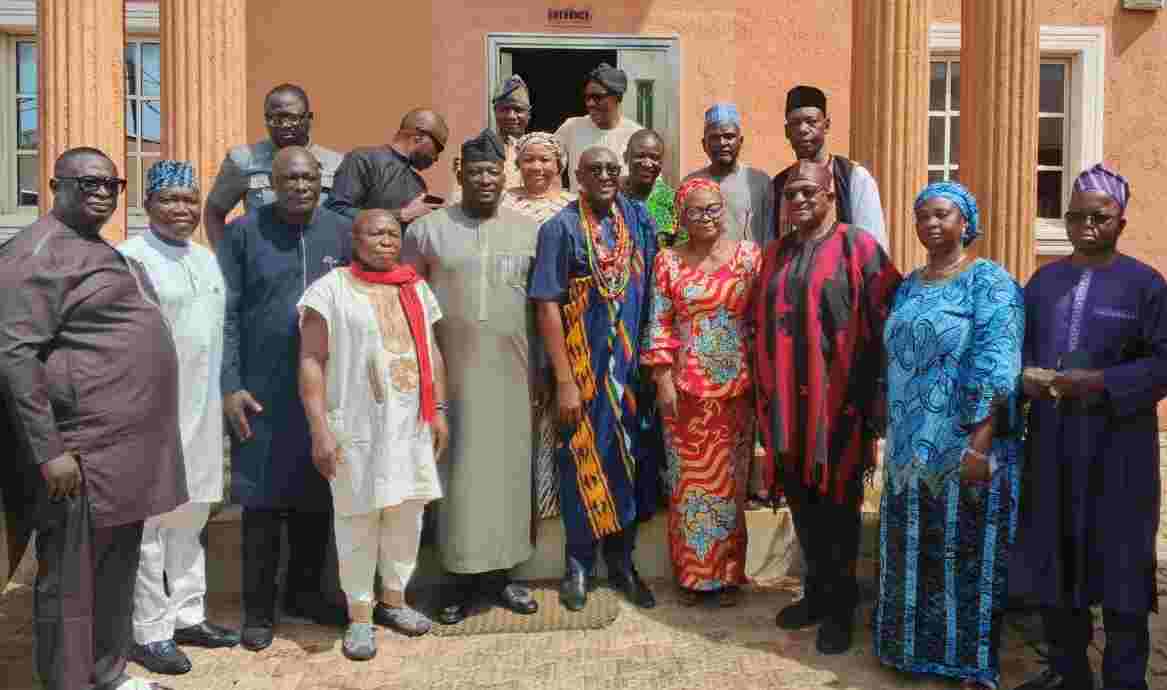
This was disclosed in a welcome address by Professor Emmanuel Oloja Ejeikwu, the Secretary General of the Coalition of Indigenous Middle Belt Organisations (CIMBO), at an Emergency Meeting held on Saturday in Abuja.
Prof. Ejeikwu, who was elected as the Interim National Chairman of CIMBO at the end of the emergency meeting, stated that the vision emerged following a series of high-level meetings of stakeholder organisations with the Middle Belt Region.

He said the journey leading to the formation of CIMBO became necessary following an earlier meeting of the Coalition of Indigenous Ethnic Nationalities (CIEN) in July 2023, noting that at that gathering, Prof. Benjamin Okaba from the Ijaw Kingdom, was elected as President of CIEN with Mr Timothy B. Gandu from the Middle Belt elected as Deputy President, while Prof. Ejeikwu was elected Chairman of CIEN’s Restructuring Committee.
Ejeikwu noted that unlike other ethnic nationalities under CIEN, the Middle Belt lacks a dynamic internal structure with hierarchical administrative structures down to the countryside through community organisations, youth and women’s groups, and socio-cultural bodies – a scenario he insists must be corrected to catalyse the desired organisational synergy.
“There is a huge void between the MBF and the countryside, the grassroots and the communities, social cultural organizations, Youth groups and Women groups,” Ejeikwu said, stressing that CIMBO considers that approach falls far short of the mission and vision of the founding fathers of the United Middle Belt Congress in the 1950s, including J. S. Tarka, Patrick Dokotri, David Lot, and Gwanna Awan.
“Their mission was to mobilize and sensitize the grassroots, the various local communities, Youth groups and Women groups politically across the Middle Belt Region, to defend their lands, their ancestral heritage and the resources therein,” Ejeikwu reiterated.
Noting that this legacy which passed through successive leaders of the Middle Belt such as Chief Solomon Lar, Air Commander Dan Suleiman (Rtd), and General T.Y. Danjuma (Rtd), Ejeikwu insists must be maintained by the leadership of CIMBO, in order to maintain the spirit and keep the Middle Belt flag flying.
According to Prof Ejeikwu, CIMBO envisions itself as a parliament for all indigenous ethnic organisations, socio-cultural groups, youth and women’s bodies in the Middle Belt, and designed to hold meetings every four months with membership that will include major ethnic nationality organisations such as Gongola, CONAECDA, BRM, SOKAPU, KPA, PIDAM, Mzough Tiv, and ICDA, among others.
The mission and vision of CIMBO, Ejeikwu said, include: Mission: To bring together all sociocultural organisations in the Middle Belt under one umbrella, continuing the legacy of Tarka, Dokotri, Lot, and Awan to protect Middle Belt peoples from hegemony, oppression, and suppression. Vision: Control over ethnic lands, heritage, and resources; removal of internal oppression and colonisation; resource control through acceptable governance structures and a federal constitution; territorial security; equitable benefit from the Nigerian Federation as specified in the 2024 National Confab reports; creation of more states and regions within the Middle Belt given its population of about 45 million and landmass of roughly 315,666 square kilometres; abolition of laws promoting inequality; guarantee of religious freedom; prevention of land inversion; preservation of identity.
Perhaps the most politically insightful element of Prof. Ejeikwu’s remark is CIMBO’s unambiguous goal to produce a Nigerian President from the Middle Belt.
“We have very able men and women, with Excellent Credentials to occupy the seat of the Nigerian President, but we have been voting for people whose knees are on our necks, only to be treated with the ‘carrot and stick’,” Ejeikwu declared, noting that CIMBO intends to deploy a grassroots campaign strategy using state, local government, ward, and community coordinators to achieve this mission.
Warning of the cost of inaction, Prof Ejeikwu said: “We must continue with the journey, from where our forerunners left us, else our children will ask us in the nearest future, why we didn’t do anything while there was still time to act?”
Ejeikwu appealed to members and allies of CIMBO, framing that forthcoming meetings of CIMBO are critical moments in the region’s history, with an urgent call: “Let us make efforts to actualize this journey”.
