


A DEEPENING leadership crisis within the Lagos State chapter of the Trade Union Congress (TUC) has drawn sharp criticism from a workers’ rights organisation, which alleges undemocratic practices and manipulation by the national leadership.
The Campaign for Democratic and Workers’ Rights (CDWR), in a statement Friday, September 26, 2025, condemned the factionalisation of the Lagos TUC, attributing it to a lack of democracy and a “fighting leadership” within the trade union movement.
The dispute, CDWR revealed, stems from a failed delegate conference scheduled for September 17-18, 2025, which was intended to elect new leadership for the Lagos State TUC.

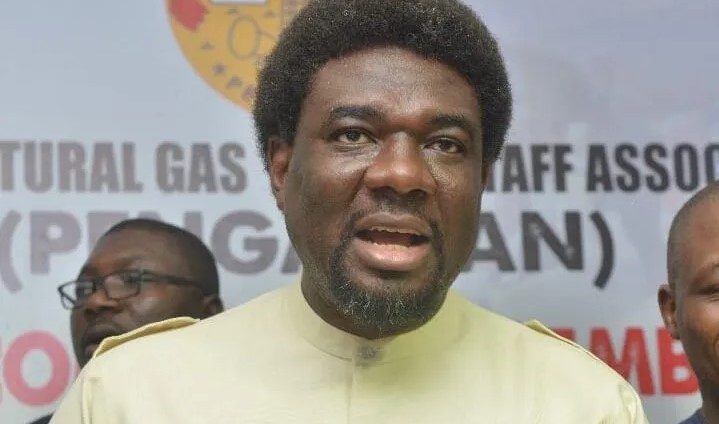
According to the statement, the conference collapsed after the National President of TUC, Comrade Festus Osifo, allegedly intervened to ensure the continued dominance of his own union, the Petroleum and Natural Gas Senior Staff Association of Nigeria (PENGASSAN).
The CDWR claims in the statement that the situation escalated when the TUC national secretariat and PENGASSAN manipulated the delegate quotas.
CDWR also alleged that PENGASSAN’s allocation was increased from 25 to 57 out of a total of 86 delegates, leaving only 29 slots for all other affiliated unions.
This move was reportedly resisted by a majority of the unions, who went ahead to hold a separate delegate conference based on the original delegates allocation, resulting in the election of a leadership faction led by Comrade Aladetan Abiodun.
Following this, Comrade Osifo and PENGASSAN were reported to have concurrently established a rival leadership faction.
The CDWR therefore strongly condemned Osifo’s actions, calling on him to “allow democracy to determine the Lagos TUC leadership.”
Using the emergent crisis, CDWR highlighted what it framed as systemic issues within the trade union movement while it criticised the practice of using capitation fees – the amount unions pay to the federation – as the sole determinant for delegate slots.
The CDWR argues that this allows financially powerful unions with potentially fewer members to dominate, even if their leadership is “pro-management and pro-state in character.”
“This dangerous policy can allow the capitalist state to financially back a pro-state union or ‘Yellow Union’ to emerge in the leadership against genuine democratic tenets,” the statement read.
The group proposes that delegate allocation should instead be based on the active membership strength of affiliate unions. It also criticised the common practice where union leaders handpick delegates instead of having them elected through democratic congresses at the branch level.
The CDWR lamented that the current factional fight is not based on ideological differences to advance workers’ interests, but is “simply a leadership struggle.”
It therefore welcomed the resistance shown by the majority of unions against “bureaucratic imposition,” as it called on the emerging mainstream leadership to prove its commitment by “constantly and uncompromisingly defending workers interests,” including resisting anti-labour practices like casualisation and contract staffing.
CDWR appealed to rank-and-file workers and activists to begin a broader struggle within their workplaces and the trade union movement to reposition it as a “fighting and democratic platform” that serves the collective interest of workers rather than “the self-serving interest of bureaucrats.”
