


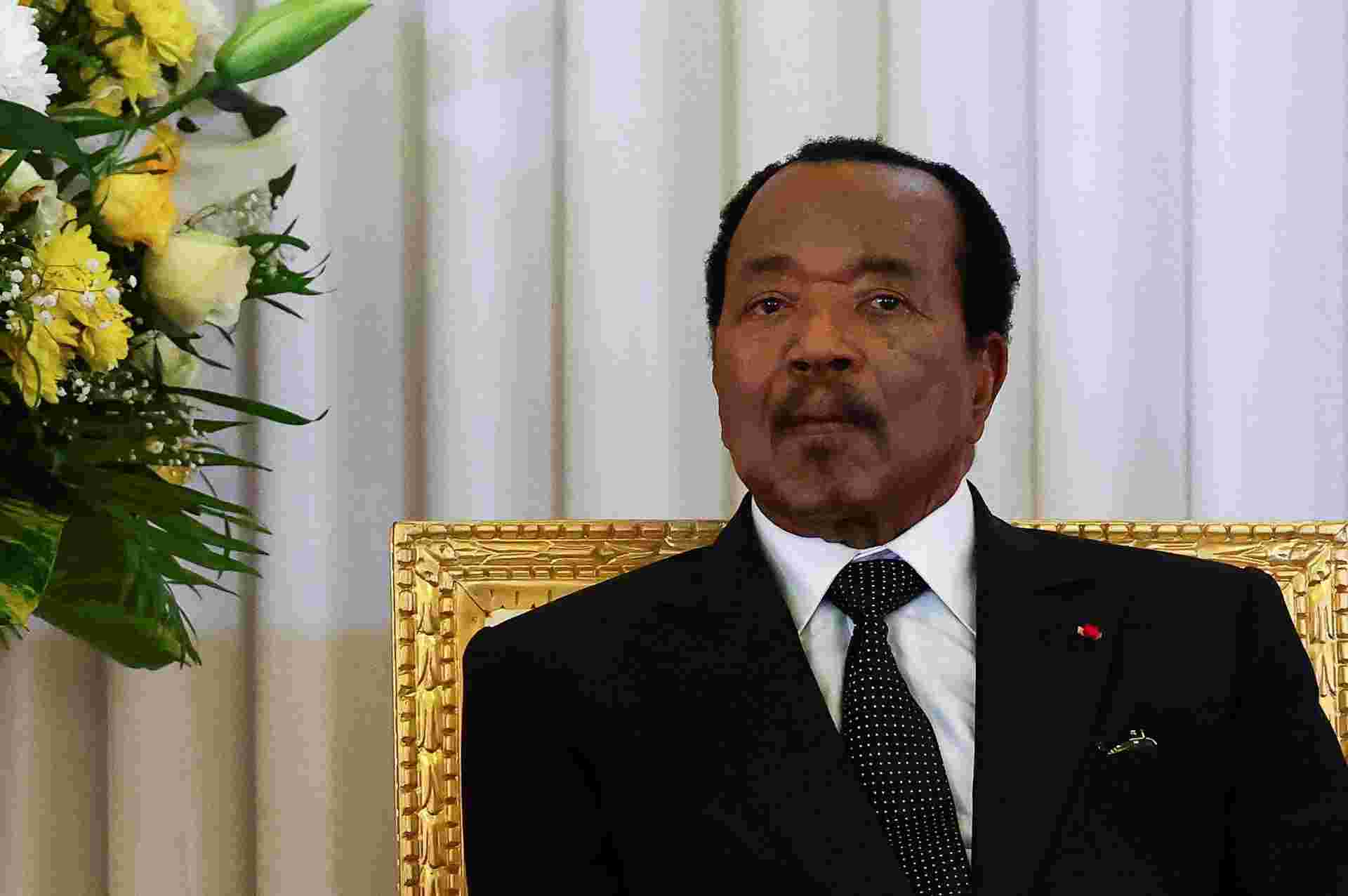
CAMEROON President Paul Biya has reshuffled the country’s senior military leadership, replacing commanders across most of the country’s regional military structure and promoting key officers, in a move that comes as questions intensify over his prolonged absence from public view.
Three presidential decrees, signed on Monday and announced on state radio, promoted the commander of the Presidential Guard to the rank of brigadier general from colonel and replaced commanders in four of Cameroon’s five joint military regions.
The changes also included the appointment of a new commander of the elite Rapid Intervention Brigade (BIR), the promotion of Major General Ebaka Hippolyte to Major General of the Armed Forces General Staff, several promotions of colonels to brigadier general, and changes to the leadership of motorised infantry brigades.

The sweeping appointments were announced while Biya, 93, remains outside the country after leaving Cameroon on June 7 for what the presidency described as “a brief private stay in Europe.”
He has not returned, making the trip one of the longest periods he has spent abroad in recent years and fuelling speculation over his health and ability to govern.
Government spokesperson, Rene Emmanuel Sadi, did not respond to Reuters’ requests for comment following the military reshuffle. However, he told French broadcaster RFI on Sunday that “the president is alive” and would return to Cameroon soon, seeking to counter mounting rumours surrounding the veteran leader’s whereabouts.
Biya, the world’s oldest serving head of state, has ruled the Central African nation since 1982.
During his four decades in power, he has frequently spent extended periods abroad, particularly in Europe, but his advanced age has made recent absences the subject of heightened public and political scrutiny.
Last month, the ruling Cameroon People’s Democratic Movement (CPDM) convened a rare meeting of its senior leadership as criticism mounted over the president’s continued absence.
While party officials did not publicly link the gathering to Biya’s stay abroad, opposition figures and civil society groups have increasingly questioned the functioning of government in his absence and called for greater transparency from the presidency.
The latest military shake-up is likely to draw close attention in a country where the armed forces play a central role in combating multiple security threats, including the Boko Haram insurgency in the Far North and a separatist conflict in the English-speaking Northwest and Southwest regions that has persisted since 2017.
Analysts have long viewed periodic changes within the military hierarchy as part of efforts to reinforce command structures and maintain loyalty within the security establishment during periods of political uncertainty.
Cameroon remains one of Central Africa’s largest oil and cocoa producers, but it faces persistent security, economic and governance challenges.
Biya’s prolonged tenure has been marked by criticism from opposition parties and international rights groups over democratic governance, while the unresolved Anglophone conflict has displaced hundreds of thousands of people and strained state resources.
Despite persistent speculation over succession, the presidency has released no information indicating any transfer of executive authority, and officials continue to insist that Biya remains in office and is carrying out his constitutional duties from abroad.
Monday’s military appointments underscored that presidential decrees continue to be issued in his name even as uncertainty over his return persists.
