


By Amos Aar
TENSION is simmering at the Benue State University Teaching Hospital (BSUTH) as resident doctors lament long-standing welfare concerns, including unpaid arrears, over-taxation, non-remittance of pension deductions and poor living conditions, while probationary nurses have accused the hospital’s management of selective salary payment.
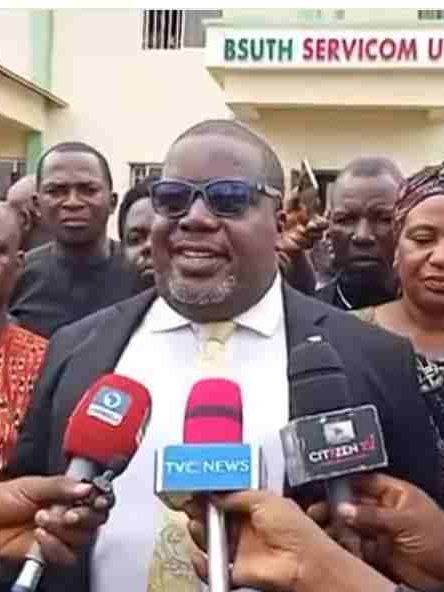
In an interview, President of the Association of Resident Doctors (ARD), BSUTH, Dr Kawen Pededoo, said while confirmed nurses received their salaries despite being part of an ongoing industrial action, probationary nurses who joined the strike were left unpaid, a situation he described as unfair and punitive.

According to him, the decision to withhold the salaries of nurses on probation was allegedly premised on the claim that they were not expected to participate in strikes.
“The confirmed nurses were paid, but the probationary nurses were not. That is where the allegation of witch-hunt is coming from,” Dr Pededoo said.
Dr. Pededoo clarified that resident doctors are not probationary staff, but medical officers undergoing residency training, a structured postgraduate specialist programme. He explained that although resident doctors were previously affected by the strike over salary issues, their December salaries were eventually paid only on Wednesday night, leaving the probationary nurses as the only category still unpaid.
Beyond salary matters, the ARD president said the doctors’ industrial action, which has lasted about two months, was not triggered by monthly pay but by unresolved welfare issues stretching back as far as 18 months.
He listed the concerns to include non-payment of 18 months’ CONMESS arrears, over-taxation introduced in November and applied disproportionately to doctors compared to other state workers, non-remittance of pension deductions and the dilapidated state of doctors’ quarters.
“We didn’t go on strike because of salary. It’s about the arrears, the excessive tax regime and pension deductions that are not being remitted. These are legitimate concerns,” Dr. Pededoo said, adding that the strike started as a national action before the state chapter declared a local extension.
He dismissed insinuations that the state government was deliberately punishing the doctors, pointing instead to what he described as intimidation from the hospital’s management.
“The governor is genuinely interested in health. Since he assumed office, we have seen massive infrastructural improvements and the acquisition of equipment worth billions of naira. We believe once these issues get to his table, he will act promptly,” he said.
Pededoo stressed that resolving the outstanding issues would boost staff morale, improve patient care and ensure optimal use of the sophisticated medical equipment recently procured by the government. He also noted that the hospital remains understaffed, a situation that leaves health workers fatigued and overstretched.
Efforts to get official reactions from relevant authorities proved unsuccessful. Questions sent to the Information Officer of the Ministry of Health and Human Services, Mr. Vincent Ada, on the alleged salary disparity, non-remittance of deductions and the possibility of settling the arrears were also not responded to.
Similarly, the Public Relations Officer of BSUTH, Mr. Moses Tsenzughul, did not respond to inquiries seeking clarification on behalf of the hospital’s management over allegations of witch-hunt and bullying against probationary nurses and the welfare concerns raised by resident doctors.
Pededoo confirmed that while resident doctors had, as at Wednesday, received their December salaries, the probationary nurses were yet to be paid, deepening concerns among affected staff and raising questions about equity and industrial harmony within the state-owned tertiary health institution.
