


By Amos Aar
THE BENUE State Government has taken a step towards addressing the plight of internally displaced persons (IDPs) in the state with the validation of a comprehensive IDP policy aimed at domestication of national guidelines to reflect the peculiar realities in Benue.
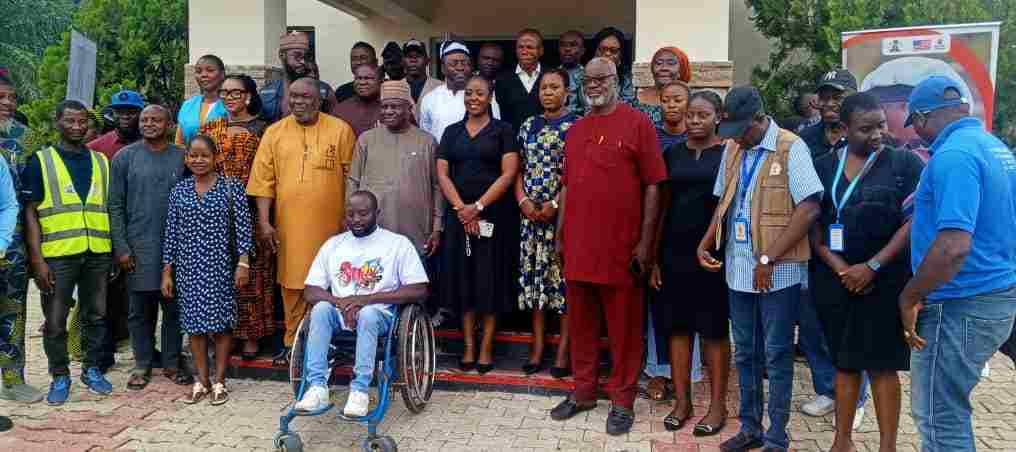
At a validation meeting held in Makurdi on Thursday attended by all relevant stakeholders, the State Commissioner for Humanitarian Affairs and Disaster Management, Hon. Aondowase Kunde, thanked Save the Children International for sponsoring the process and for their ongoing support in the state. He particularly commended the organization for its interventions in Naka, where he said the IDP population has outnumbered that of the Makurdi International camp.

“The number of IDPs at NKST Naka has tripled that of Makurdi international market camp. I will continue to plead with our partners to give more attention to Naka. They don’t even have water,” Kunde lamented. “We are here to validate this policy, and we invite you to lend your voices. Just like we did on the Yelwata report, we want all our partners to make their professional inputs. We don’t want a situation where people criticize the document after it is launched. So, we are opening the doors for everyone to contribute.”
Kunde explained that the policy, once validated and approved by the Benue State Executive Council, would serve as a legal guide in managing IDP affairs. He noted that the policy had already been approved at the national level, and the state was now adapting it to its unique context.
“The attorney general has assigned professional lawyers to support the process. And Rt. Hon. Abu Umoru (who represents Apa constituency in the House of Assembly) is also here to guide us within legal boundaries. By next week, I will present this document to the state executive council for approval and eventual launching,” he stated.
He further clarified the legal backing of the policy, noting that it does not require a fresh passage by the Benue State House of Assembly. “The policy has already passed through the National Assembly. What we are doing here is domestication, tailoring it to reflect Benue’s peculiarities,” Kunde said.
When asked about calls by a cleric, Rev. Tor Uja, for the immediate closure of IDP camps across the state on the grounds of alleged fraud, the commissioner responded cautiously. “I don’t need to confront a clergy. But if there’s evidence of corruption at the camps, it should be made public. I’m not a magician to know what is going on without facts. From the reports on my desk, there is no problem in the camps. You don’t just shut down camps emotionally. There’s a policy that guides the opening and closure of camps.”
Also speaking, Murjanatu Kabir, the Advocacy Campaign and Policy Manager at Save the Children International, stressed the organization’s mission to ensure the rights and survival of children are protected, especially in vulnerable settings like IDP camps.
“Our role is to ensure the IDP policy is fully domesticated. Our vision is a world where every child survives and develops, and that’s why we’re committed to this process. We’ve been in Benue for a long time with various projects, and we want this policy to align with our goals and to serve as a guiding principle in addressing the challenges IDPs, especially children, face in the state,” Kabir explained.
On his part, Rt. Hon. Abu Umoru gave assurances of the State Assembly’s support for the policy. “Whatever Benue is going through regarding IDPs, …we must fast-track this policy. I will personally visit Naka and other affected areas to understand the challenges better,” he promised.
John Akuse, Director of the General Sustainable Development Goals for Benue State and a key facilitator of the process, also gave context to the validation effort. He noted that the state had already launched its action plan on durable solutions, empowering the governor to begin resettling IDPs in their ancestral homes.
“But that action plan must be backed by a policy that defines our responsibilities, not only for those in camps but also for IDPs living in host communities. That’s why we are here today. We are validating the document page by page, ensuring every stakeholder has an opportunity to assess and make corrections. This process is about cultural inclusion, accountability, and making the document whole,” Akuse added.
